• Skip to primary navigation
  • Skip to main content
  • Skip to primary sidebar

Penny Travels

Travelling the world, near and far, one step at a time.

  • Home
  • Travel Destinations
  • Transport
  • Tourist Brown Signs
  • Tube Stop Baby Challenge
  • About Penny
  • Privacy Policy and Disclosure

Europe

Vintage Water Chute, Northstead Manor Gardens, Scarborough

April 24, 2024 by Penny Leave a Comment

I love vintage seaside attractions and was therefore delighted to find the vintage Water Chute in Northstead Manor Gardens, Scarborough. Located right next to the station for the North Bay Railway, close to Peasholm Park and originally dating from 1932, this is one of only three water chutes left in the UK.
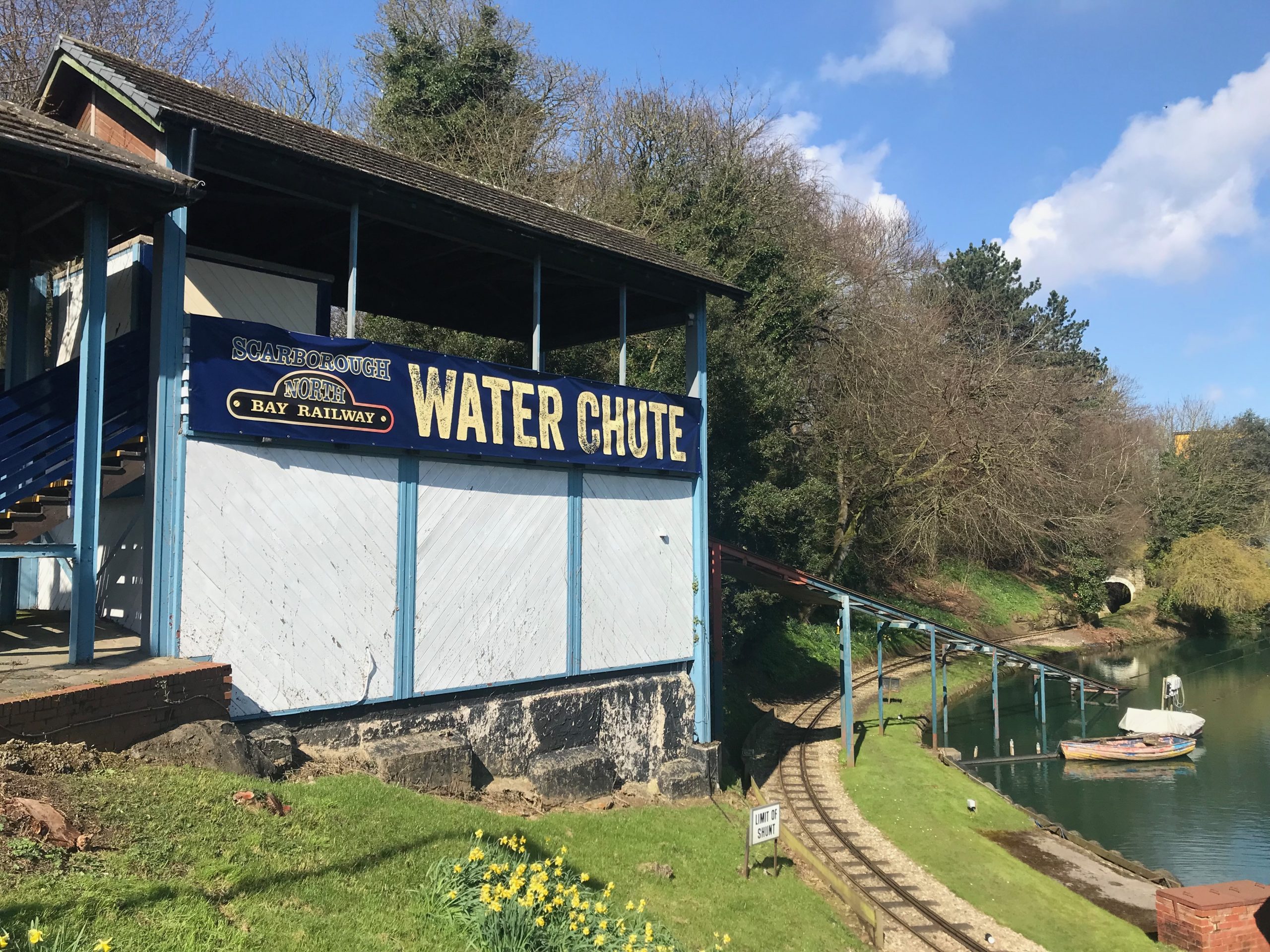
A view showing the timber building from which the water chute is launched and the metal track leading down into the lake. You can see a railway track passing under the metal track of the water chute. On the side of the building is a large banner reading "Scarborough North Bay Railway Water Chute"

The water chute operates by running down a short ramp from a timber cabin, into the lake’s waters. You are then hauled back up the ramp, backwards, by a big cable, before being released down into the lake for a second time.

In comparison to modern day log flumes, it’s actually quite a sedate ride with little danger of getting really wet. But if you think back to how it must have felt to ride the water chute back in 1932 when people weren’t used to fast rollercoasters and fairground rides throwing them all over the place, it must have been quite an exhilarating ride after a genteel walk round the nearby Peasholm Park.

History of the Vintage Water Chute

The water chute was designed by Charles Wicksteed, a name that many parents may have spotted on playground equipment across the UK. The Wicksteed company (now Wicksteed Leisure Limited) still make playground equipment and the words of their founder are proudly written on their website:

“The Play Ground should not be put in a corner behind railings, but in a conspicuous and beautiful part of a Park, free to all, where people can enjoy the play and charming scenery at the same time; where mothers can sit, while they are looking on and caring for their children”

The vintage water chute in Scarborough is the third oldest in the country and one of only three surviving such rides from before the Second World War. Historic England describe it as “as an evocative example of early 20th Century amusements aimed primarily at children and families, with a rider experience that is the same as when the ride first opened”.

The first water chute was opened in Earl’s Court in London in 1893 and this was followed by chutes at Southport Pleasure Beach (1903) and Blackpool Pleasure Beach (1907). They were incredibly popular in their day and I’m particularly intrigued having seen photos of the one that was next to Southend Pier in Essex.

Remaining vintage water chutes in the UK

Today two more vintage water chutes survive. The most famous example is at Wicksteed Park in Kettering (linked to Charles Wicksteed as the name suggests) and in East Park, Hull. When we went on the water chute in Scarborough the man running things was incredibly knowledgeable about the history of the chute and about Charles Wicksteed himself. He informed me that the Hull chute has been modernised and electrified over the years and as such is often broken. That’s certainly backed up by this article about the boat derailing only months after it was reopened with great fanfare following a refurbishment.

Scarborough’s Vintage Water Chute
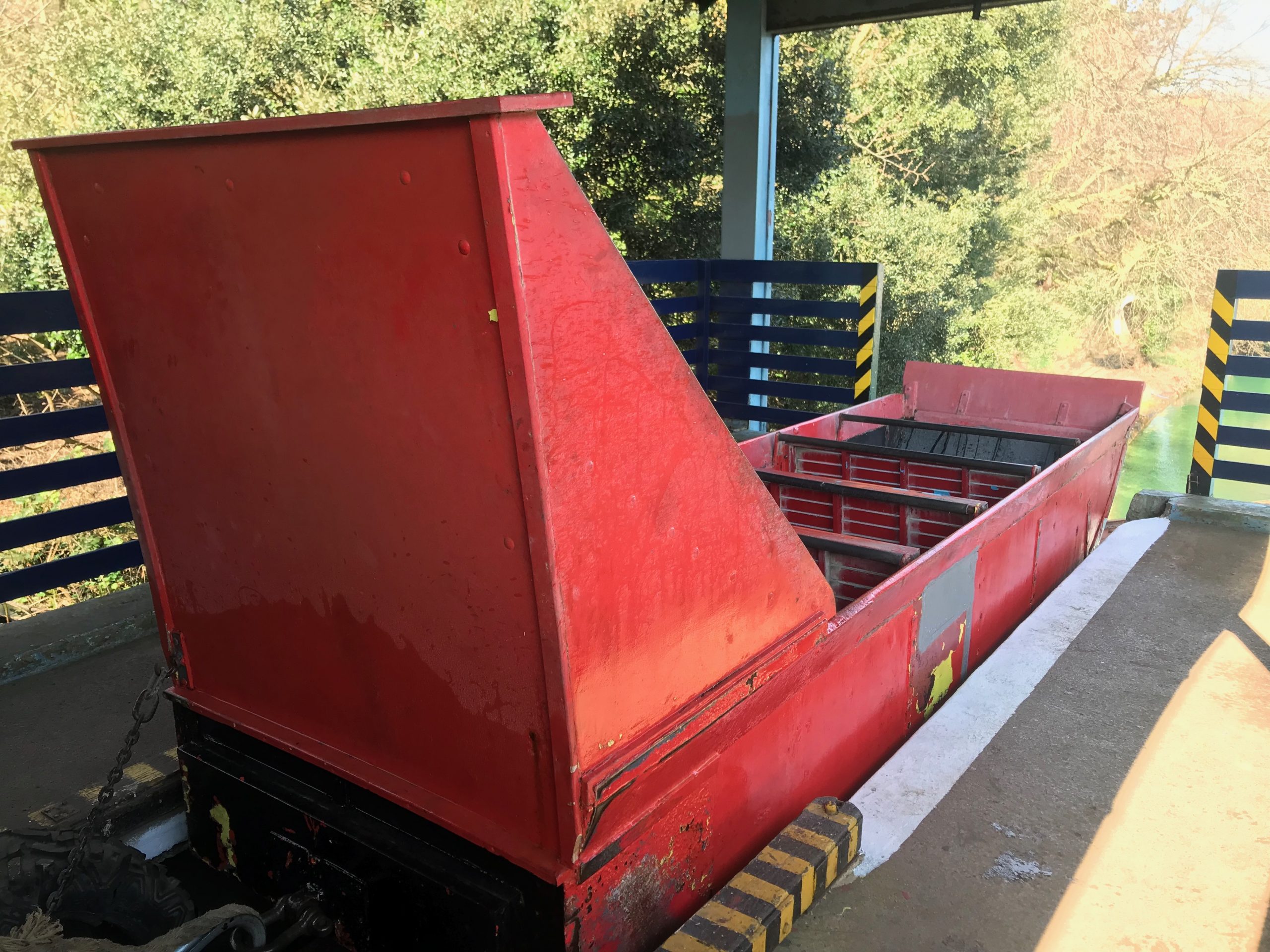
The red boat part of the water chute which looks a bit like a basic sleigh that Father Christmas might ride in. This is taken at the top of the water chute and you can see the gap in the barriers where the boat will pass through to go down the metal ramp into the lake below.

The vintage water chute in Scarborough is run by the people behind the neighbouring North Bay Railway. You buy tickets for the chute in the shop bit of the railway before climbing up to the top of the chute to take your ride.

Tickets cover two goes on the chute and at the time of writing (April 2024) are £3.50 per person.

The water chute was refurbished by the owners of the North Bay Railway back in 2007. At points before that the ride was part of the Kinderland activity park that was on the site but time saw it become derelict and under threat of permanent closure. The water chute became Grade II listed in 2017.

What else to do in Scarborough

Looking for other things to do in the Scarborough area? Why not see where else we have visited in this North Yorkshire seaside town here.
Filed Under: Scarborough

Peasholm Park, Scarborough

April 19, 2024 by Penny Leave a Comment

I’ve always been a fan of a municipal park. Years ago I used to have a regular client that I visited on the train. To get from tree station to his office you could walk through the park there which featured the usual flowerbeds and fountains, but also a delightful aviary and a small boating lake. My colleague and I would often take the longer route round the park and many a conversation took place about what made a good park and why we didn’t seem to create good ones anywhere any more. Country parks with vast lakes still get built, or you get “community spaces” shoehorned in between buildings, but it’s ages since I think I’ve heard of a good municipal park in a town or city.

As a child we have many holidays in Scarborough and one memory I have very clearly is of visiting Peasholm Park in an evening, just as it was getting dark, and seeing colourful lanterns all lit up around the lake there. I’ve always wanted to go back and see how accurate my memory was and finally this latest trip gave me time to do so.

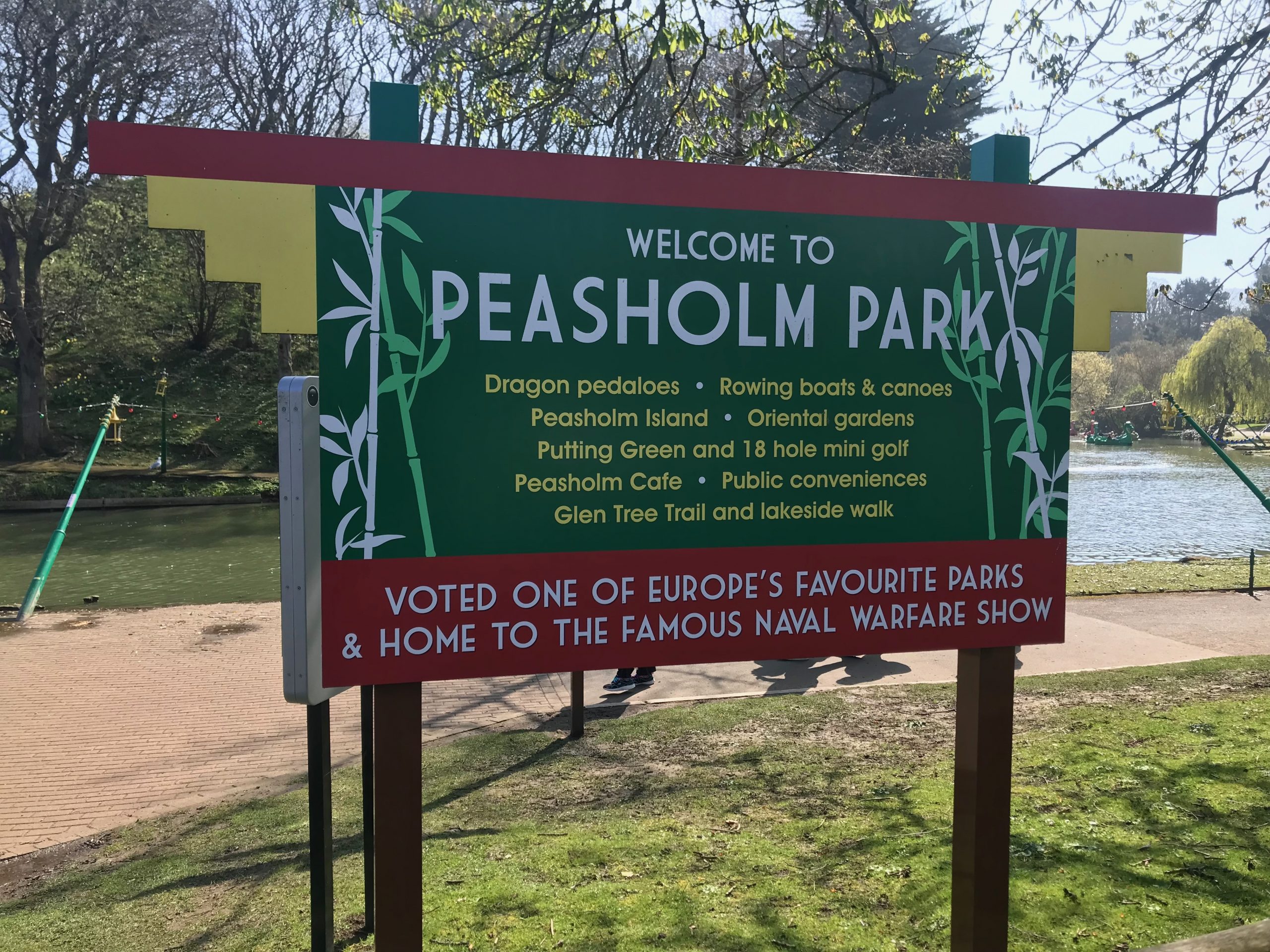
The sign for Peasholm Park listing what there is to do there. At the bottom it says "Home to the Famous Naval Warfare Show"

History of Peasholm Park

Scarborough’s Peasholm Park originally opened to the public in 1912 and has remained a municipal park since that day. It was particularly popular in the pre and post World War Two days. The park saw a decline in use in the 1970s as the number of people visiting Scarborough (and other similar seaside towns) decreased, but Heritage Lottery Funding has helped restore much of it. In 1999 Pesholm Park was granted grade II listed status by English Heritage.

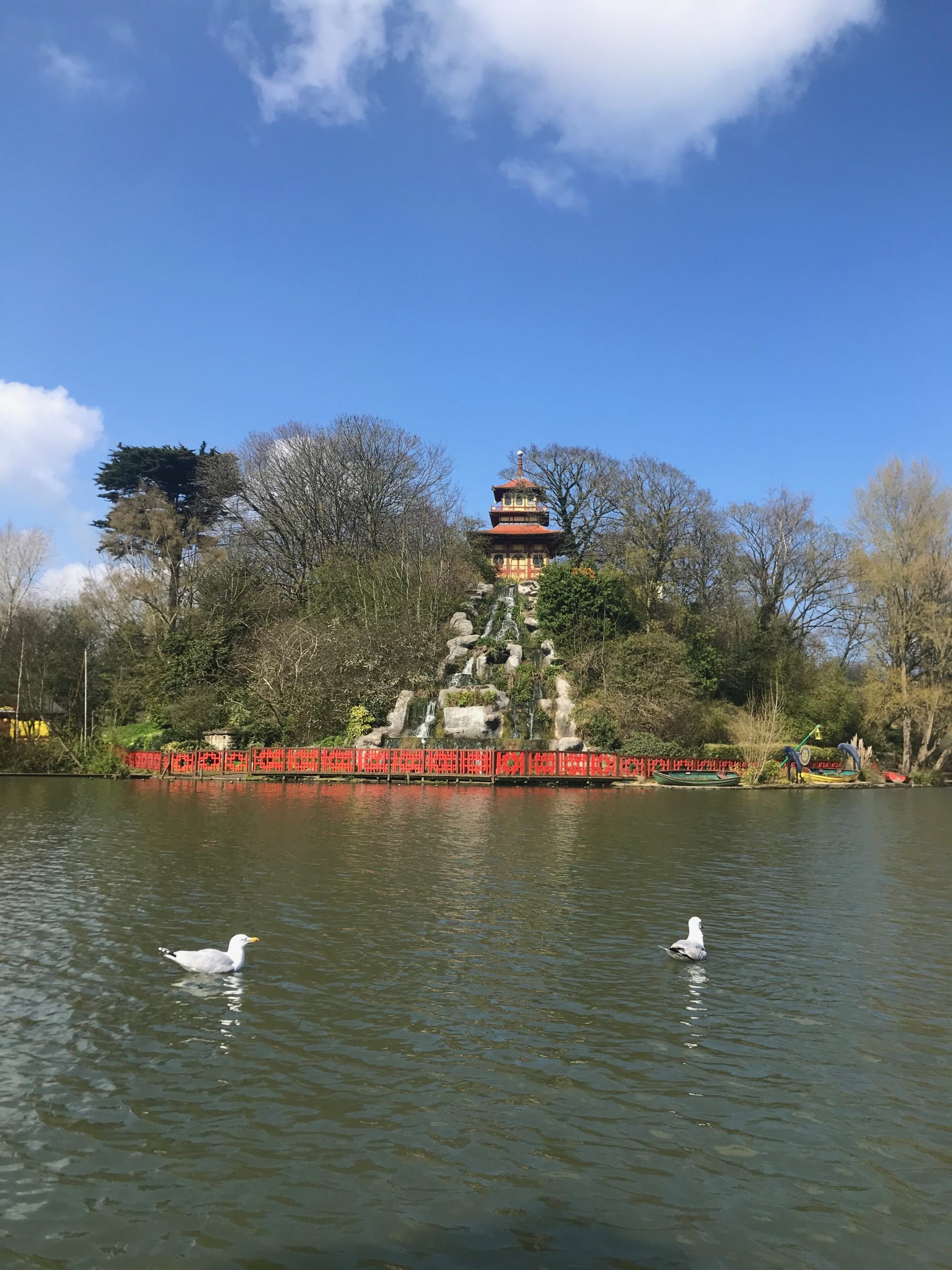
A view of the pagoda on the island in the middle of the lake at Peasholm Park. In front of it is a water cascade into the lake.

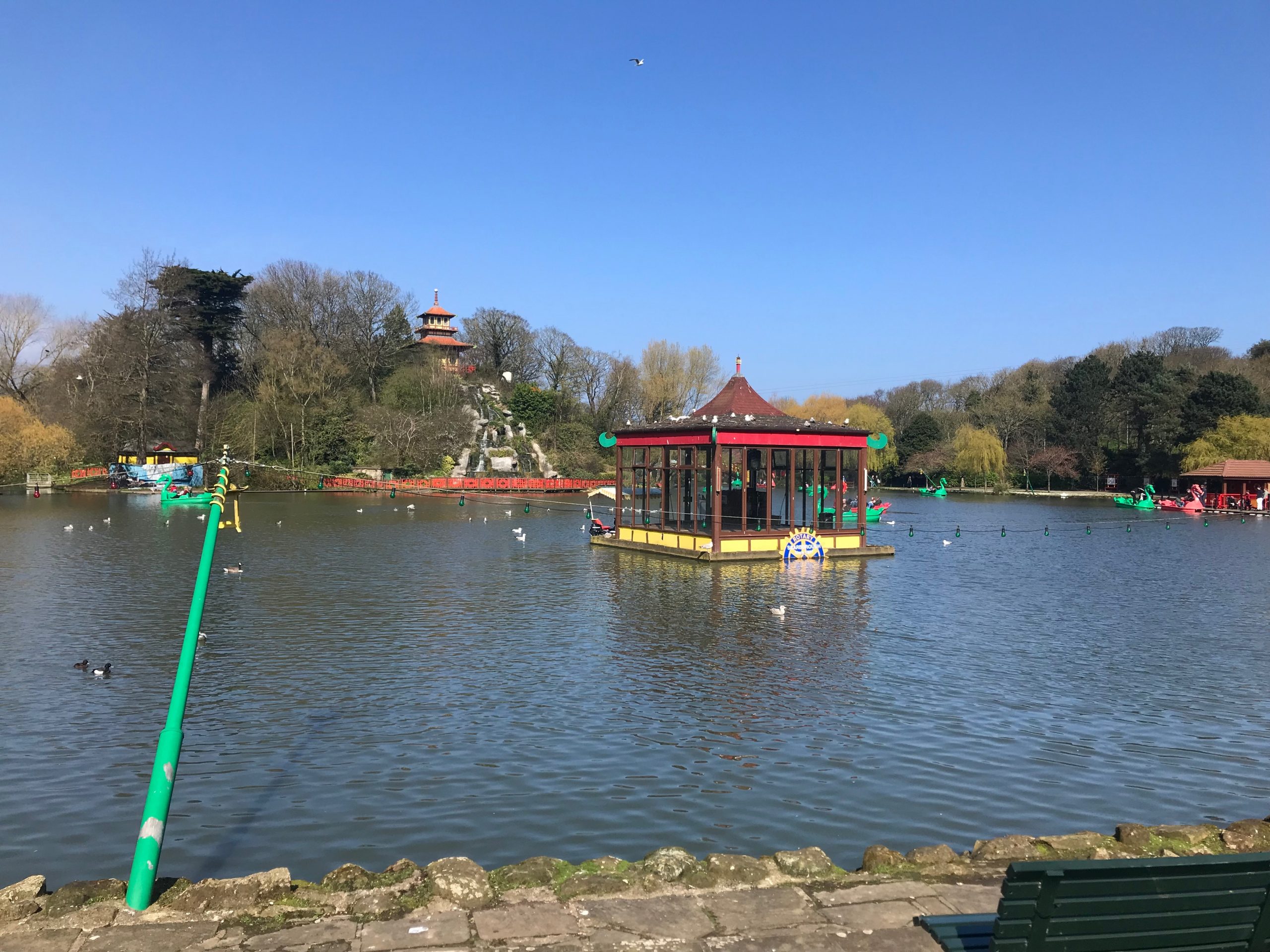
Peasholm Park is orientally themed, with a pagoda on an island in the middle of the boating lake there. It is said that the design of the pagoda is based on that seen on Willow Pattern pottery. With a waterfall leading from the pagoda down into the lake it is certainly not quite what you expect to see in a municipal park in a Yorkshire seaside town!

If you want to find out more about the history of Peasholm Park then the Peasholm Park Friends have a useful page on their website.

Visiting the park

Peasholm Park is free to visit and is open twenty four hours a day, 365 days of the year. As well as on street parking on neighbouring streets, and along the North Bay’s seafront, there is also a pay and display car park at the north end of the park, opposite the North Bay Railway.

What is there to do at Peasholm Park?

Peasholm Park offers so many different things for all members of the family. As well as just walking around and soaking up the atmosphere visitors can take in the Peasholm Glen Tree Trail which features rare and unusual trees. During one piece of restoration work the Dicksonian Elm, which was though to be extinct, was found to be growing in the Peasholm Glen.

The lake is a central part of the park and in season visitors can hire rowing boats or dragon shaped pedalos to go round the lake on. Hire tickets are purchased from one of the buildings near the lake before queuing up on the lakeside to take one out. I was delighted to see that lanterns are still strung along the edges of the lake, although we only visited during the daytime and so didn’t see them illuminated.

A view across the lake at Peasholm Park, Scarborough. In the distance you can see the Pagoda on the island in the middle of the lake. On the water are a variety of ducks and dragon pedalos.

There are plenty of benches for people to sit and take in their surroundings, and also an ice cream kiosk, a cafe, bandstand and a putting green. Signs point to a pitch and put course, but that seemed to be abandoned and overgrown when we tried to find it. Interestingly it still features though on North Yorkshire Council’s uninformative webpage on the park.

Naval Battles on the lake

Possibly one of the most surprising things that goes on at Peasholm Park are the naval battles on the lake. I’ve not been fortunate enough too see these in person, but three times a week in the summer the Battle of Peasholm is reenacted on the lake. 20ft electrical and man powered replica boats take to the water and since WW2 act out the Battle of the River Plate. It all sounds utterly bonkers and I do hope to return to see it for myself but until then I’m making do with this description and a couple of videos I’ve found on YouTube. The best has to be when it was featured on The One Show back in 2022 though.

What is nearby?

Whilst visiting Peasholm Park, you might want to see what else is in that part of Scarborough. Right across the road from the north end of the park is the North Bay Railway. This short train ride can take you right out to Scalby Mills Station, which is right next to the Scarborough Sealife Centre. It makes a great alternative to driving there.

That’s not all the North Bay Railway has to offer though. In the gardens next to Peasholm Station, you can also ride on the vintage Water Chute, go on the Sky Trail or take to the lake in a boat or a zorb ball. If all that sounds too strenuous you can also just pick up an ice cream and enjoy watching others.

A short walk from there takes you to the refurbished Scarborough Open Air Theatre. Built originally in 1932, the theatre actually closed in the 80s, but then 2010 saw the venue reopen after a major renovation. Now tube venue has welcomed the likes of Kylie and Westlive with Status Quo and Tom Jones due to play there in 2024.

It is also a short walk from the park along the north bay seafront where you can find crazy golf and a skate park as well as the usual array of ice cream vendors. Marine Drive is a fantastic spot for a bracing walk (and great for kids on scooters) and it’s a brilliant location to watch the waves come crashing in when the weather turns. Be warned though that if the sea is particularly wild then they will close the road for safety reasons!

What else is there to see and do in Scarborough?

Want to know what else we’ve got up to on previous trips to Scarborough? Then take a look here for posts covering things we have done in Scarborough over the years.

Filed Under: Scarborough

Central Tramway Company – Scarborough’s Cliff Railway

April 17, 2024 by Penny Leave a Comment

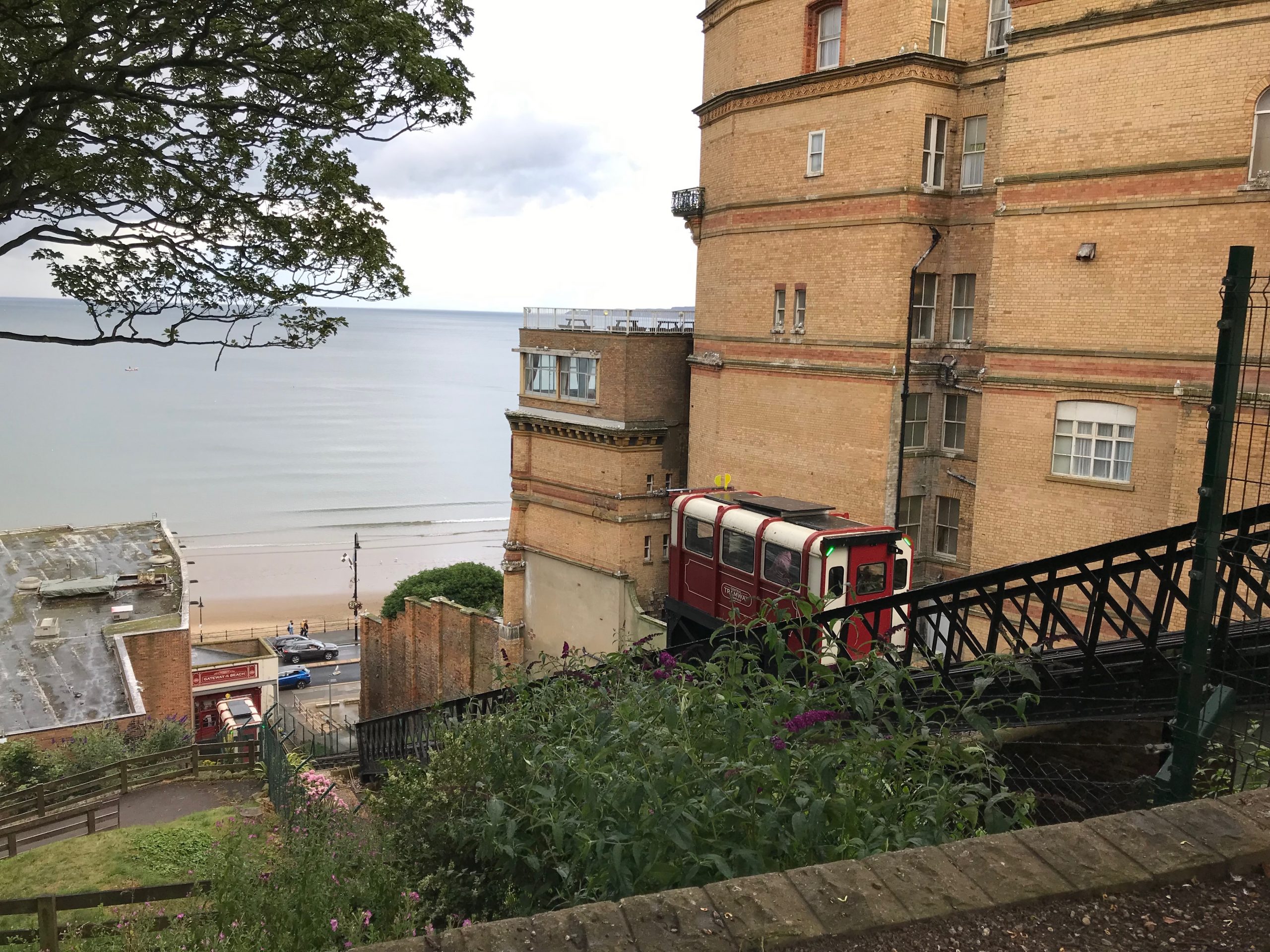
Scarborough is a popular North Yorkshire seaside town that many think of as on two levels. The bays are obviously at sea level, but the main part of the town with shops and accommodation is at the top of the cliff. Walking down to the bay can be quite nice, but the trip back up, especially after a long day is hard going. Even more so if you have children with you. There’s no wonder then that over the years Scarborough has had a total of five cliff lifts, or cliff railways, and two of them remain operational today. Possibly the most famous being the Central Tramway Company.

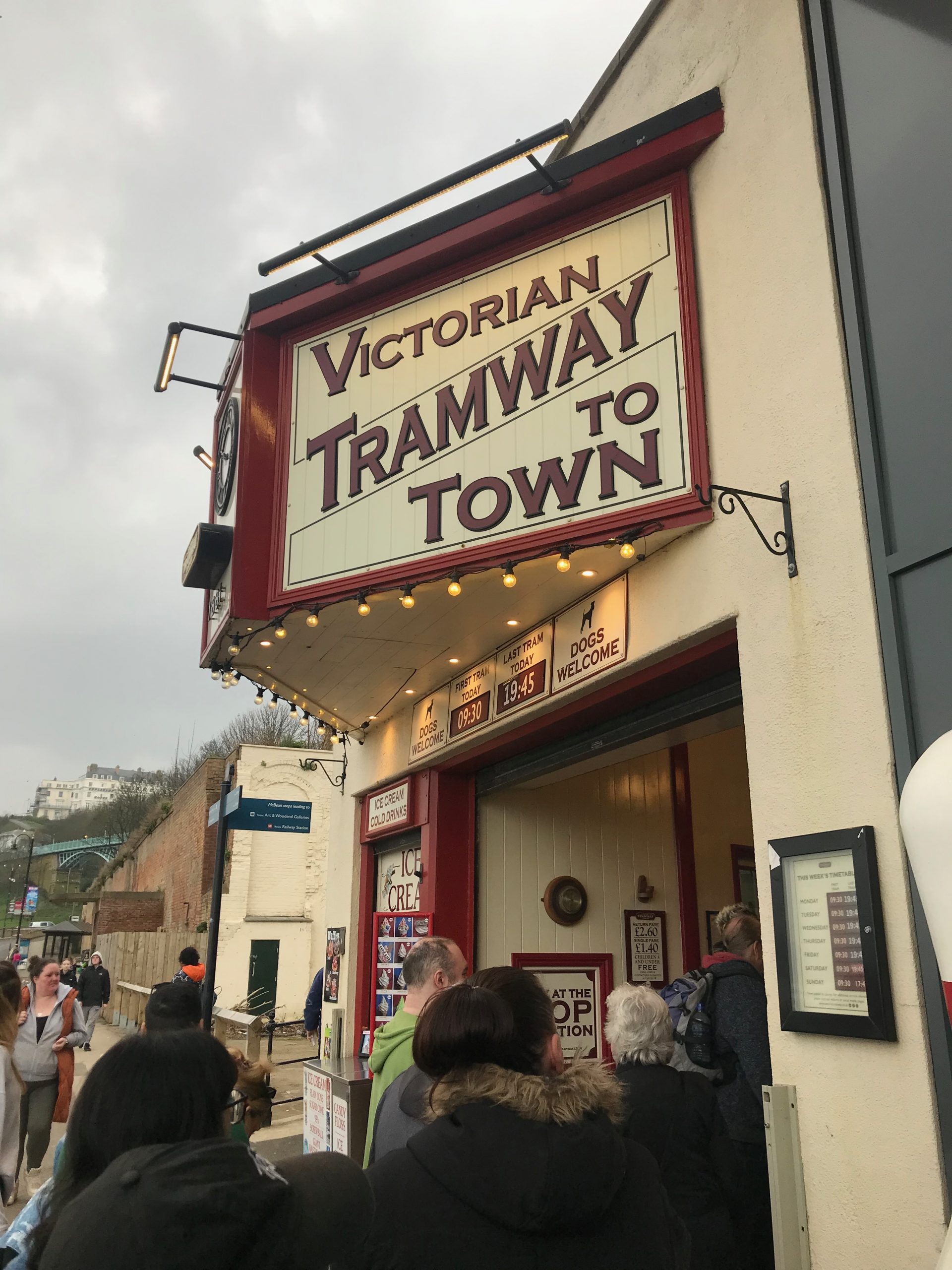
A picture of the outside of the lower station on teh Central Tramway Company. The sign reads Victorian Tramway to Town.
The entrance to the tramway on the South Bay

Where to find Scarborough’s Cliff Railway

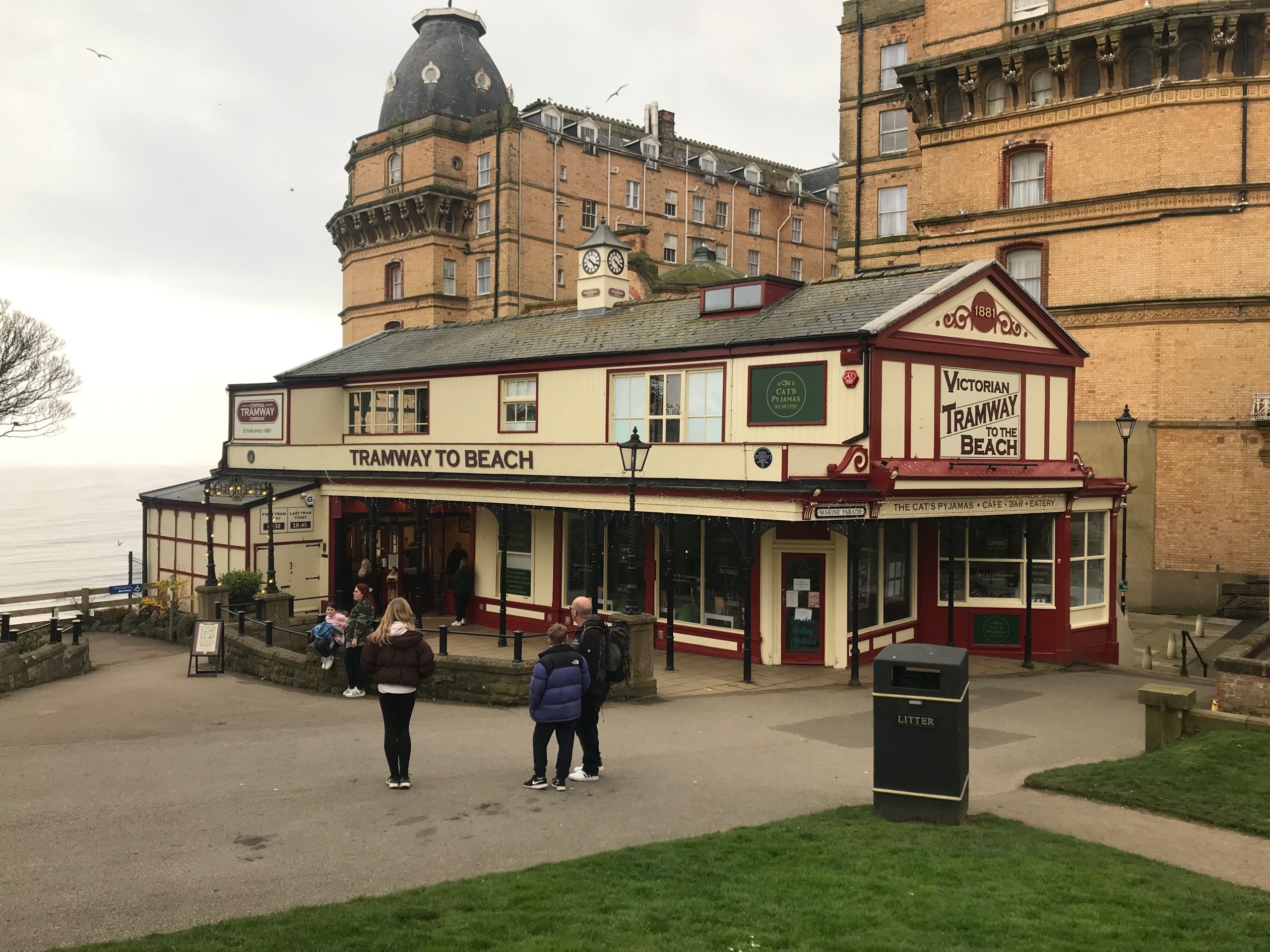
Running on Scarborough’s South Bay the top station is located between the Grand Hotel and the Town Hall and the bottom one is next to the massive Olympia amusement arcade. For most of the year the railway runs 7 days of the week, with only some weekday closures in December and January for maintenance. Normally open by 10am, the railway runs until 9.45pm in the summer months.

The history of Scarborough’s Cliff Railway

Originally built in 1881 the Central Tramway got its name because its was centrally located between two other cliff railways in the town – the South Cliff Tramway Company (now the Spa Cliff Lift, which is still operating) and the Queens Parade Cliff Lift (closed in 1887).

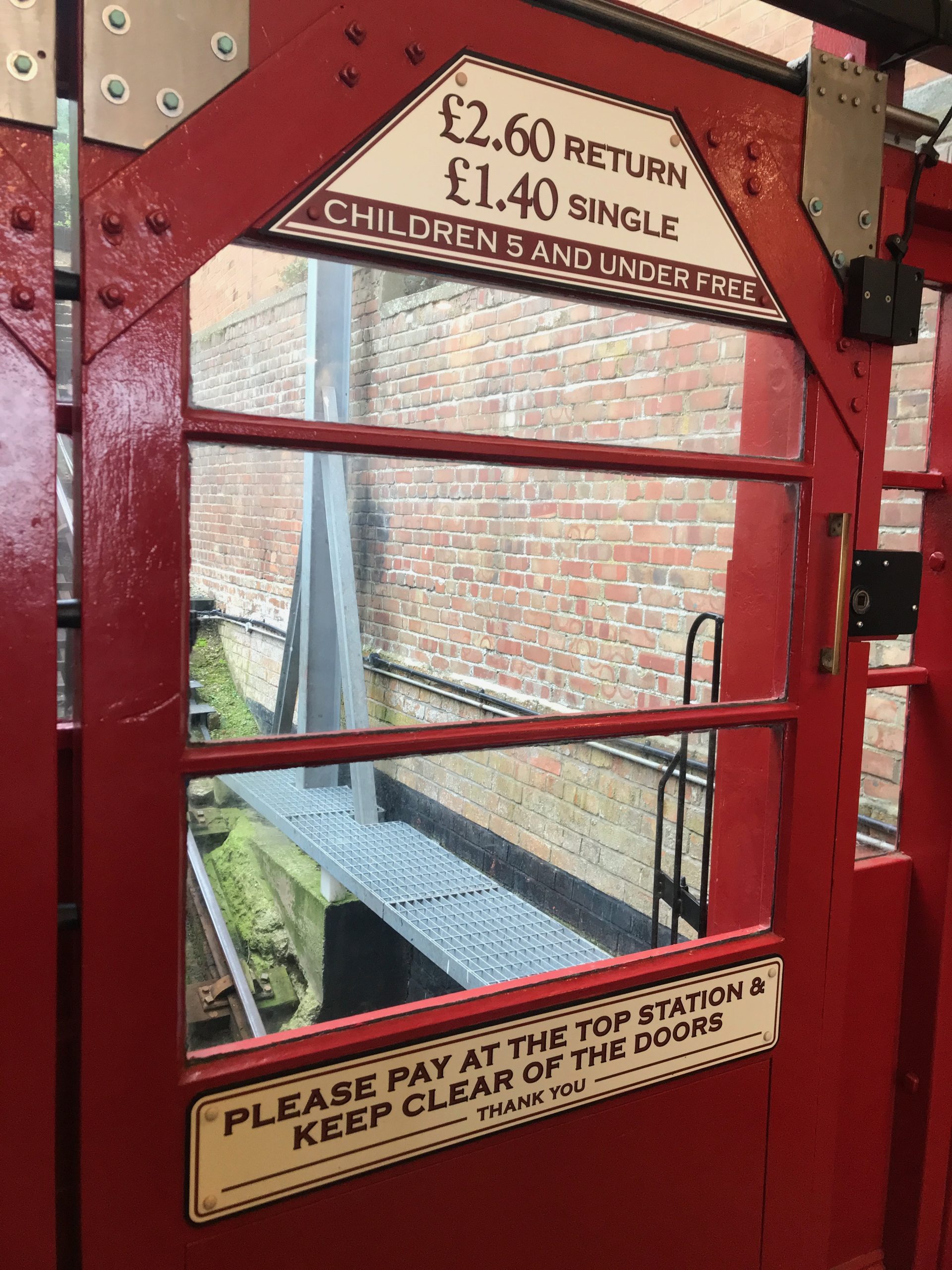
Inside one of the tramcars. Fares correct as of April 2024.

The first Tramway (the South Cliff one) linked the hotels of the South Cliff Esplanade with the panoramic South Bay beach and entertainment venue of the Spa and had been so popular with tourists that local business men were keen to repeat that success.

The Central Tramway Company now holds the position of the oldest surviving Tramway Company in the UK.

Technical facts

The gauge of the railway is 4 ft 8+1⁄2 in (1,435 mm) and there is a track length of 248 feet (76 m). There is a gradient of 1:2. The tramway being a funicular means that both cars are attached to each other with cables and as one car ascends the other descends.

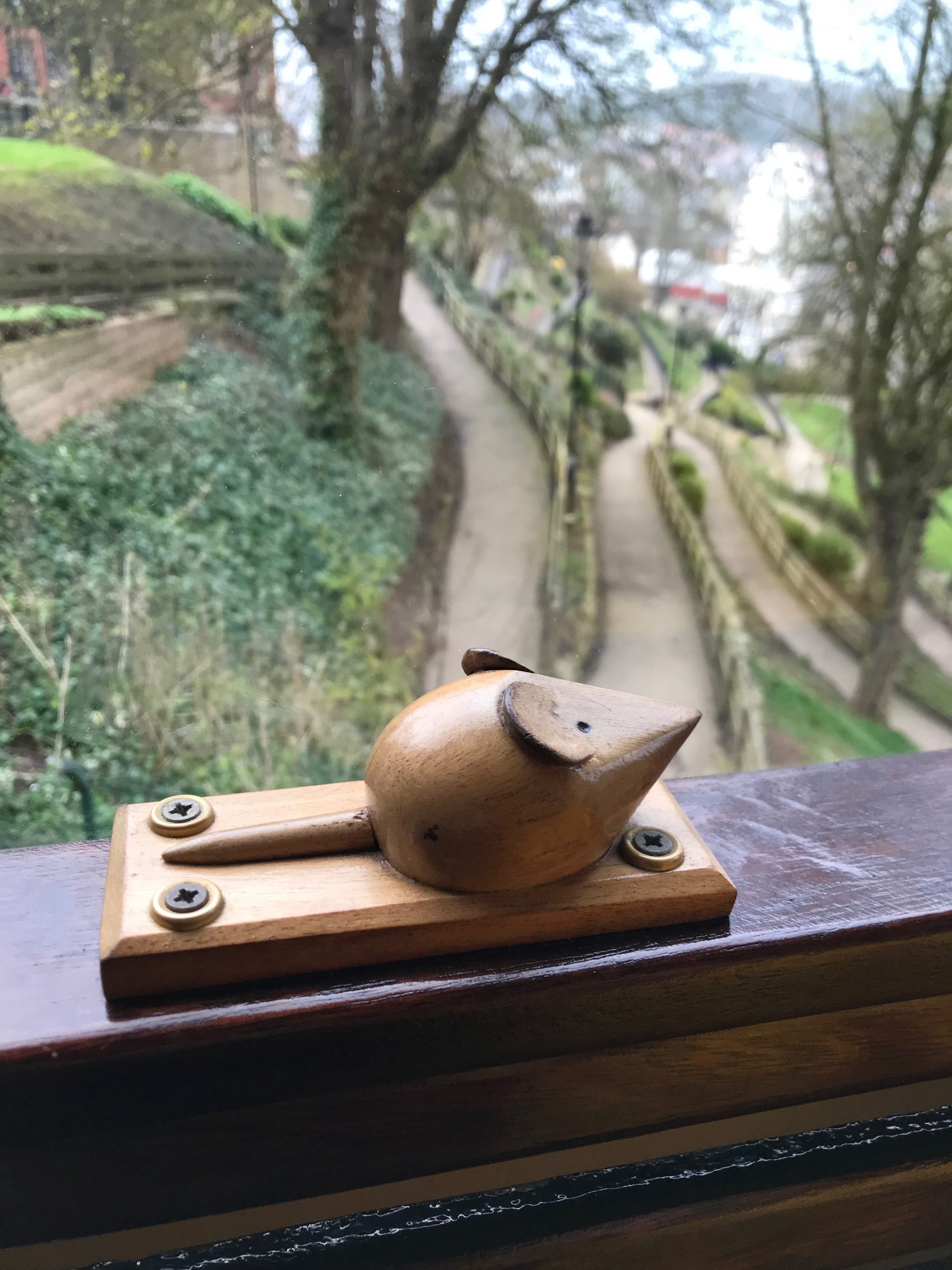
At the Central Tramway the two cars are named Grand and Olympia. They are identical (with the exception often placement of a small wooden mouse) and the names are mainly used for operational and engineering purposes to differentiate between the two. The cars are driven remotely by a driver who sits in a booth at the top station.

A carved wooden mouse sitting on a plaque on the window sill own a moving tramcar.
A wooden mouse found inside one of the tramcars

Tramway practicalities – when does it run and how much does it cost?

The Central Tramway provides an on demand service, so there is no need to book. Both stations have been through a significant refurbishment and make the most of their Victorian heritage in the way this has been done incredibly sympathetically. The two tram units themselves were refurbished in 2022 and, along with work to install a new Programmable logic controller drive system in 2019, means that the system makes the most of modern computer technology and the latest safety measures.

A picture of one of the tramcars half way down the tracks and the second car visible just starting its ascent. The bottom station and the sea can be seen in the background.
A tramcar leaving the top station in 2019

You pay for Scarborough’s Cliff Railway at the top station. If you’re coming up from the bay you pay upon exiting once at the top station. At the time of writing a return ticket costs £2.60 and one way is £1.40. Children 5 and under are free.

A picture showing the top station. The long building has a small clocktower on top, is mainly wooden in construction painted in cream and Burgundy. The words Tramway to Beach are along the side of the building and at the end it says Victorian Tramway to the beach.
The top station, located between the Town Hall and the Grand Hotel in Scarborough

At the top station is a small “shop” (more of a display unit with things to buy on it!) which is perfect if you want a little something to remember your trip from. Disappointingly, no sew on badges to be had, but sadly that seems to be the way in so many places lately.

For more details on the Central Tramway Company then take a look at their website.

Did you know?

Scarborough’s Grand Hotel, located near the Tramways top station) was spared from destruction in the Second World War as it is believed that Hitler had identified it as where he wanted to rule Britain from once he had invaded!

A fan of a cliff railway?

If you are then why not take a look at what we thought of the Southend Cliff Lift when we visited there and you can also read there about the difference between a cliff railway and a cliff lift, and so we should really be referring to this as Scarborough’s Cliff Funicular. Real cliff lift, railway and funicular fans may also be interested in this book which they were selling at the small shop they have at the top station, or this wider covering one.

Filed Under: Funiculars, North Yorkshire, Scarborough

October Half Term in Dunstable 2023

October 12, 2023 by Penny Leave a Comment

With the Half Term fast approaching I’ve been pulling together a local guide for October Half Term in and around Dunstable. There’s an obvious Halloween slant to some of the events being held, but it’s also possible to find some non-spooky attractions to take your little ones to.

In Dunstable

Pumpkin Party at The Quadrant Shopping Centre

Organised by Dunstable Town Council there is a FREE Pumpkin party taking place in The Quadrant Shopping Centre on Wednesday 25 October from 11am to 2pm. There’s a pumpkin trail, arts and crafts, face painting and spooky golf. Full details here.

Dunstable Library Halloween Party

Promising ghoulish games and creepy crafts, Dunstable Library is hosting a Halloween Party for children aged 8+ on Thursday 26 October from 6.30 – 8pm. Call the library on 0300 300 8056 to book your FREE ticket. There’s also a prize for the best fancy dress. Further details here.

Houghton Hall Park Halloween Potion Trail

Taking place on Sunday 29 October from 11am to 3pm Houghton Hall Park is hosting a Halloween Potion Trail for children aged 3+. “Houghton, the witches cat, is on a mission to find the missing recipe for his mistresses’ magic potion which has been jumbled up by the naughty Halloween ghost. With the aid of your magical spy glasses help him decipher the recipe then come back to the Visitors Centre to claim your prize and make your own potion!” The trail costs £6 per child and you must book a timeslot in advance vis their website here.

A Witch In the Woods at the Dunstable Downs

Running all week from Saturday 21st to Sunday 29th October The National Trust team at the Dunstable Downs is running a Witch in the Woods trail and craft activity for children. “Our resident witch needs a helping hand to bring the magic back to her woodland home. Make your very own wand and join us on this mystical trail down to Chute Wood”. This costs £3 per trail and craft and no booking is necessary, just turn up at the Visitors’ Centre. Full details here.

Spooky Afternoon Tea at the Dunstable Downs

Children can enjoy a scary sandwich, spooky sweet treat and spell-binding soft drink at the Dunstable Downs visitors’ centre from Monday 23rd to Friday 27th October from 12 noon to 3pm. This costs £8.95 per child (and £5.95 per adult – for coffee/tea and seasonal cake) and you need to book in advance which you can do here.

The Sooty Show at the Grove Theatre

Sooty, Sweep and Soo are celebrating 75 years in show business with a special party performance at Dunstable’s Grove Theatre at 2.30pm on Saturday 28 October. With tonnes of laughter and audience participation The Sooty Show is the perfect family trip out to round off half term. Tickets are available via The Grove Theatre’s Box Office here.

Forest School Session for SEND Children

A FREE Forest School session of activities and a hot chocolate and a biscuit for SEND children aged 3-7 and their families (siblings welcome up to the age of 12). CHildren must be accompanied by a parent/carer. This session will take place in all weathers so please make sure you are all dressed appropriately.

This event is run by Dunstable Children’s Centre, Oakwood Avenue, Dunstable and takes place there on Wednesday 27th October between 10.00am and 11.30am. Numbers are limited so please contact the children’s centre to book, or for any other enquiries. Call 0300 300 8104 or email dunstablechildrenscentres@centralbedfordshire.gov.uk

Sketch and Paint at Dunstable Library

A FREE event for children aged 5+, led by library staff that will include a range of different materials to use as well as guidance books and sheets. Book via the library. Either in person or on 0300 300 8056. Full details here.

Spooky Movie Night at Dunstable Library

Children ages 8+ are invited to Dunstable Library for a spooky movie night on Saturday 28 October from 4.30pm – 6pm. Tickets are FREE, but book via the library on 0300 300 8056. Full details here.

Just outside Dunstable

Boo at the Zoo at Whipsnade Zoo

Boo at the Zoo returns to Whipsnade Zoo from 21st to the 29th October with a theme of unseen animals – children will get to learn all about the animals who prefer nighttime. There are loads of activities including a halloween disco, a monstrous magic show, a costume contest, spooky storytelling, a ghoulish ghost tour, creepy crafts and pumpkin painting (an extra charge for this), a ghostly trail on The Great Whipsnade Railway (again, an additional charge for this), and animal talks about those nighttime preferring animals.

Normal zoo tickets are required (book here) and as pointed out above, some of the activities do have a separate charge. Full details of Boo at the Zoo are here.

Halloween Fun at Woodside Animal Farm

From Saturday 21st through to Sunday 29th October there is Halloween fun at Woodside Animal Farm in the form of finding witches and ghosts hidden around the farm to win a spooky treat, make a halloween decoration to take home and decorate a yummy spooky cookie. In addition, if you find the golden pumpkin hidden at the farm you can also win a super special prize. For an extra charge you can also pick your own pumpkin from their pumpkin corner. Tickets are £15 each for adults and children, and £5 for child members. Tickets for the Halloween Fun can be booked online here.

Freaky Fun Fest at Mede Open Farm

Running for the whole of half term week (21st to 29th October) the Freaky Fun Fest at Mede Open Farm gives you a Spooktacular family day out all included in your ticket price. There is a new new Freaky Flamenco Fiesta Circus and three spooky walkthrough attractions. Each child can pick a free pumpkin in their pumpkin patch and there’s a Monster Mash Mission to complete too. If you book your tickets online you also get a 20% discount on the gate price. Full details of the event are here, along with a link to book tickets.

In Luton

The Unscaredy Scaredy Cat Book Launch at Luton Hat Factory

Formy Books is holding a party to celebrate the publication of their new picture book – The Unscaredy Scaredy Cat. This FREE event is taking place at the Hat Factory Arts Centre on Saturday 21st October from 1 – 4pm and promises books, activities and goodie bags for the children. Full details here.

Hotel Transylvania at Luton Hat Factory Arts Centre

As part of the Family Film Club the Luton Hat Factory Arts Centre is showing the PG rated film Hotel Transylvania on Saturday 21st October at 10.30am. Tickets are £3.50 each (adult or child) or you can buy four tickets for £12. Tickets need to be booked in advance and you can do so here.

Steel Pan Workshop at Stockwood Discover Centre

Ever wanted to learn to play Steel Pan? This is your chance with a workshop at the Stockwood Discovery Centre on Tuesday 24 October. With a guidance of being suitable for children aged 6+ there are two workshops (11.30am and 2pm) but tickets are selling fast. They need to be booked in advance here.

Wow! Said the Owl at Stockwood Discover Centre

Based on Tim Hopgood’s picture book, Wow! Said the Owl is a magical combination of storytelling, puppetry and music for 2 to 5 year olds at Stockwood Discovery Centre. There are two performances on Sunday 22nd October (11.30am and 2pm) and tickets should be booked in advance here.

African Drumming Workshop at Stockwood Discovery Centre

A child only workshop for children aged 6+ at Stockwood Discovery Centre on 26 October gives children the opportunity to the beautiful djembe drums and learn the intricacies of playing West-African rhythms. The costs £6 per child (plus booking fees) for a 1 hour workshop and you can book in advance for either the 11.30am or 2pm sessions here.

All Aboard! Ship Inspired Carnival Costume Making at Stockwood Discovery Centre

The UK Centre for Carnival Arts is running a ship inspired carnival costume making session at the Stockwood Discovery Centre on Wednesday 25th and Friday 27th October. All ages are welcome and there is a charge of £4 per child for the 1 hour session. There are four different time slots each day (11.30am, 12.30pm. 1.30pm and 2.30pm) and you can book in advance here.

In St Albans

The Big Draw at St Albans Museum and the Verulamium Museum

The St Albans Museum and Gallery and the Verulamium Museum in St Albans are both taking part in The Big Draw during October half term. The theme is “drawing with senses” so pick up a pack at the front desk and try some of the suggestions as you explore and draw. At the St Albans Museum head up to the Assembly Rooms where on Monday – Friday there will be some drawing activities for your to try. Admission to the St Albans Museum is free. There is a charge to visit the Verulamium Museum if you are not a St Albans resident. Suitable for all ages. At the St Albans Museum The Big Draw is available Monday 23rd to Friday 27th October from 11am to 5pm. At the Verulamium Museum it is 12 noon to 4.30pm Monday to Friday and additionally 11 am to 3.30pm on Saturday 28th October.

Paint your own Mug at the St Albans Museum

To fit in with their Time for Tea exhibition children age 8+ are invited to paint their own mug on Tuesday 24th October at the St Albans Museum. All materials and instructions will be provided at a cost of £7.50 per child. You will need to place your mug in the oven at home afterwards to make it dishwasher proof. The sessions run either at 1.45pm – 3pm or 3pm – 4.15pm. Pre-booking is essential here.

Make your own Tea Pet at St Albans Museum

Apparently in the Gong-Fu tea ceremony there is often a small figurine on the side of the tray, made from leftover clay, to keep the drinker company, meaning they never drink alone. This is a tea pet. Children aged 5+ will be able to learn all about tea pets before making one of their own out of polymer clay. You’ll then need to take your pet home and pop them in the oven to make them hard. Sessions run from 1.45 – 2.45pm and 3 – 4pm on Wednesday 25th October at the St Albans Museum. Pre-booking is available here.

Make a Roman Oil Lamp at the Verulamium Museum, St Albans

Children aged 4+ are invited to the Verulamium Museum in St Albans on Thursday 26th October to make a clay lamp, just like those the Romans used to use to light their homes, fuelled by olive oil. Sessions run at 10.30am, 11.30am and 12.30pm at a cost of £5 per lamp. Please note that you will need to pay museum admission on top of this charge. Pre-book here.

Toddler Tales at the Verulamium Museum: If I had a Vampire Bat

Part of the monthly Tots Tales session at the Verulamium Museum on Friday 27th October the focus story is If I had a Vampire Bat. Children between the ages of 2 and 4 are invited to enjoy the story before learning all about vampire bats and take part in some seasonal spookiness. £5 per child(ren) attending. Sessions at either 10.30am or 1.15pm. Pre-booking is available here.

Further afield

Nocturnal Animals at the National History Museum, Tring

A half hour session for children aged 5+ to immerse themselves in the world of nocturnal animals and get hands on with the museum’s specimens. Tickets cost £2 each and can be purchased from the shop on the day. Sessions run at various times on Tuesday 24th, Wednesday 25th and Thursday 26th October. Full details (including session times) are available here.

Apple Pressing and Juice Tasting at the National History Museum, Tring

As part of Tring’s famous Apple Fair, visitors get the chance to peel, core, cut and squeeze apples to make tasty apple juice, before giving it a taste test in the museum’s outdoor area for FREE on Friday 27th October from 10am to 3.30pm. Full details here.

Museum by Torchlight at the National History Museum Tring

On Friday 27th October the National History Museum at Tring is opening its doors after hours for children aged 5+ to explore the galleries by torchlight. Fancy dress is encouraged and children can also create their own scary animal to take home. For £1 there is an additional spooky challenge they can complete. Tickets are FREE buy need to be booked here.

Waddesdon Manor’s Haunted Half Term

For all of half term children get into the house and grounds at Waddesdon for free with a paying adult. There’s a Trick or Treat Skeleton Trail (£3 per child) where children have to find spooky skeletons around the grounds and work out if their skeleton facts are trick (false) or treat (true). There’s a sweet treat from the Waddesdon chef as a prize at the end for correct answers.

On the 21st and 22nd October Zoolab allow you to get up close end hands on with exotic animals in they Creepy Critters show. Suitable for all ages the shows take place at 11.00am, 11.55am, 12.50pm, 2.20pm & 3.15pm. A small event charge is advised and pre booking is essential.

There is a face painter on site on the 28th and 29th October to help children have a spooky makeover. Separate charges apply for this.

Details of all the Waddesdon Haunted Half Term activities are available here along with details of (a rather pricey!) Spooky Afternoon Tea in the Manor Restaurant.

Half Term activities at Milton Keynes Museum

In addition to the regular hands on activities for kids at the Milton Keynes Museum they will also be open all week with spooky Halloween themed crafts and pottery workshops. The Concrete Circus will also be returning to the Museum to keep everyone entertained with workshops throughout the week. Full details here. Usual ticket prices apply, but remember that you pay once and then can return for a year at no additional cost. If you go now your ticket will also cover Christmas opening and all next summer holidays!

All details were correct at the time of writing, but please do go and check with the event organiser beforehand. Penny Travels takes no responsibility for changes that take place after the publication of this article. October Half Term in Dunstable.

If there’s a local event that I haven’t included here then please drop an email to penny@pennytravels.co.uk

Filed Under: Bedfordshire, Local Things To Do

Bletchley Park

September 15, 2023 by Penny Leave a Comment

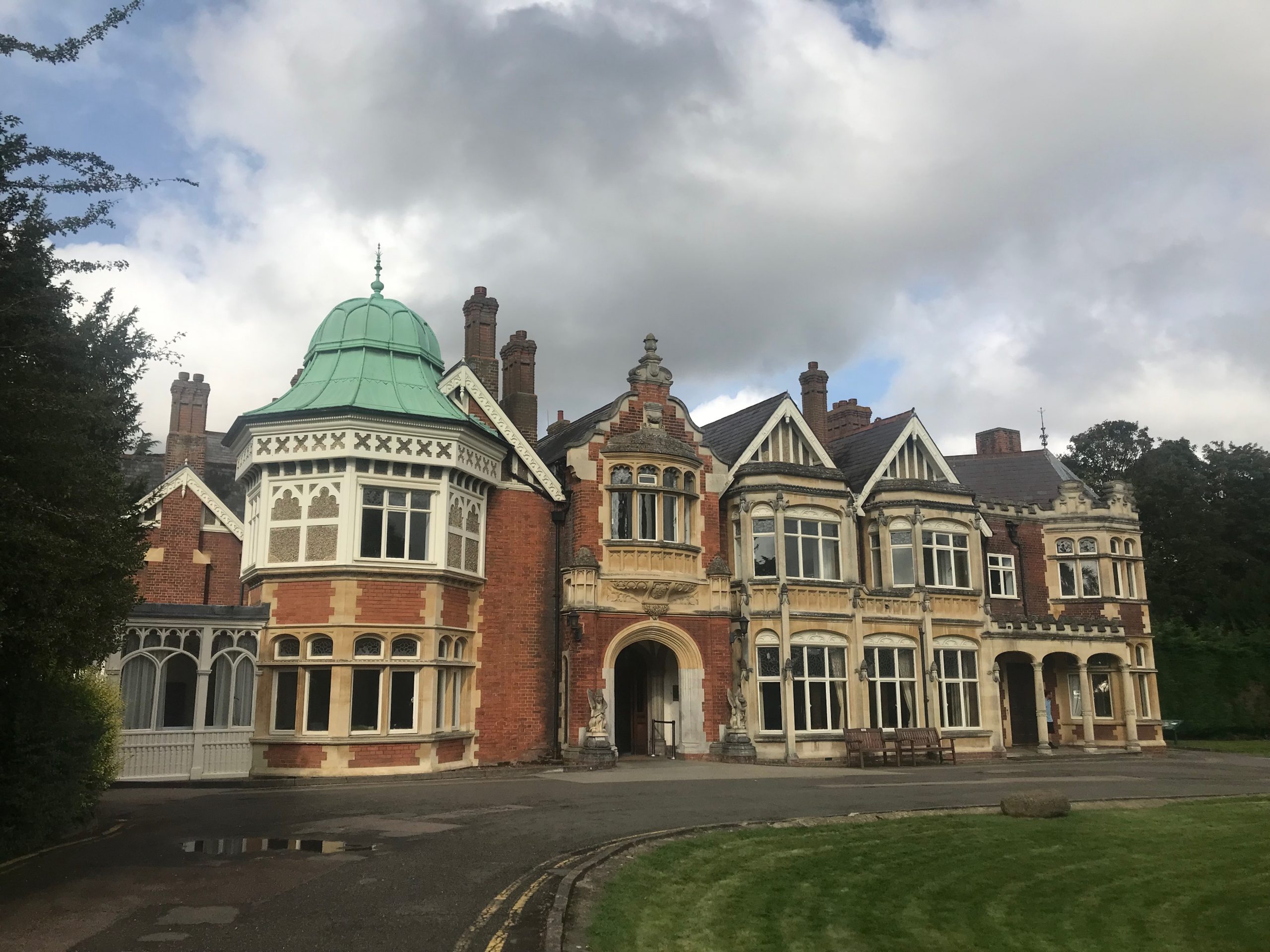
Bletchley Park, just outside Milton Keynes, was the wartime secret home of Britain’s code breakers. It has gone from a place whose very existence wasn’t ever acknowledged to a top visitor attraction, and in my mind it’s a must visit for anyone with an interest in war time history.

The front of the Manor House at Bletchley Park

What was done at Bletchley Park?

During the Second World War, Bletchley Park was the centre of all Allied code-breaking efforts. It housed the Government Code and Cypher School (GC&CS) who worked to decode the communications of Axis powers. Most famously they cracked the German Enigma and Lorenz codes at Bletchley. The GC&CS later turned into what is today known as GCHQ – the Government Communication Headquarters.

Bletchley employed some of the brightest minds available, but with the vast number of messages that needed decrypting it was soon realised that working through everything manually was simply not sustainable. Instead they started developing machinery to help with decryption and this work culminated in the development of Colossus, the world’s first programmable digital electronic computer.

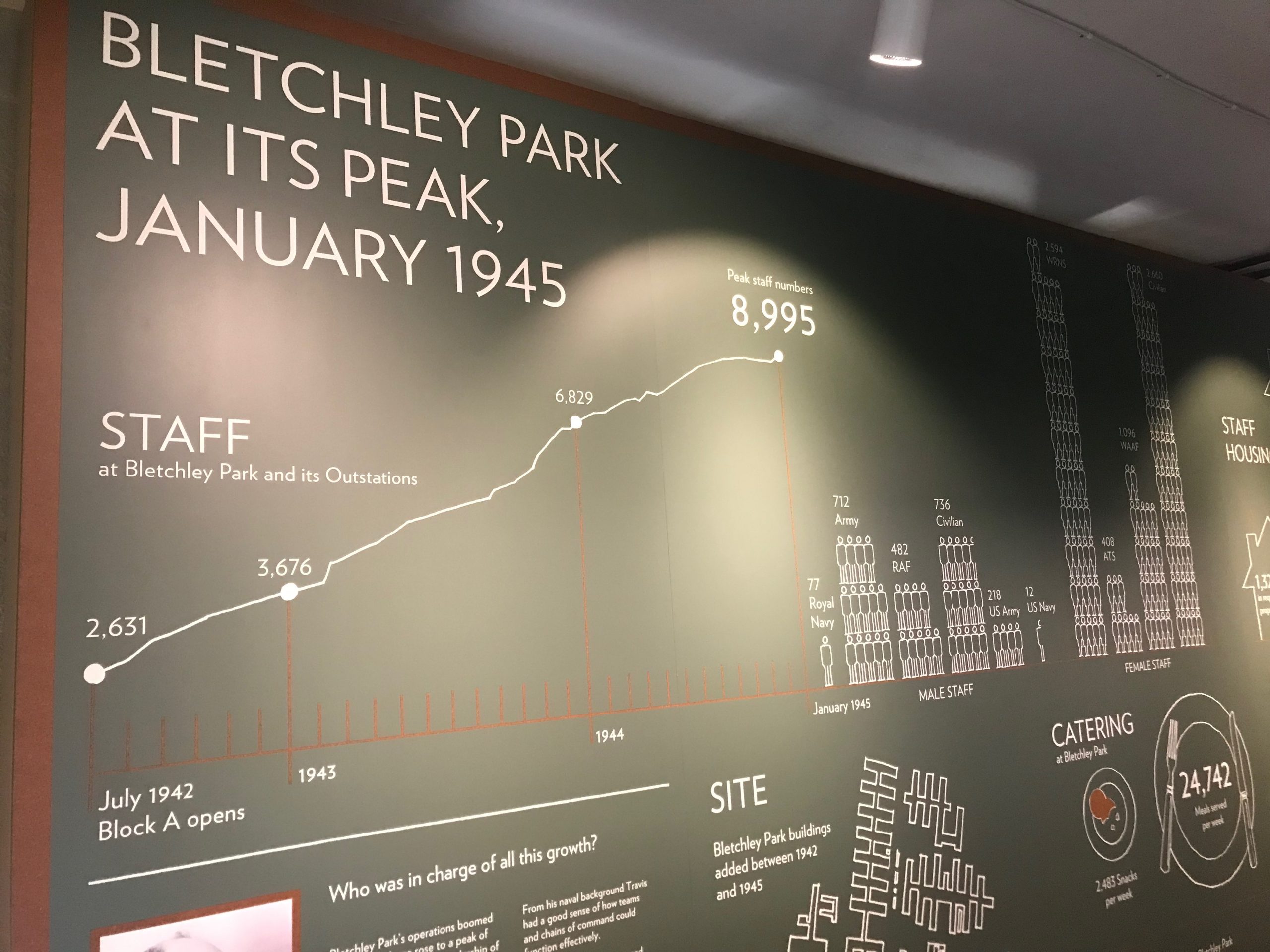
Part of an infographic showing a variety of numbers about Bletchley Park. This includes the number of people working there, where they came from in terms of previous roles and whether they were male or female.

At its peak nearly 9,00 men and women (the majority women) worked at Bletchley, and it is thought that the work they did helped to shorten the war by between two and four years. It’s incredibly really just how much was done there, in absolute secrecy from those living outside the park.

The physical location of Bletchley Park was perfect because it is situated close to Bletchley train station, which was then on the Varsity line which ran between Oxford and Cambridge. Students and graduates from both these universities were exactly the kind of people that they wanted to work at Bletchley. Bringing with them incredible skills in mathematics, logic and languages.

Saving Bletchley Park

Today we know all about the work that was done at Bletchley Park and even those who haven’t visited might be able to speak of Enigma and even know that Alan Turing worked there. There was a real risk though that the Bletchley Park story might have gone untold. In 1990 the huts at Bletchley were being considered for demolition and had it not been for the work of the Bletchley Park Trust (formed in 1992) it is quite possible that the whole site might have been redeveloped.

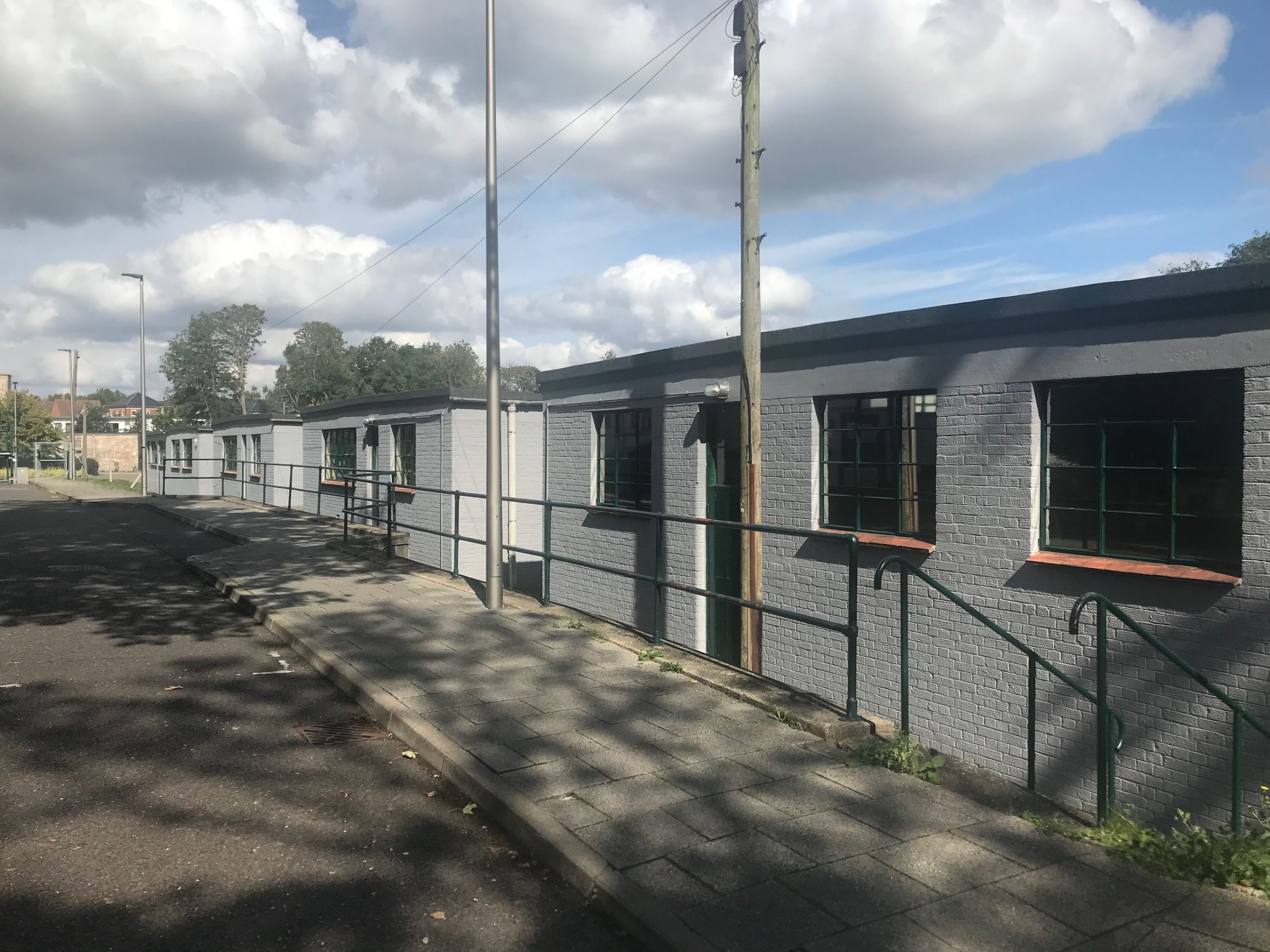
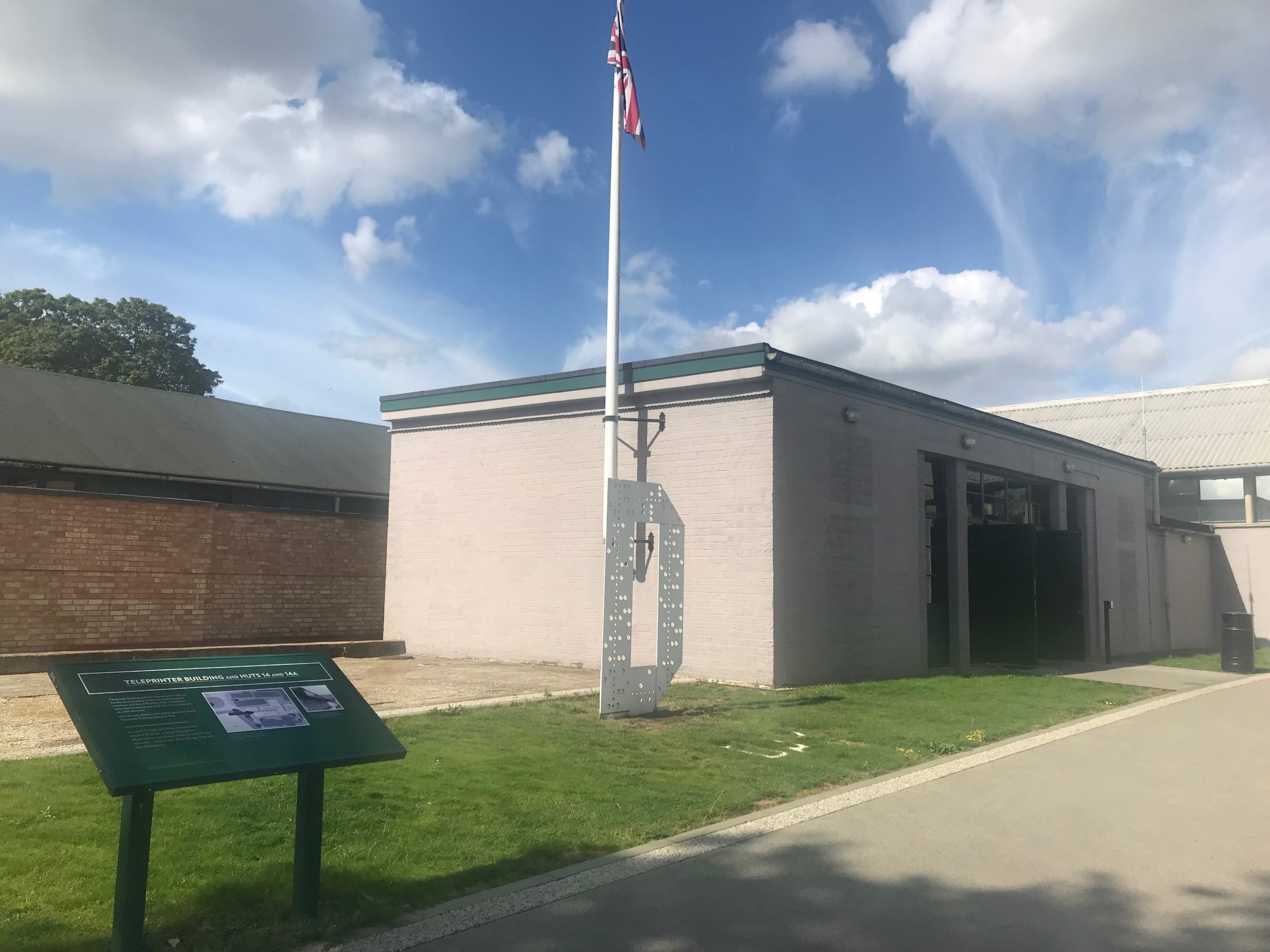
Grey nondescript looking squat government buildings. They have a bit of a military look about them.

Funding remained a huge issue and great efforts went into approaching large technical companies whose own existence stemmed from some of the work done at Bletchley. Most notably Google who donated £550,000 and in doing so helped to unlock £4.2m from the Heritage Lottery Fund.

The Covid pandemic also had an impact on Bletchley and has affected some of their plans going forwards due to reduced visitor numbers during lockdowns and subsequent restrictions. Facebook were one of the companies that provided a financial contribution to help them recover from the pandemic.

Bletchley as a visitor attraction

In the end it was an £8 million restoration project that resulted in Bletchley Park opening as a visitor attraction in June 2014. Nearly ten years later it is now an award winning visitor attraction which tells an incredibly important story about the site’s role in World War Two, along with the stories of the men and women who worked there.

Open every day (with only three exceptions at Christmas) it is obviously an attraction that appeals to those with an interest in wartime or military history, but its appeal goes wider than that with the way that it includes exhibitions on the technology and also the social history around its years of operation.

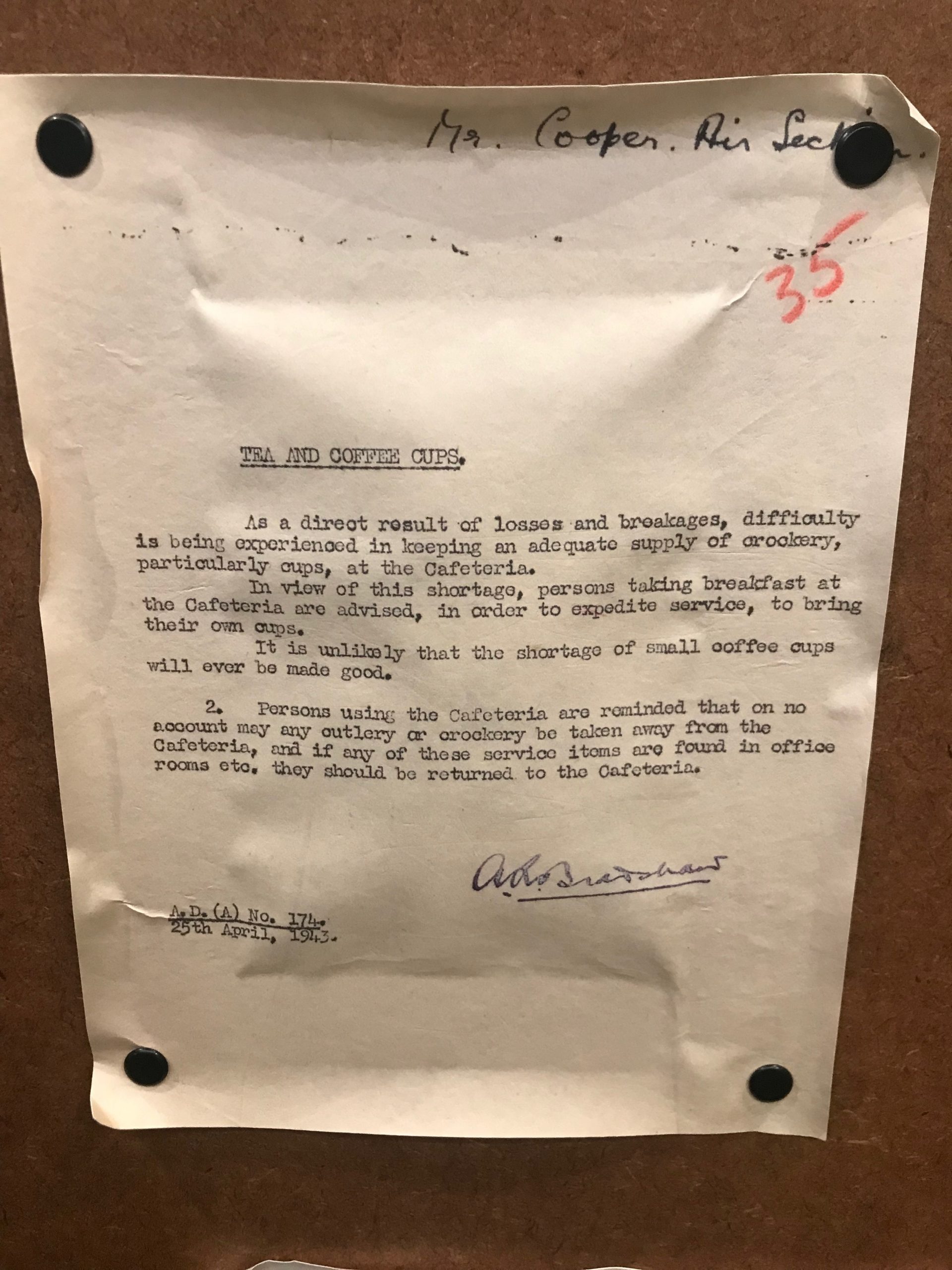
There are some lovely little personal touches to give you an idea of how they managed to run such a large operation there, and the lives of the people who worked there. A favourite of mine has to be this meno about tea and coffee cups.

A memo about a shortage of coffee cups at Bletchley Park.

Visiting Bletchley Park

It is impossible to summarise in just one blog post everything that there is to see at Bletchley Park. There are so many different exhibition spaces that you could easily spend a whole day at Bletchley and still come away thinking that you haven’t had chance to see everything. It’s for this reason that your ticket is actually valid for a whole year, and this is something that I will definitely be taking advantage of over the next twelve months. My most recent visit overlapped with my mum going there on a trip of her own, so some of our time was spent chatting over a cup of tea in the cafe. As a result I only really got time to properly so three sections. There are so many wonderful hands on exhibits that help you understand code breaking and forming intelligence from what you intercept that you could easily spend days doing everything there.

Multimedia Guides

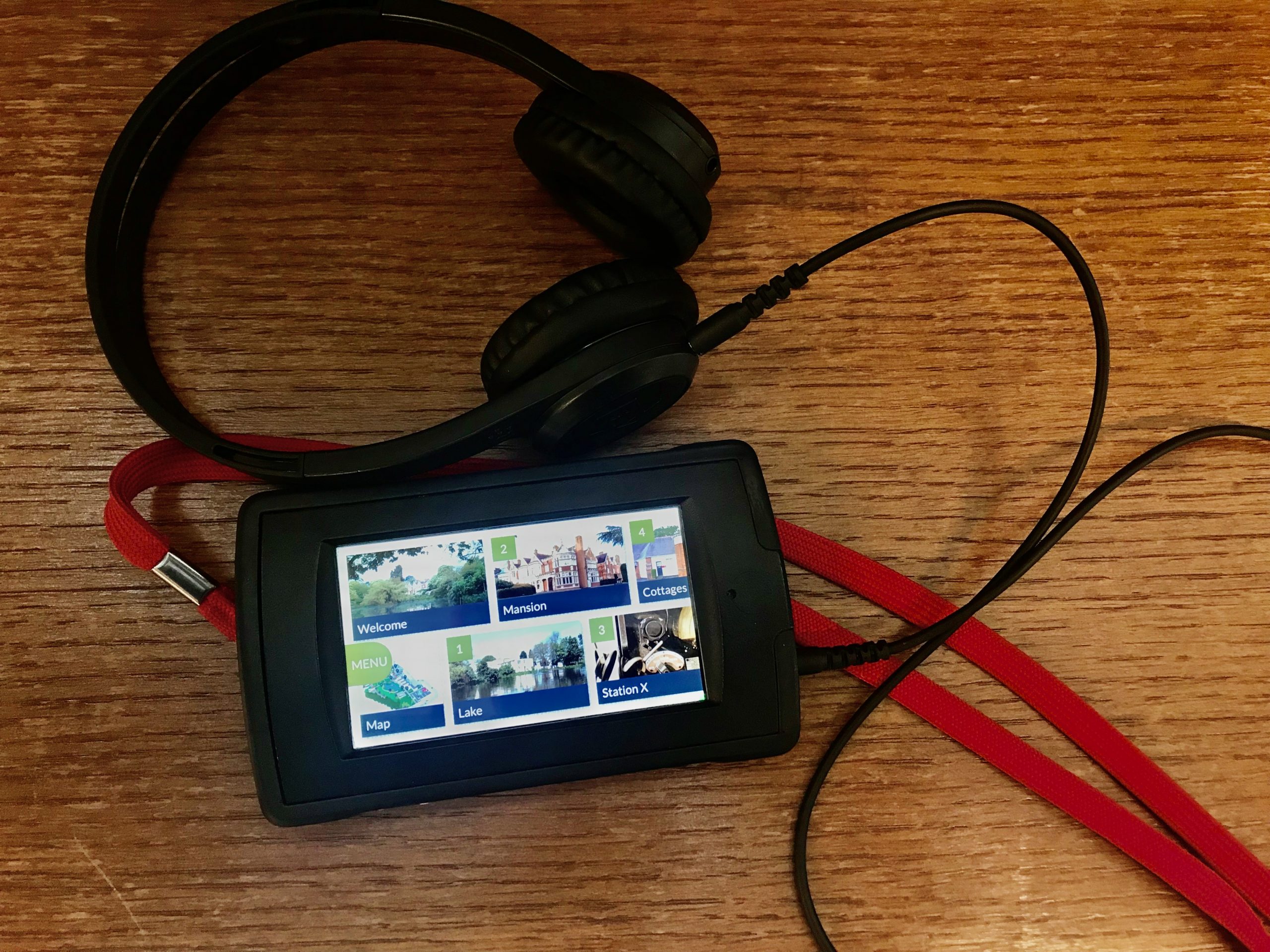
A phone sized multimedia device with headphones plugged into it. On the screen you can see a variety of menu options including mansion, lake and station x.

All visitors are offered a free multimedia guide to use during their visit. This phone sized device has headphones and a lanyard so that you can wear it round your neck. Available in several different languages, there is a simple to use picture menu that allows you to choose points around the site in your own order. There are videos and eye-witness accounts from people who worked at Bletchley and it really does enhance your visit.

Practical Visitor Information

Bletchley Park’s own website contains much of the information that you might need to plan a visit. Everything from opening hours to ticket prices. You can also book admission tickets online. It is worth noting that if you are a local resident (postcodes within a 10 mile radius) then you get a 50% discount. There are also reductions for English Heritage members. Under 12s are free of charge.

Whilst young children are welcome and might enjoy some of the hands on exhibits and the play area I honestly think that older children and adults would get more out of the museum if they are able to concentrate on what they are seeing there. This is not meant to be an anti-children statement – I’m a mum of three – but just a practical point based on my own visitor experience. There is so much to take in and absorb that trying to do so whilst having an eye on a young child is very hard.

The outside of a low squat building which contains an exhibition about the park's role in D Day.

As well as two cafes and an outdoor snack bar there are a large number of picnic benches on the lawn near the lake that people can picnic at. For something a bit special it is also possible to book afternoon tea at the Manor House on most weekends.

The gift shop contains a range of war time related souvenirs alongside a wonderful range of books and puzzle books. I quite simply could have spent a fortune in there!

The Bletchley site is large, so make sure that you wear decent footwear when visiting. Toilets are located at numerous points around the site and are generally well marked on maps and signs. In generally accessibility is good with automatic doors and ramps to get into buildings. Most of the videos have subtitles and I spotted large print guides in various areas. Further accessibility information is available on their website.

Want to visit somewhere else local?

Why not take a look at where else I have visited in Buckinghamshire, or the neighbouring counties of Hertfordshire and Bedfordshire.

Filed Under: Buckinghamshire, Museums

Oxford University Museum of Natural History and the Pitt Rivers Museum, Oxford

September 7, 2023 by Penny Leave a Comment

When you visit Oxford you can be forgiven for being dazzled by all the University’s spectacular architecture and all the historic colleges, but make sure you don’t forget about the city’s museums. The Oxford University Museum of Natural History and the Pitt Rivers Museum may be two separate museums, but they are co-located on the same site, and to get from one to the other it really is as simple as walking through an interconnecting door.

Oxford University Museum of Natural History

When you arrive at the museum site it is the Museum of Natural History that you will visit first, for the simple fact that you have to walk through it to get to the Pitt Rivers Museum.

As you walk up the steps and into the main museum hall, the size, height and brightness of the hall takes your breath away. Especially on a sunny summer’s day like the one we visited on.

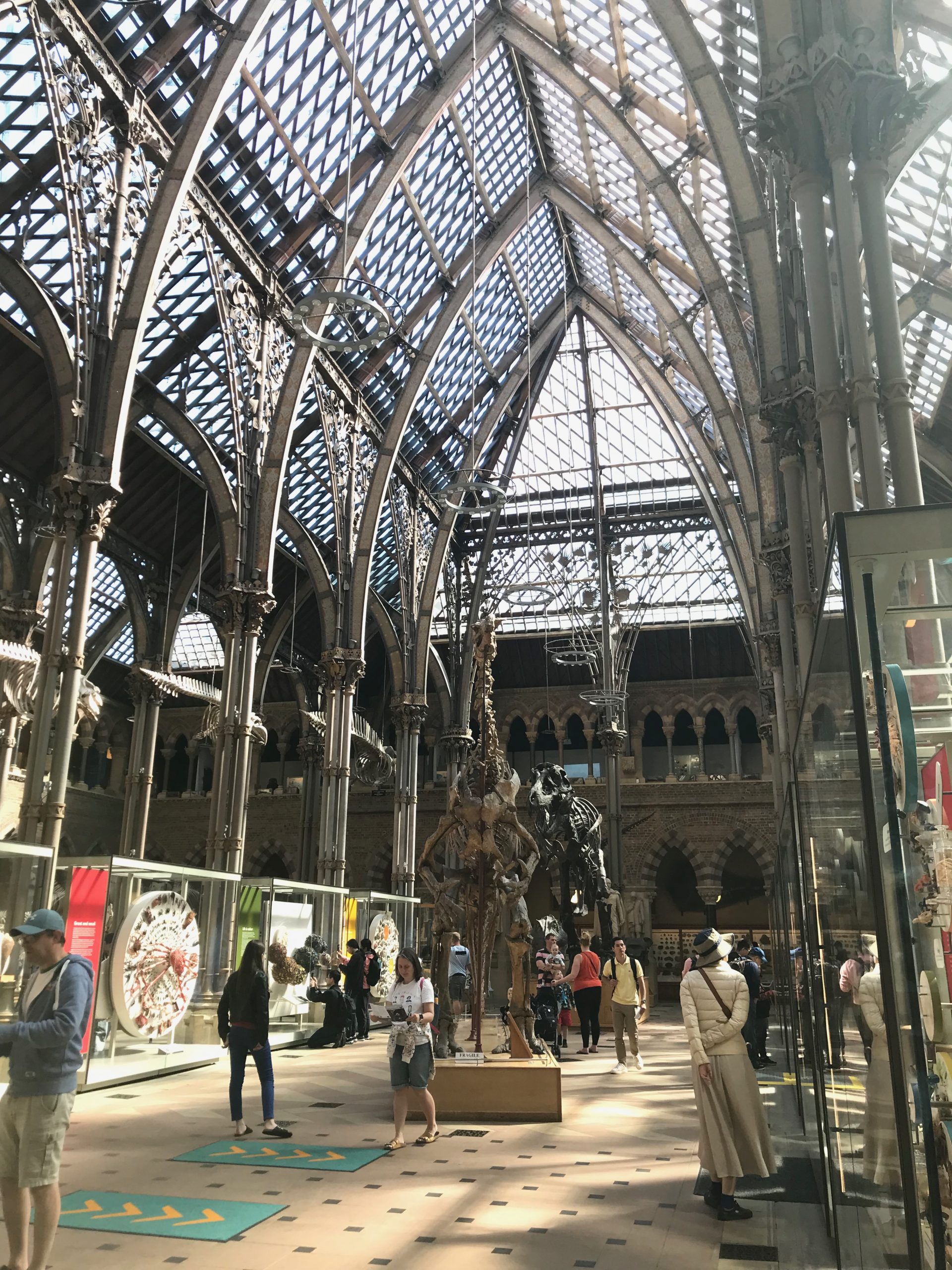
The main hall of the Oxford University Museum of Natural History. It shows a tall space, more like e railway station than a museum, with light flooding in through a glass ceiling. Various Natural History exhibits can be seen in the foreground.

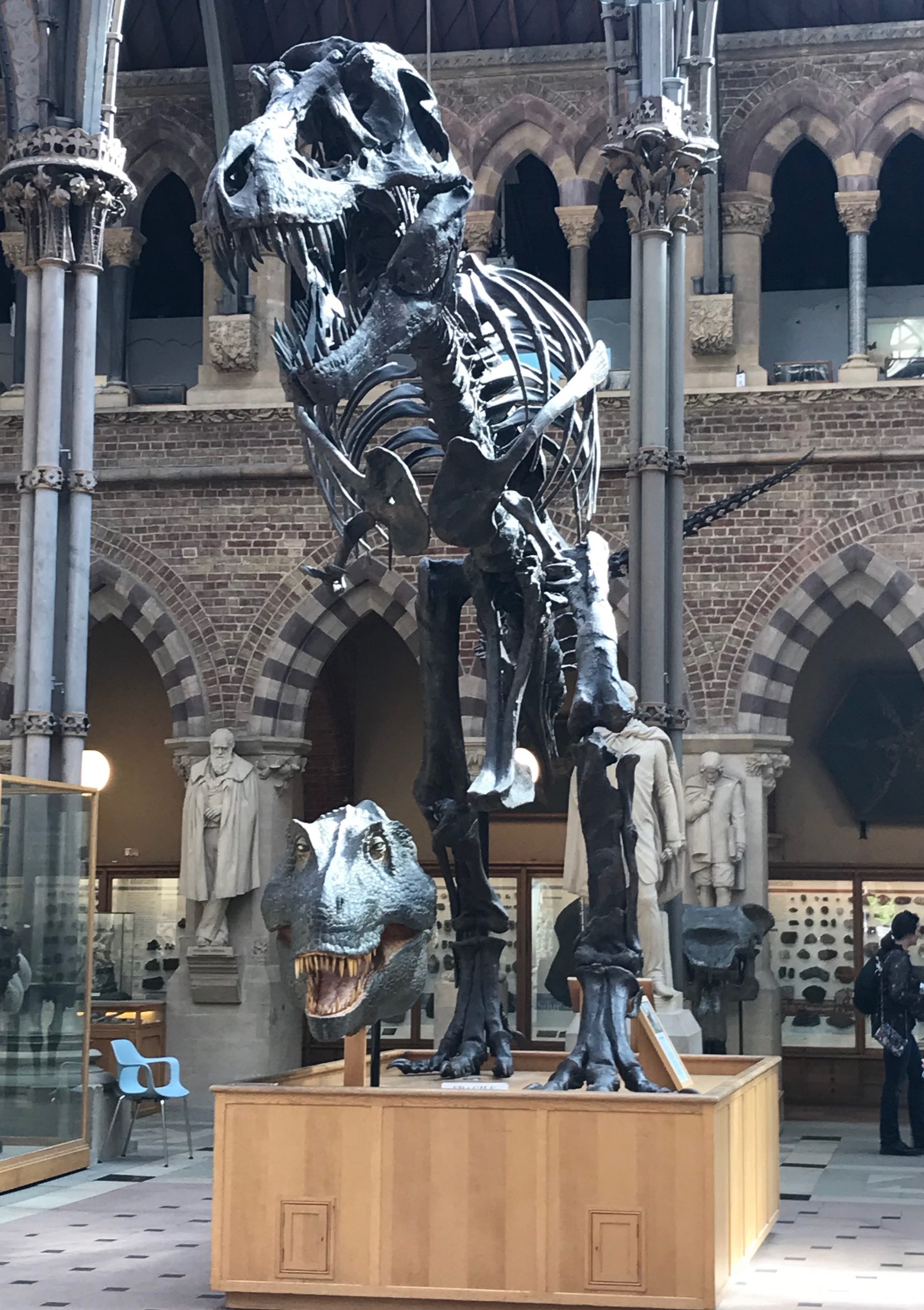
I’m not going to pretend that it can compete with the scale of London’s Natural History Museum, but if you’re looking for somewhere a bit more compact then this is actually the perfect museum to visit. Most importantly for many little ones visiting – there are dinosaurs!

What is there to see?

Originally established in 1860 to draw together scientific studies from across the University of Oxford, the museum’s strap line today is “Home to Earth, science and nature”. In addition to the impressive fossils and skeletons on display, my daughter was amazed to be able to see so many different butterflies and other insects and she took a particular interest in counting how many different pigeons she could spot in the bird section of the museum.

The skeleton of a dinosaur at the museum.

Some of the museum’s displays have been refreshed recently and there are now two large plesiosaur skeletons that you can marvel at, as well as Mary Anning’s ichthyosaur.

The architecture of the museum

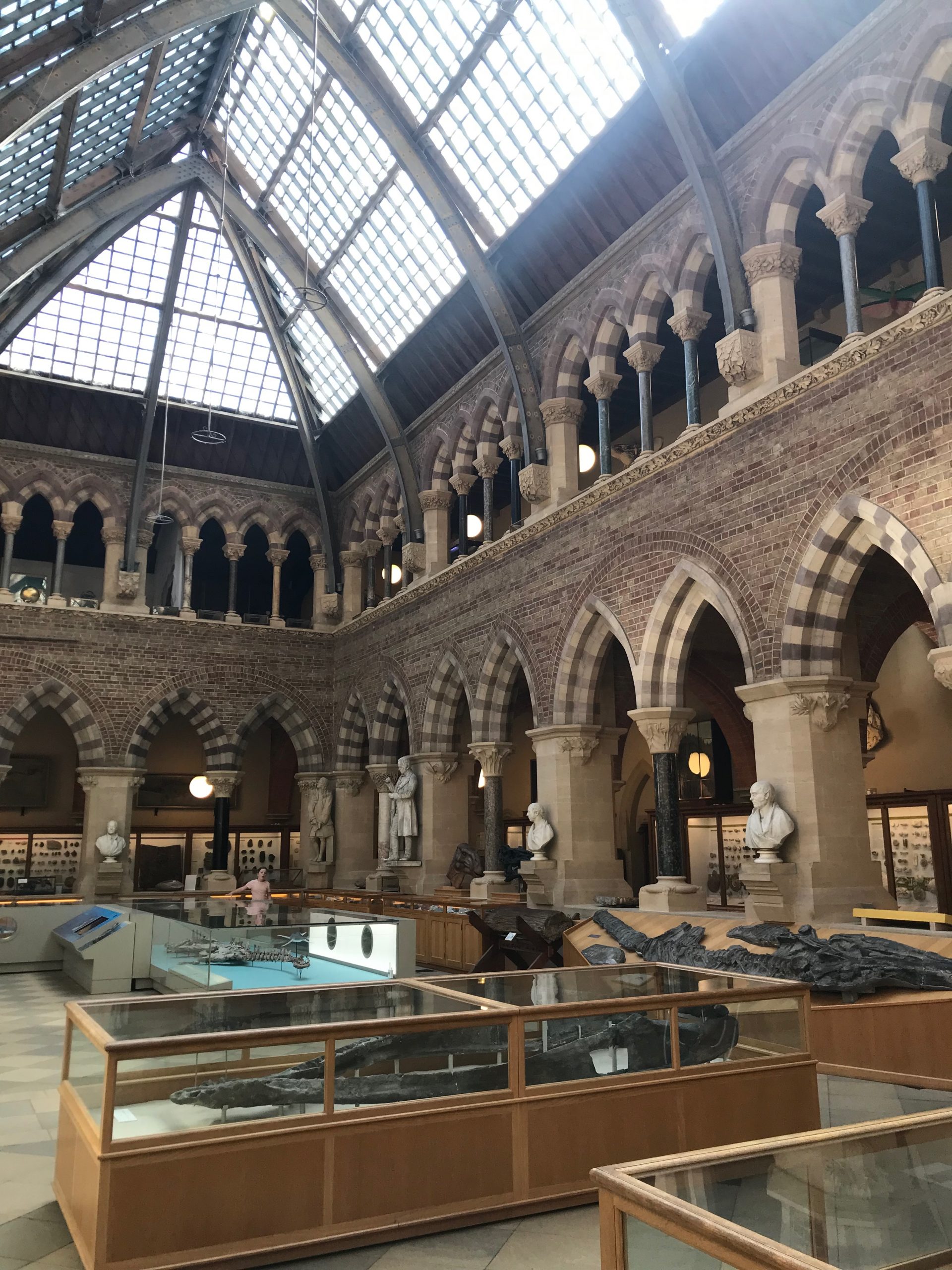
It’s impossible to ignore the fabric of this museum. There’s something about the roof structure that makes me (and others) think about some of the impressive railway architecture that you see at stations like St Pancras, and it was a bit of an experiment sitting alongside the Victorian Neo-gothic stone architecture holding it up. I noticed as we went around that the pillars are all made of different materials, from across the country. The geological artefacts built into the museum itself.

A view across some of the display cases, showing off the architecture of teh building, in particular the columns.

My photos don’t do it proper justice, but this video is fantastic to give you a taste for what it’s like, and to show you some of the hidden features that you might otherwise overlook.

You can also learn more about the architecture of the Museum of Natural History on their website here.

Facilities at the museum

In addition to a small gift shop by the entrance there is also a cafe on level one of the museum building, looking down over the main hall. Toilets and baby changing facilities are also available. Whilst eating and drinking is not allowed in the museum, you can eat a picnic on the lawn outside the front of the building and whilst we were there many did this.

Out the front of the museum was also a lovely independent coffee van that sold hot and cold drinks as well as snacks. The queue of people who obviously work and study nearby suggests they were very good.

Visiting the Museum of Natural History

It is free to visit the Oxford University Museum of Natural History, but there is a suggested donation of £5 to help them cover their costs. You don’t need to book and more details can be found on the museum’s website.

Kids want to know more?

There are some family trails for the museum that you can either print out before you arrive, or they have printed versions at the information n desk in the museum. And if your little ones are impressed by the ichthyosaur and want to learn more about Mary Anning then the Little People, Big Dreams book on her is excellent. The museum’s website also details any family friendly activities that they put on in school holidays.

The Pitt Rivers Museum, Oxford

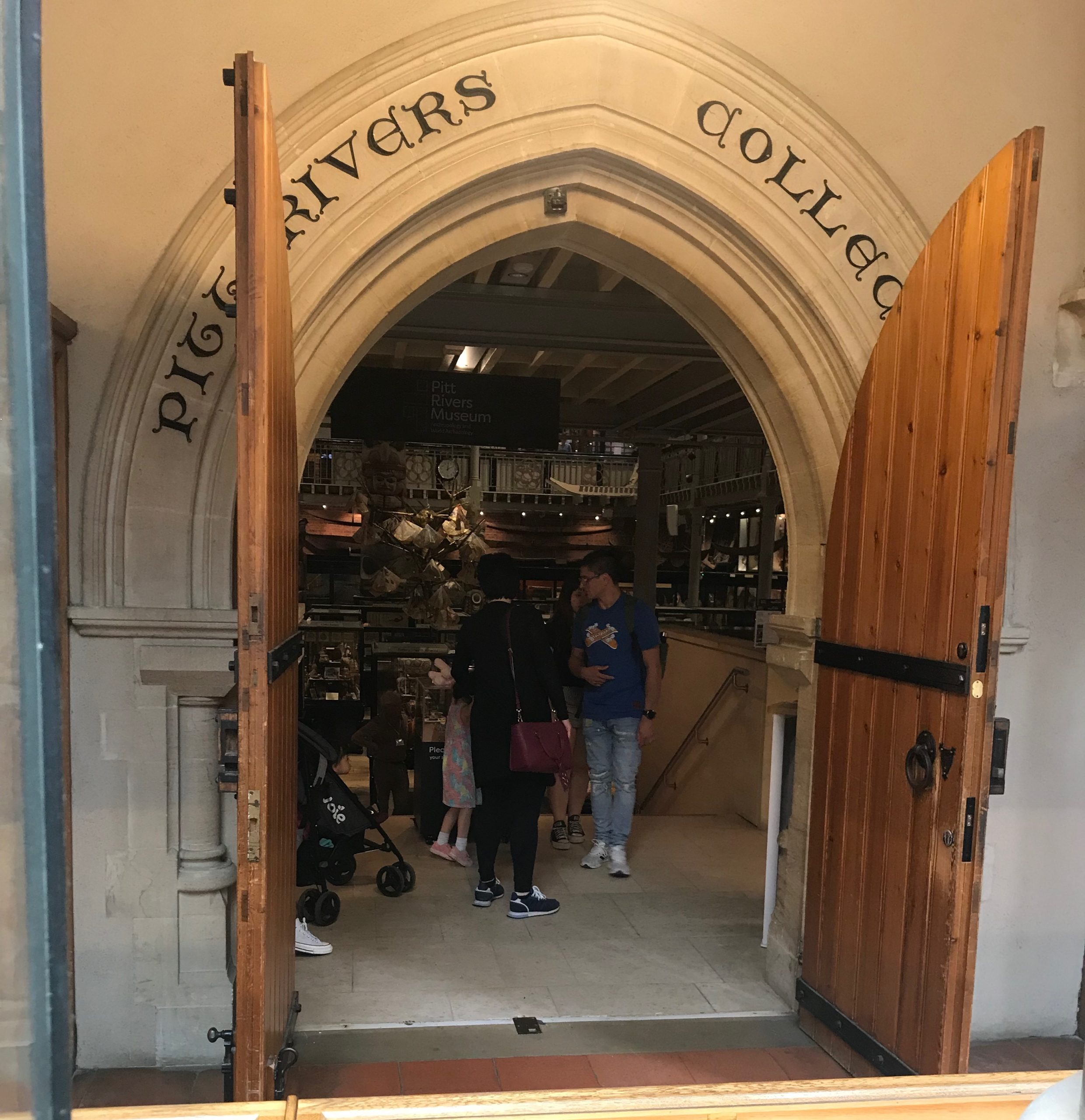
A door at the back of the Museum of Natural History leads into the Pitt Rivers Museum and as you step through the doorway it is very obvious that you are entering somewhere with a very different feeling.

A double wooden door set into a stone wall. Through teh door you can just see some museum display cases. Above the door are the words "Pitt Rivers Collection" and this door leads from teh maim hall of teh Oxford University Museum of Natural History to the Pitt Rivers Museum.

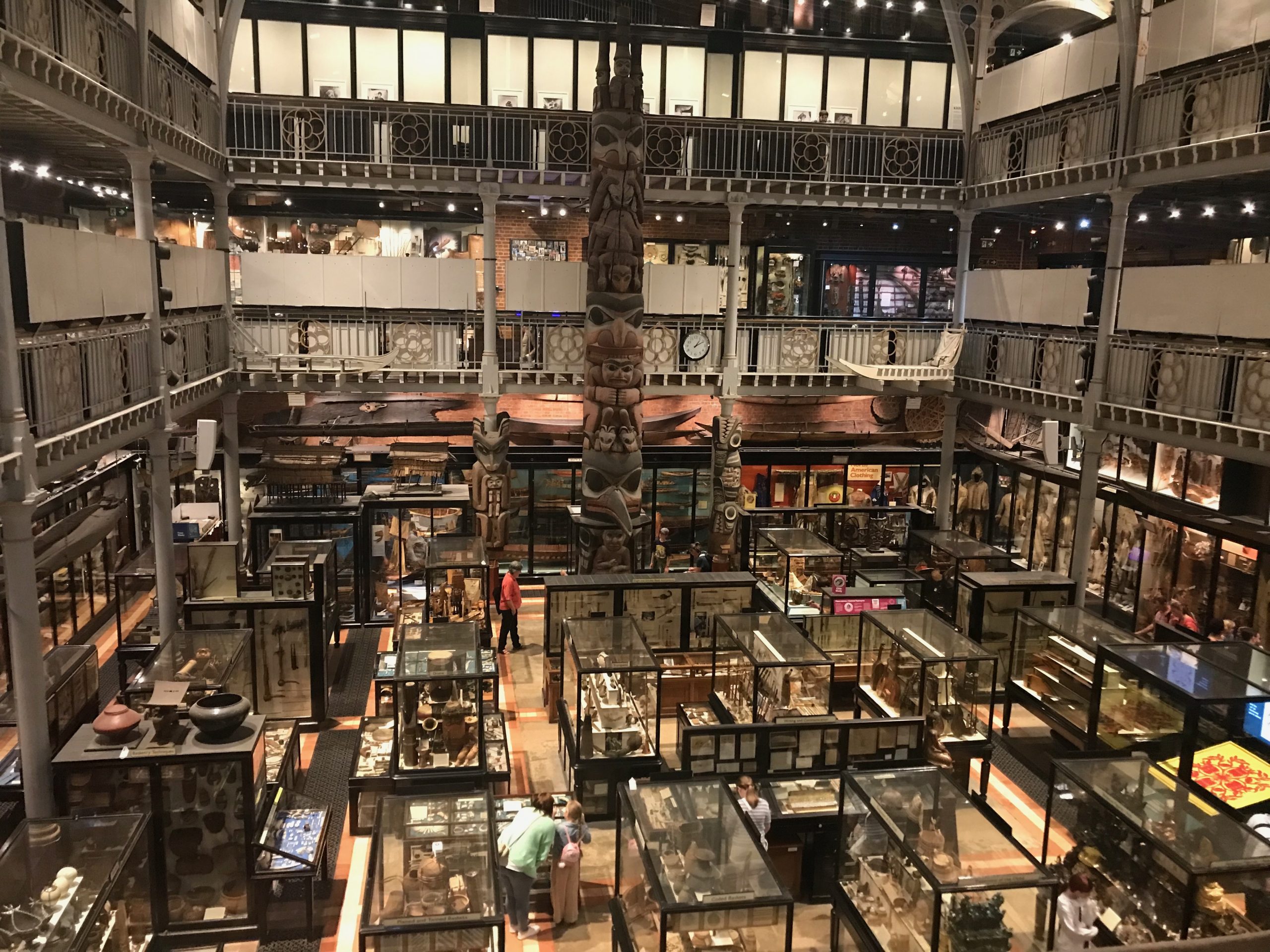
The Pitt Rivers Museum lacks the bright open space of its neighbour the Museum of Natural History and instead visitors are presented with quite a dark space that is absolutely rammed full of artefacts. Housing the University of Oxford’s archaeological and anthropological collections there is so much to see that it can be a bit daunting knowing where to look first.

An uncomfortable initial experience

As is traditional when visiting somewhere with an excited young child we didn’t really go round the museum in the suggested order and as a result of that I actually felt a bit uncomfortable about some of what I was looking at, until I found the relevant explanatory panels. The museum frankly accepts on one of its panels that “The history of the Pitt Rivers Museum is tied to British Imperial expansion and the colonial mandate to collect and classify objects from all over the world. The processes of colonial “collecting” were often inequitable and even violent towards those people being colonised.” They go on to talk about this uncomfortable past for the museum, and how they are working through the collections, how they are presented, and how they are explained through a present day lens. You can ream more about the museum’s commitment to change on their website.

My favourite exhibits

In a museum that contains so much it can be overwhelming to try to take it all in. There were a few exhibits though that did stick with me when we left.

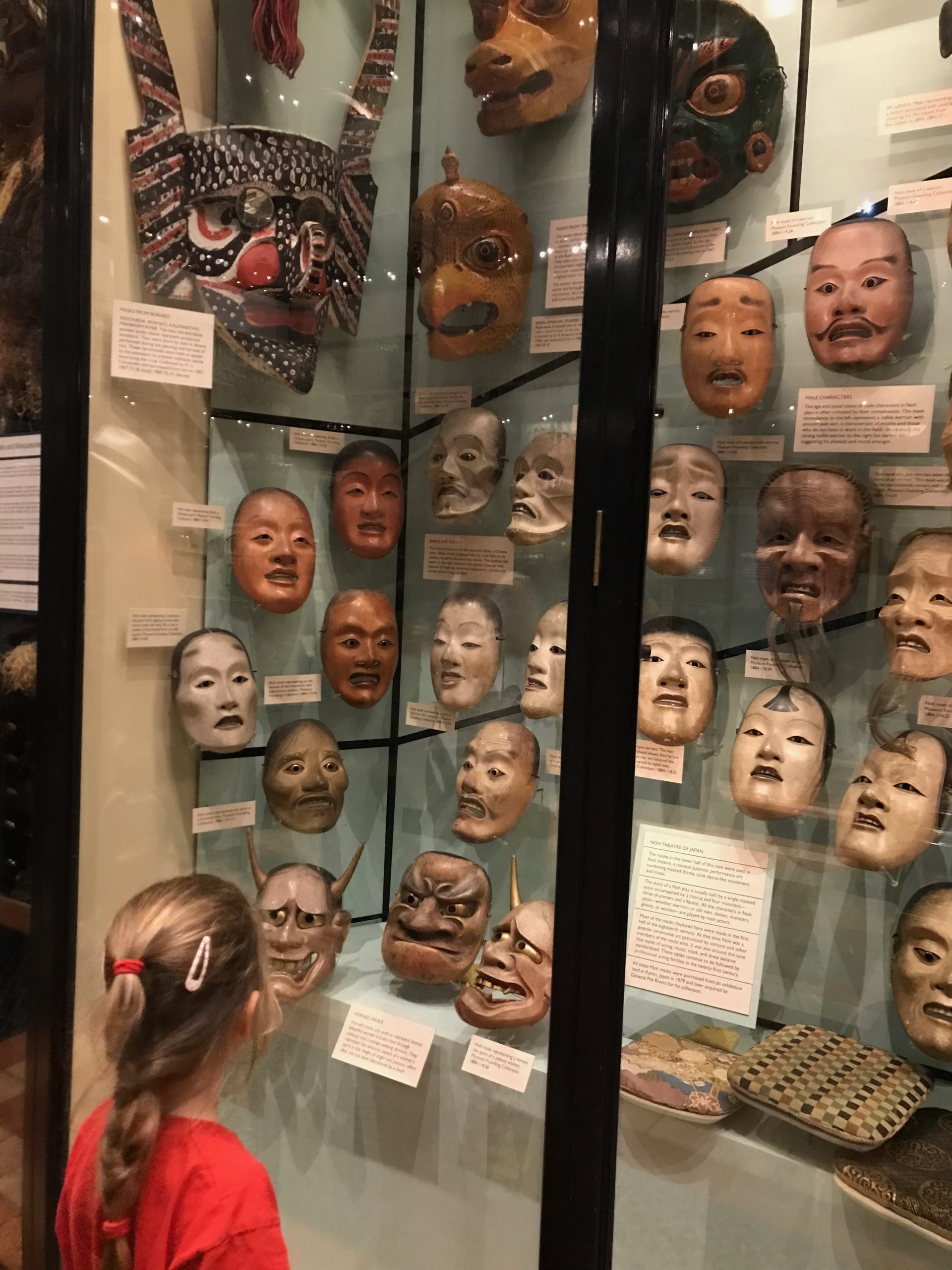
A display case full of slightly creepy looking masks with a four year old girl looking on.
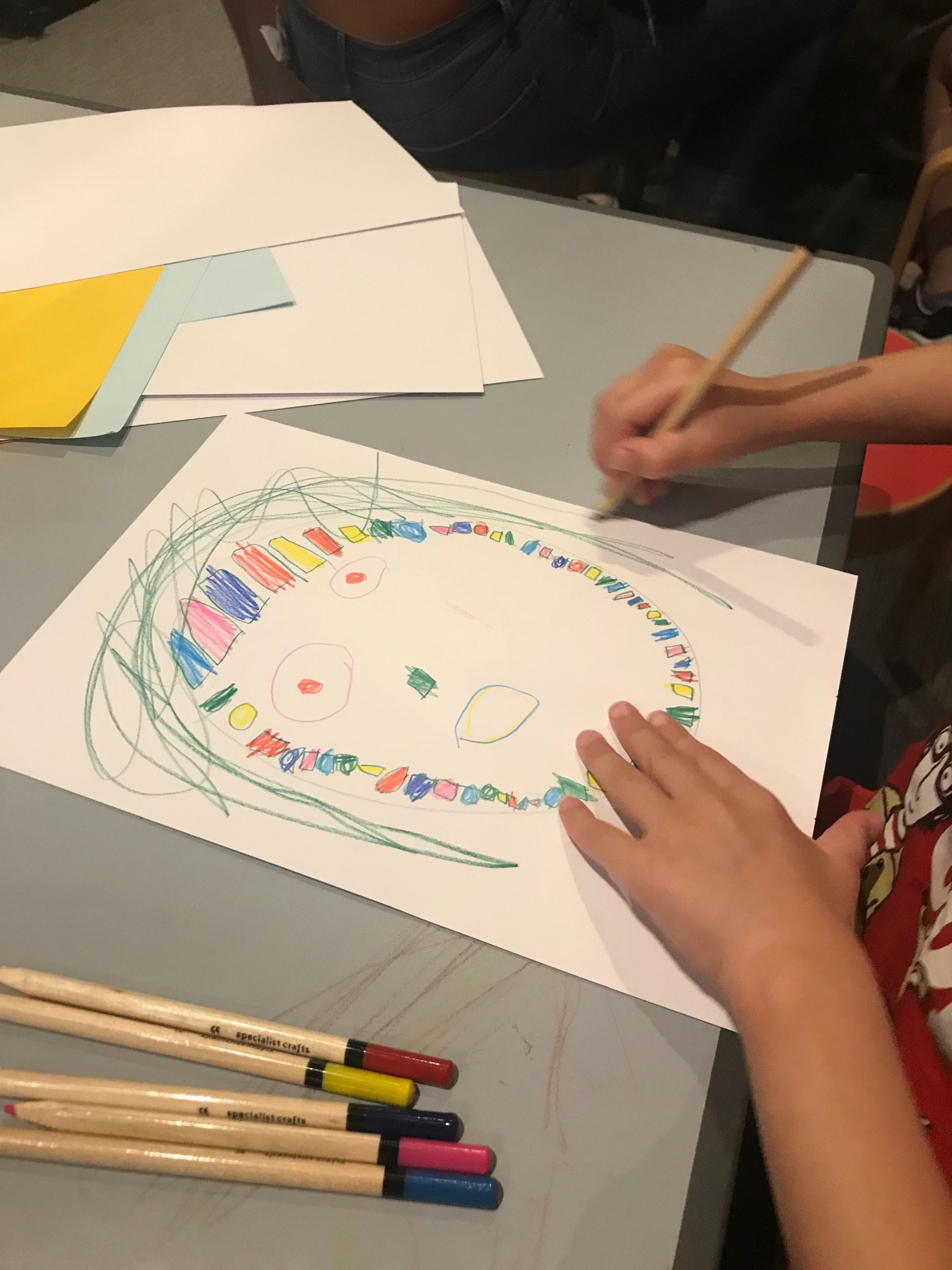
The hands of a four year old child as she draws a brightly coloured mask with coloured pencils.

My daughter loved the variety of masks that the museum displays, and when we stumbled into a school holiday drawing session for children it was a mask that she chose to design. Her’s wasn’t quite was freaky as some of the ones on display (thankfully!) but the museum also had some excellent drawing prompts for children of all ages to encourage them to look at the museum’s exhibits carefully.

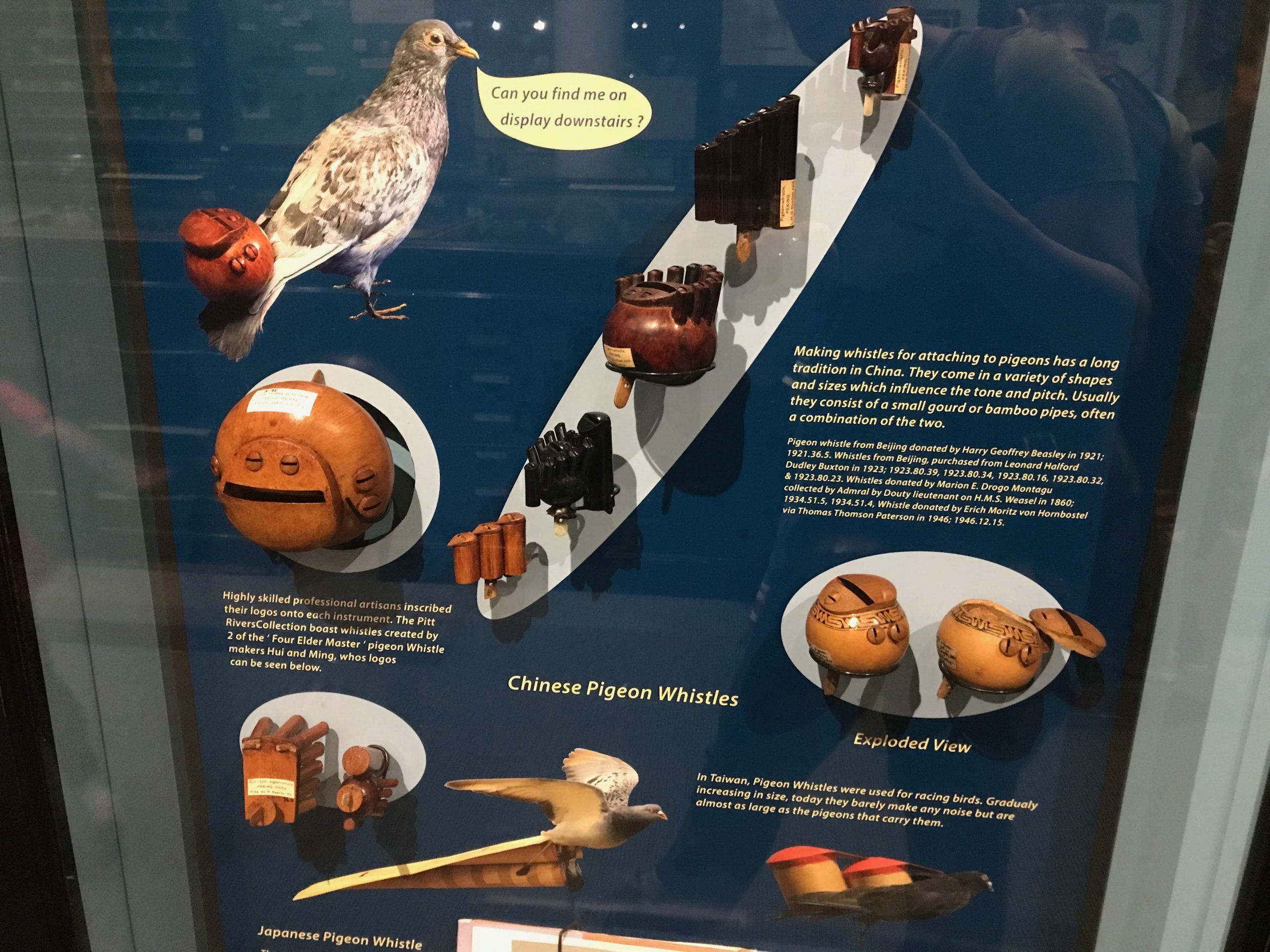
A museum display case showing and explaining Chinese pigeon whistles which were attached to pigeons in China.

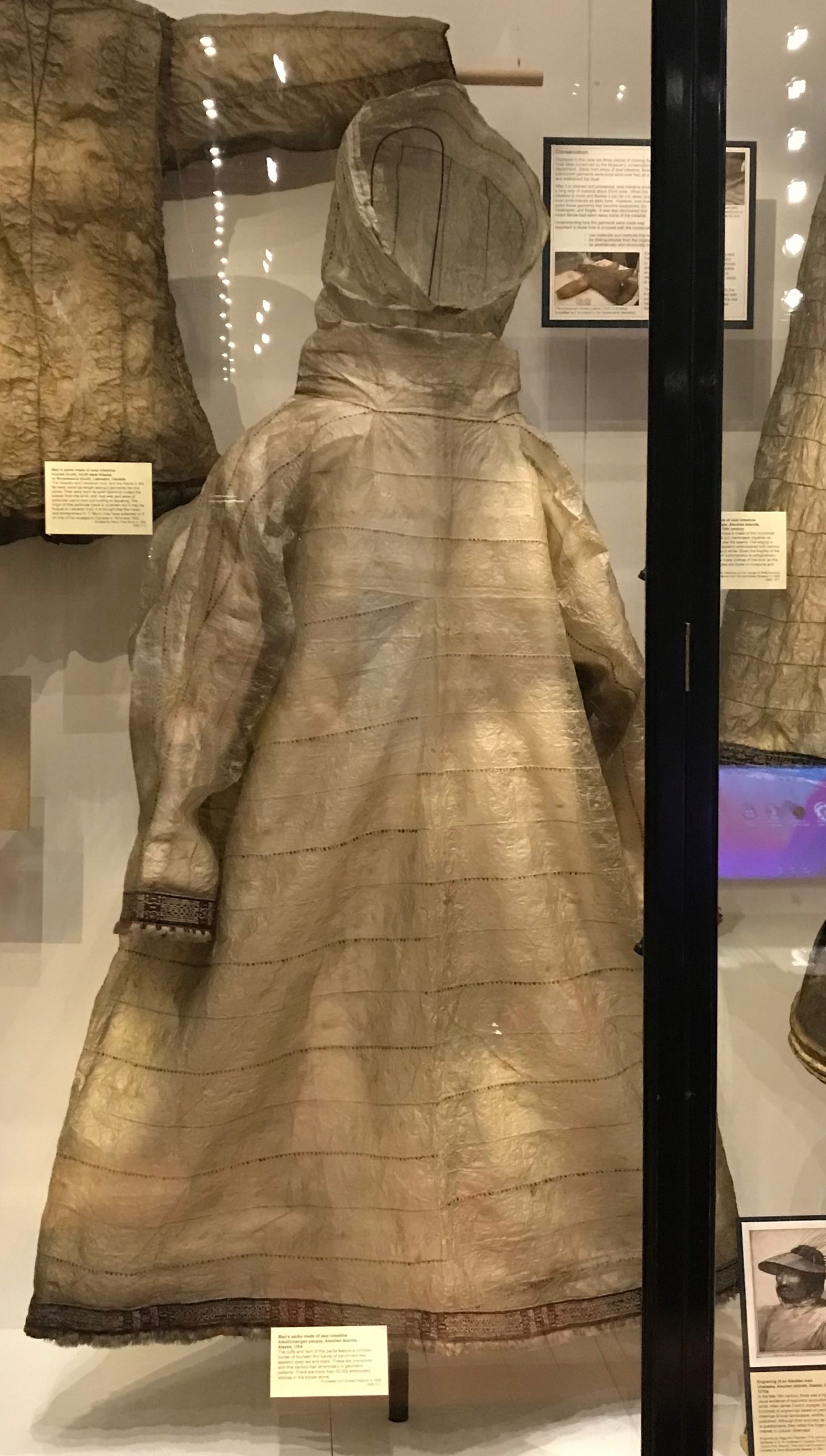
For me though whilst the pigeon whistles fascinated me, I was speechless at the sight of a man’s parka made of seal intestines from Alaska. Purchased by the Pitt Rivers Museum in 1908 it is described as such:

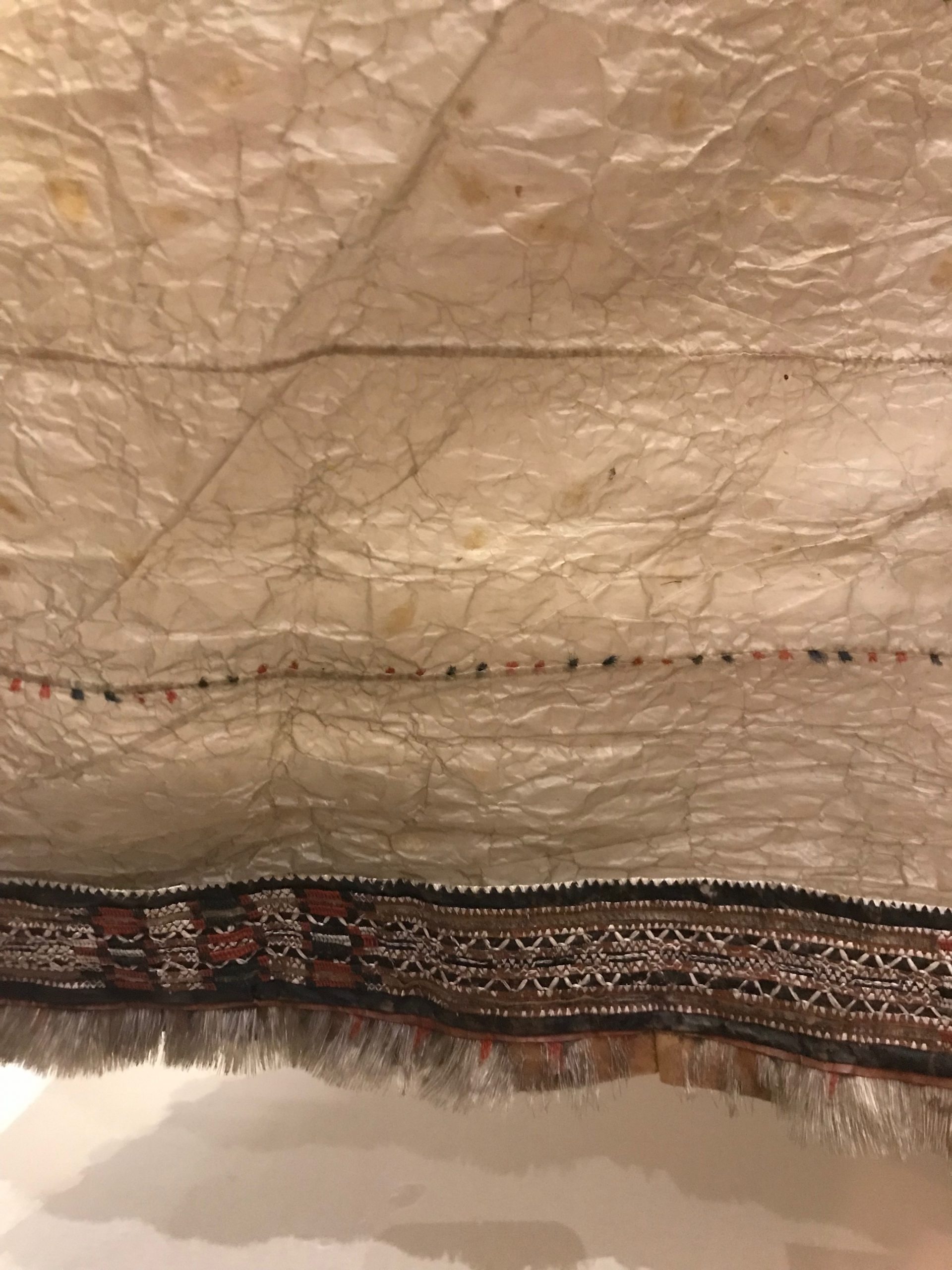
“The cuffs and hem of this parka feature a complex border of fourteen thin bands of parchment-like sealskin dyed red and black. These are over woven with fine caribou-hair embroidery in geometric patterns. There are more than 20,000 embroidery stitches in the border alone”

A museum display case showing off the parka that I have described. It has a hood and is of a relatively simple shape with arms. It looks like it more practical than decorative from a distance.

Let that just sink in. Over 20,000 embroidery stitches in the border alone. And made in or before 1908. So, no electric light. In Alaska, so probably dark for half the year. The work that must have gone into that absolutely fascinates me, and I’m left wondering why it was felt necessary to decorate a parka so elaborately. I wish I knew.

A close up of intricate embroidery on the border of the parka.

Facilities at the Pitt Rivers Museum

With the Pitt Rivers Museum connected to the Museum of Natural History it shares many of the same facilities. It has its own toilets and a small gift shop, but for refreshments you are directed to either the cafe in the Museum of Natural History or back outside for a picnic space and alternative coffee provision.

Wondering where else to visit?

Why not take a look at other places we have visited in Oxfordshire or the neighbouring county of Buckinghamshire. You could also see which other museums we have visited around the world.

Filed Under: Museums, Oxford, Oxfordshire

  • « Previous Page
  • Page 1
  • Page 2
  • Page 3
  • Page 4
  • …
  • Page 7
  • Next Page »

Primary Sidebar

Google Ads

Categories

  • Destinations
    • Europe
      • Channel Islands
        • Guernsey
      • Denmark
      • France
      • Germany
      • Sweden
      • The Netherlands
      • United Kingdom
        • England
          • Bedfordshire
          • Buckinghamshire
          • Devon
          • Essex
          • Gloucestershire
          • Hertfordshire
            • St Albans
          • London
          • Norfolk
          • North Yorkshire
            • Scarborough
            • Whitby
          • Oxfordshire
            • Oxford
        • Isle of Wight
        • Scotland
          • Edinburgh
    • Islands
  • Family Days Out
  • General Travel Writing
  • Local Things To Do
  • Museums
  • National Trsut
  • National Trust
  • Transport
    • Air Travel
    • Land Travel
      • Train Travel
        • Funiculars
        • Heritage Railways
        • Miniature Railways
    • Sea Travel
  • Travel Tips
    • Accommodation
    • Driving
  • Tube Stop Baby

Copyright © 2026 · Genesis Sample on Genesis Framework · WordPress · Log in