• Skip to primary navigation
  • Skip to main content
  • Skip to primary sidebar

Penny Travels

Travelling the world, near and far, one step at a time.

  • Home
  • Travel Destinations
  • Transport
  • Tourist Brown Signs
  • Tube Stop Baby Challenge
  • About Penny
  • Privacy Policy and Disclosure

Penny

Oxford University Museum of Natural History and the Pitt Rivers Museum, Oxford

September 7, 2023 by Penny Leave a Comment

When you visit Oxford you can be forgiven for being dazzled by all the University’s spectacular architecture and all the historic colleges, but make sure you don’t forget about the city’s museums. The Oxford University Museum of Natural History and the Pitt Rivers Museum may be two separate museums, but they are co-located on the same site, and to get from one to the other it really is as simple as walking through an interconnecting door.

Oxford University Museum of Natural History

When you arrive at the museum site it is the Museum of Natural History that you will visit first, for the simple fact that you have to walk through it to get to the Pitt Rivers Museum.

As you walk up the steps and into the main museum hall, the size, height and brightness of the hall takes your breath away. Especially on a sunny summer’s day like the one we visited on.
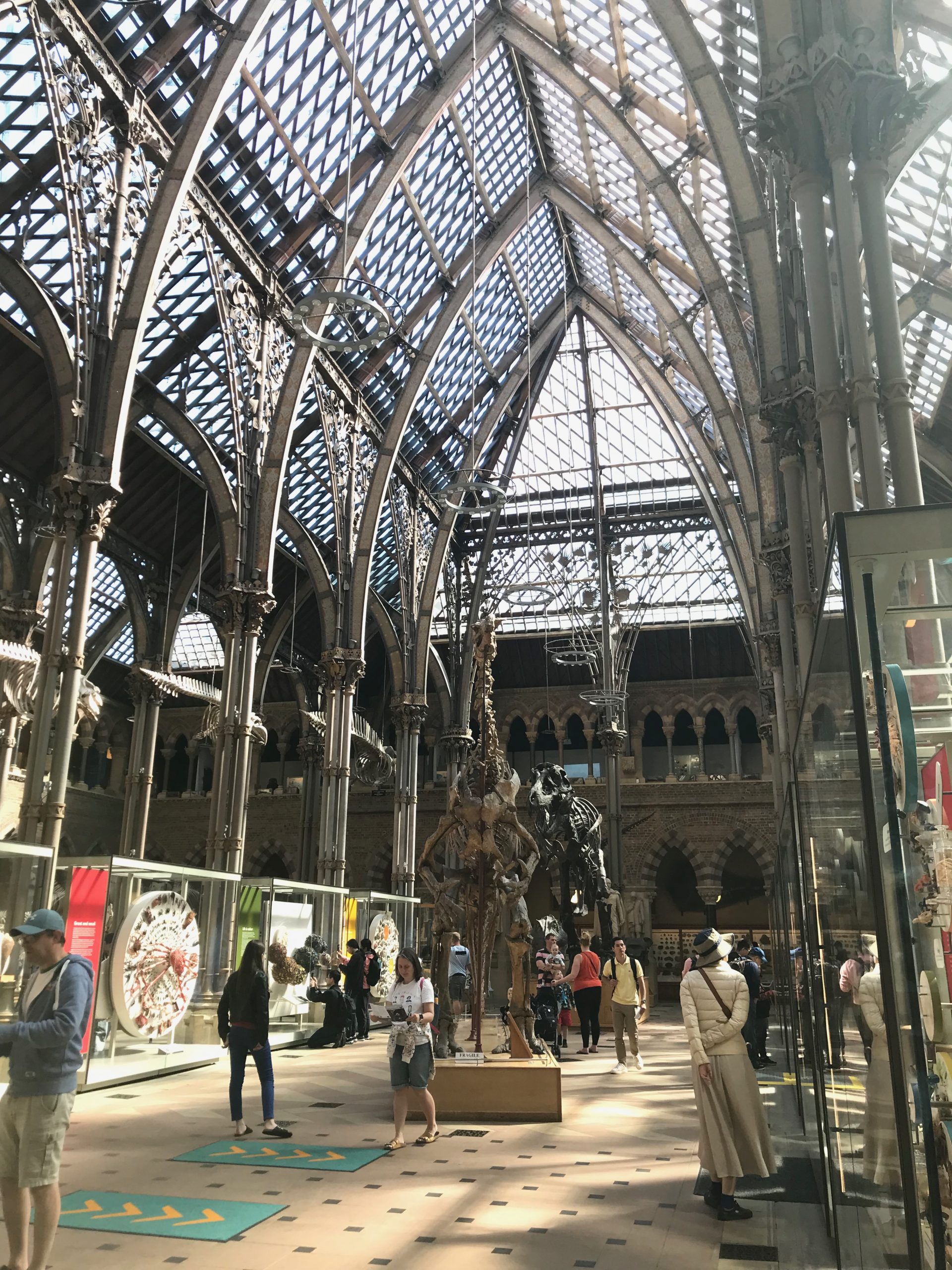
The main hall of the Oxford University Museum of Natural History. It shows a tall space, more like e railway station than a museum, with light flooding in through a glass ceiling. Various Natural History exhibits can be seen in the foreground.

I’m not going to pretend that it can compete with the scale of London’s Natural History Museum, but if you’re looking for somewhere a bit more compact then this is actually the perfect museum to visit. Most importantly for many little ones visiting – there are dinosaurs!

What is there to see?

Originally established in 1860 to draw together scientific studies from across the University of Oxford, the museum’s strap line today is “Home to Earth, science and nature”. In addition to the impressive fossils and skeletons on display, my daughter was amazed to be able to see so many different butterflies and other insects and she took a particular interest in counting how many different pigeons she could spot in the bird section of the museum.
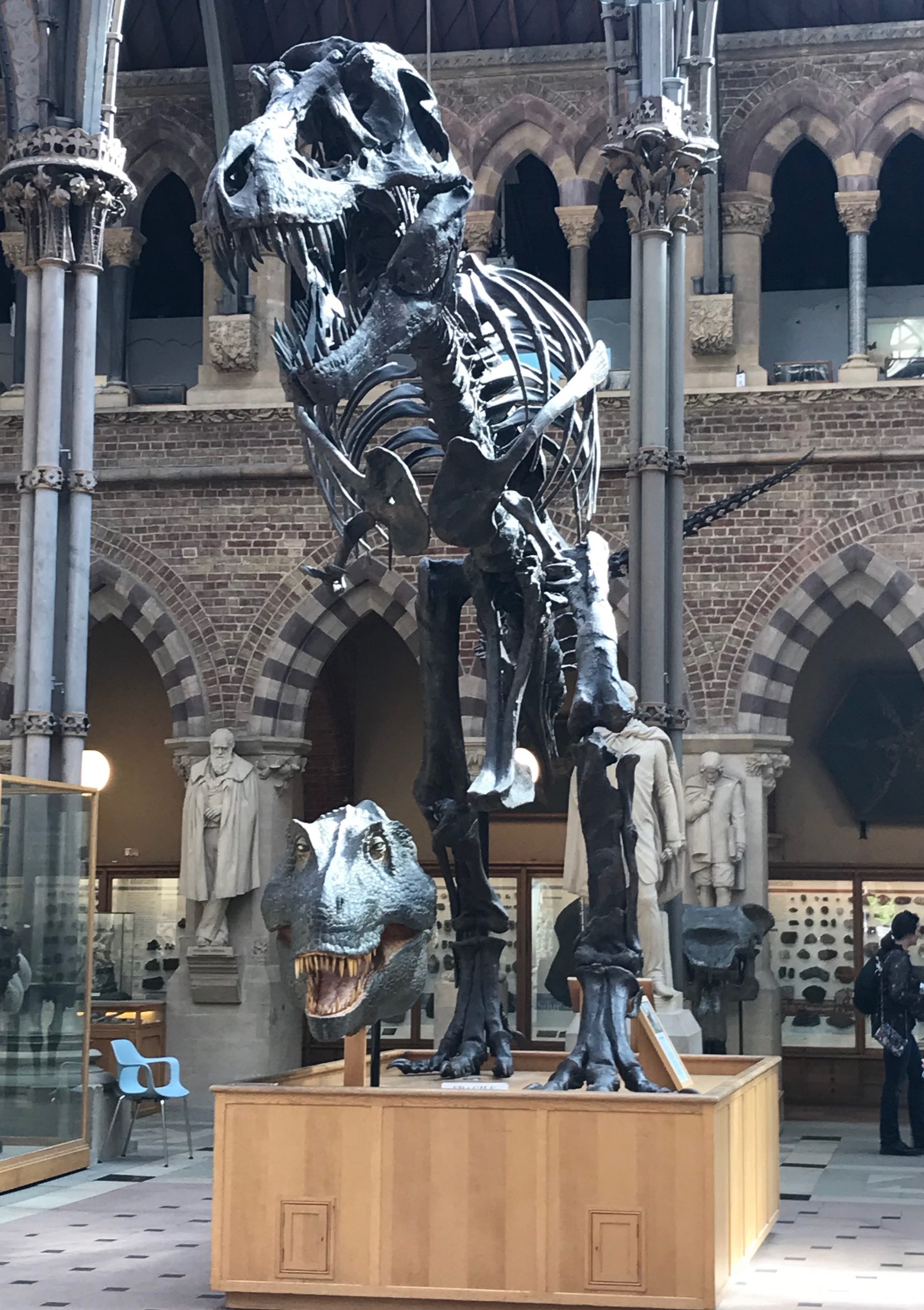
The skeleton of a dinosaur at the museum.

Some of the museum’s displays have been refreshed recently and there are now two large plesiosaur skeletons that you can marvel at, as well as Mary Anning’s ichthyosaur.

The architecture of the museum

It’s impossible to ignore the fabric of this museum. There’s something about the roof structure that makes me (and others) think about some of the impressive railway architecture that you see at stations like St Pancras, and it was a bit of an experiment sitting alongside the Victorian Neo-gothic stone architecture holding it up. I noticed as we went around that the pillars are all made of different materials, from across the country. The geological artefacts built into the museum itself.
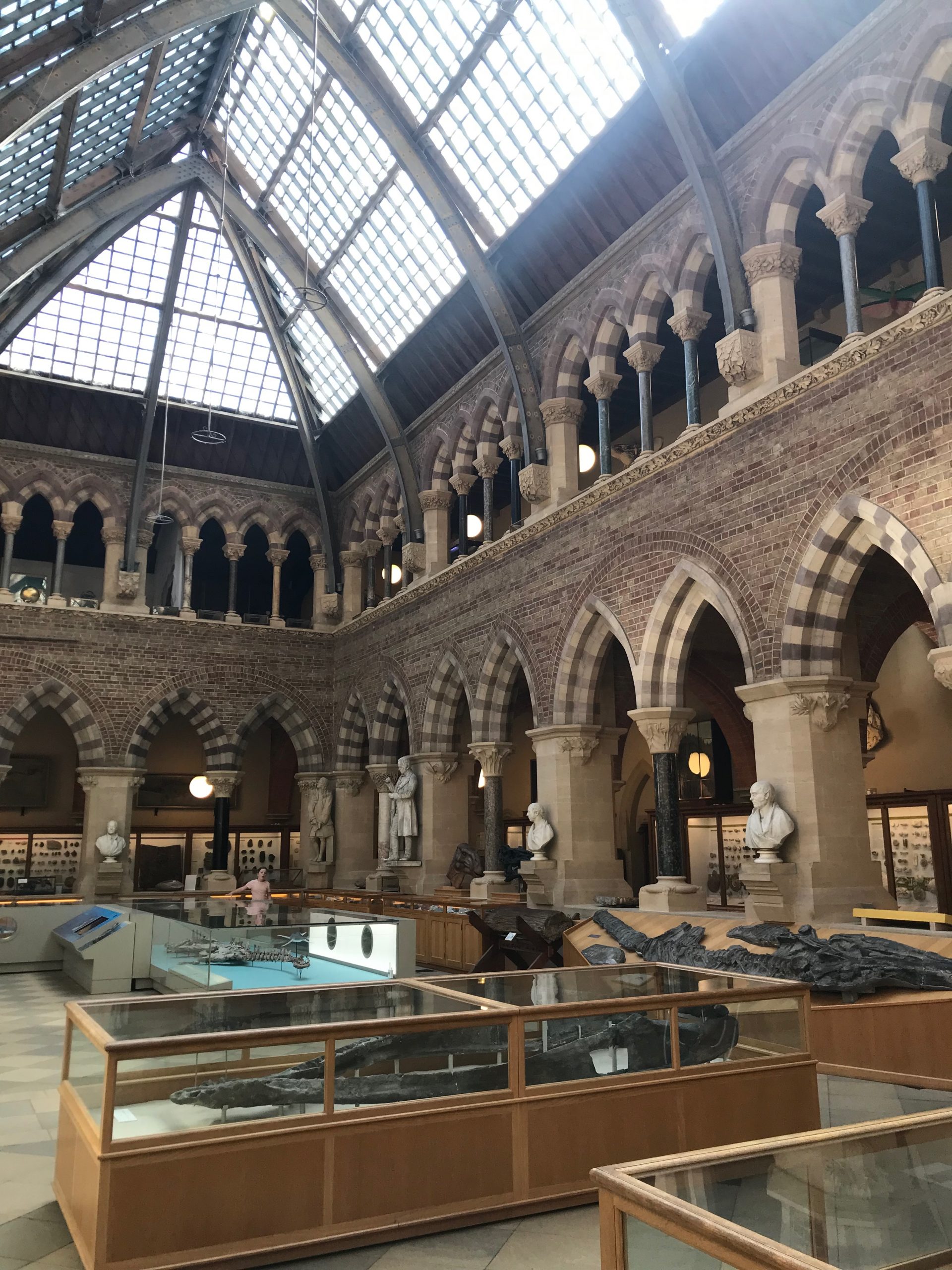
A view across some of the display cases, showing off the architecture of teh building, in particular the columns.

My photos don’t do it proper justice, but this video is fantastic to give you a taste for what it’s like, and to show you some of the hidden features that you might otherwise overlook.

You can also learn more about the architecture of the Museum of Natural History on their website here.

Facilities at the museum

In addition to a small gift shop by the entrance there is also a cafe on level one of the museum building, looking down over the main hall. Toilets and baby changing facilities are also available. Whilst eating and drinking is not allowed in the museum, you can eat a picnic on the lawn outside the front of the building and whilst we were there many did this.

Out the front of the museum was also a lovely independent coffee van that sold hot and cold drinks as well as snacks. The queue of people who obviously work and study nearby suggests they were very good.

Visiting the Museum of Natural History

It is free to visit the Oxford University Museum of Natural History, but there is a suggested donation of £5 to help them cover their costs. You don’t need to book and more details can be found on the museum’s website.

Kids want to know more?

There are some family trails for the museum that you can either print out before you arrive, or they have printed versions at the information n desk in the museum. And if your little ones are impressed by the ichthyosaur and want to learn more about Mary Anning then the Little People, Big Dreams book on her is excellent. The museum’s website also details any family friendly activities that they put on in school holidays.

The Pitt Rivers Museum, Oxford

A door at the back of the Museum of Natural History leads into the Pitt Rivers Museum and as you step through the doorway it is very obvious that you are entering somewhere with a very different feeling.
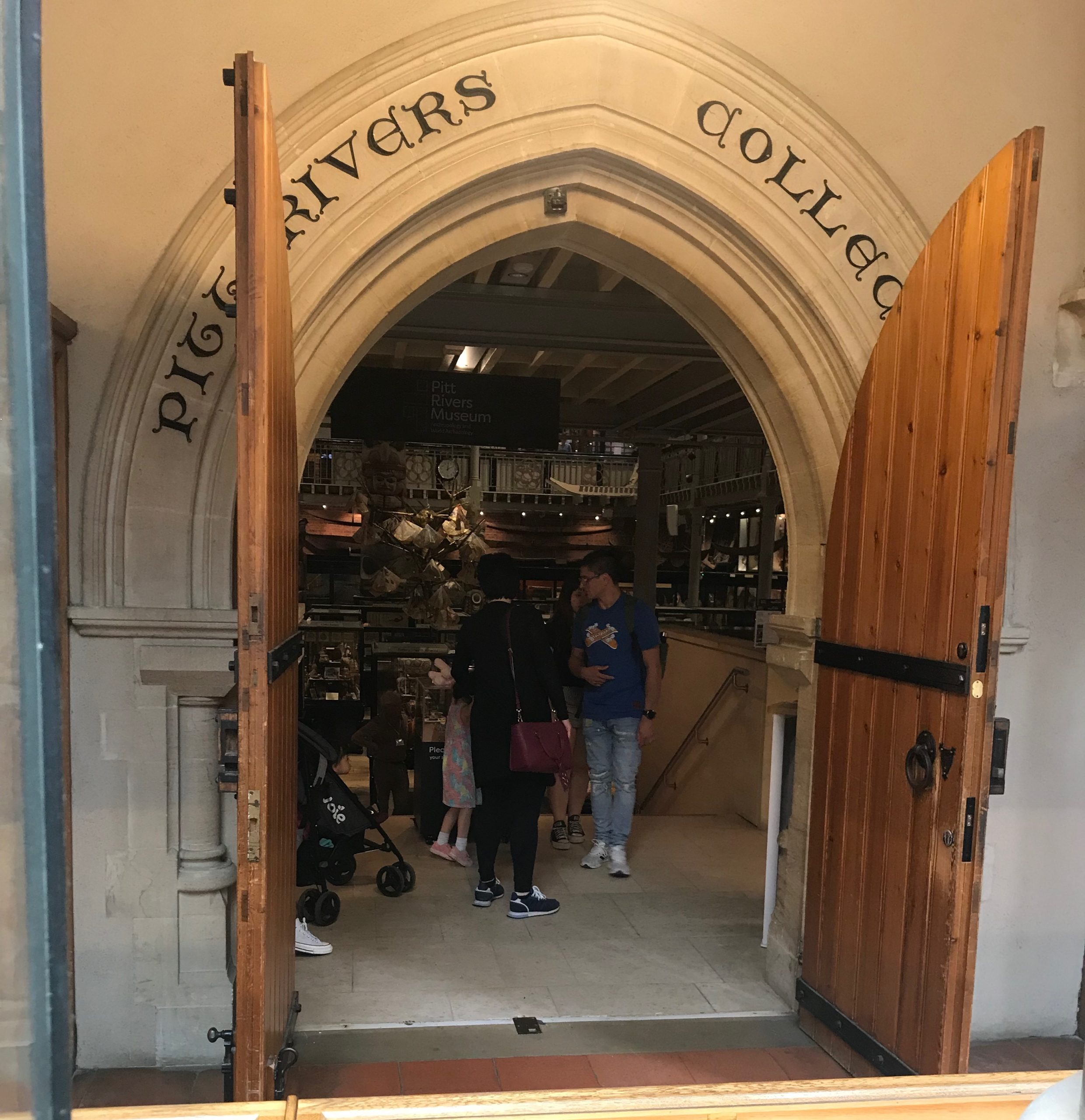
A double wooden door set into a stone wall. Through teh door you can just see some museum display cases. Above the door are the words "Pitt Rivers Collection" and this door leads from teh maim hall of teh Oxford University Museum of Natural History to the Pitt Rivers Museum.

The Pitt Rivers Museum lacks the bright open space of its neighbour the Museum of Natural History and instead visitors are presented with quite a dark space that is absolutely rammed full of artefacts. Housing the University of Oxford’s archaeological and anthropological collections there is so much to see that it can be a bit daunting knowing where to look first.
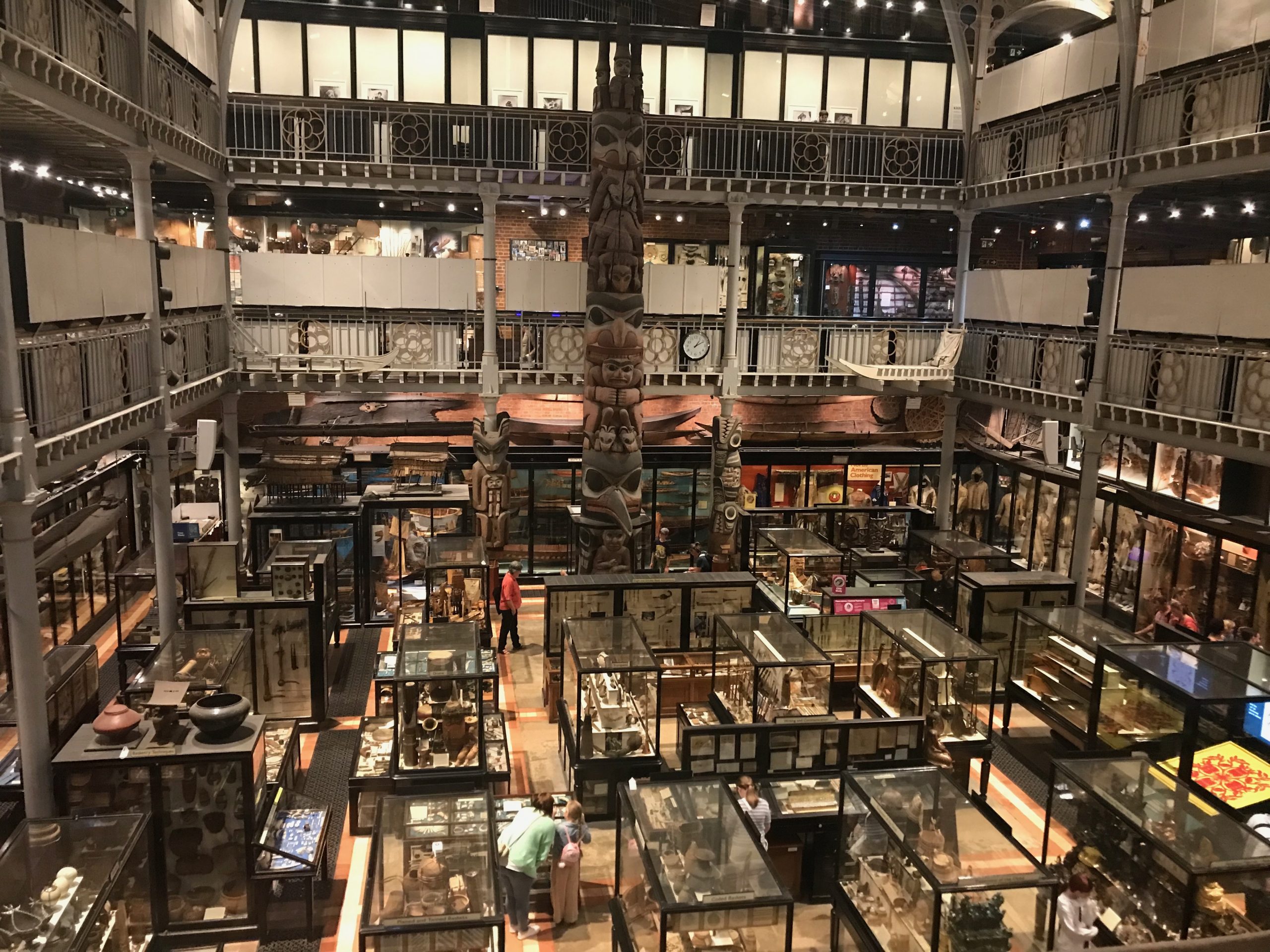
An uncomfortable initial experience

As is traditional when visiting somewhere with an excited young child we didn’t really go round the museum in the suggested order and as a result of that I actually felt a bit uncomfortable about some of what I was looking at, until I found the relevant explanatory panels. The museum frankly accepts on one of its panels that “The history of the Pitt Rivers Museum is tied to British Imperial expansion and the colonial mandate to collect and classify objects from all over the world. The processes of colonial “collecting” were often inequitable and even violent towards those people being colonised.” They go on to talk about this uncomfortable past for the museum, and how they are working through the collections, how they are presented, and how they are explained through a present day lens. You can ream more about the museum’s commitment to change on their website.

My favourite exhibits

In a museum that contains so much it can be overwhelming to try to take it all in. There were a few exhibits though that did stick with me when we left.
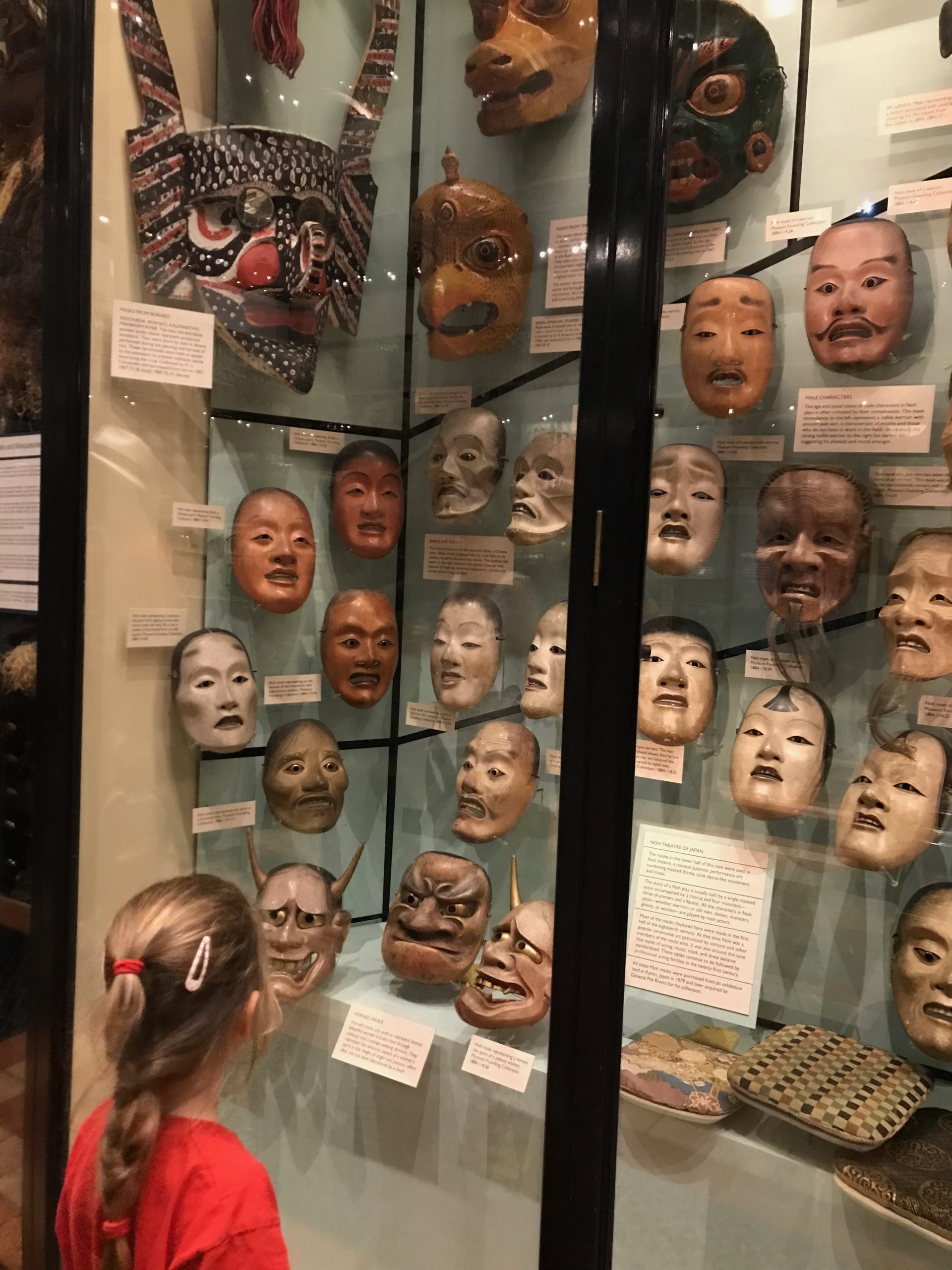

A display case full of slightly creepy looking masks with a four year old girl looking on.
The hands of a four year old child as she draws a brightly coloured mask with coloured pencils.

My daughter loved the variety of masks that the museum displays, and when we stumbled into a school holiday drawing session for children it was a mask that she chose to design. Her’s wasn’t quite was freaky as some of the ones on display (thankfully!) but the museum also had some excellent drawing prompts for children of all ages to encourage them to look at the museum’s exhibits carefully.
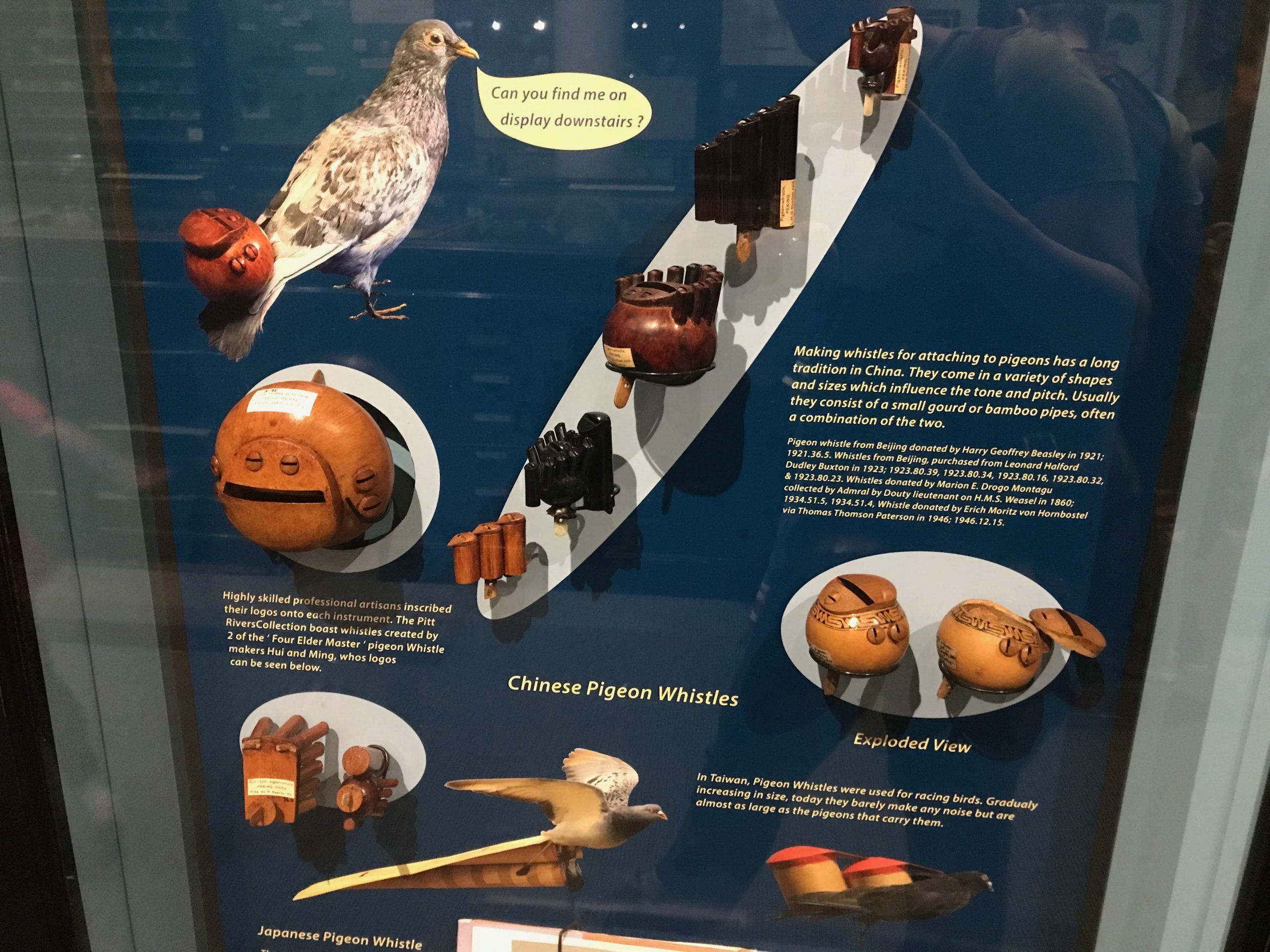
A museum display case showing and explaining Chinese pigeon whistles which were attached to pigeons in China.

For me though whilst the pigeon whistles fascinated me, I was speechless at the sight of a man’s parka made of seal intestines from Alaska. Purchased by the Pitt Rivers Museum in 1908 it is described as such:

“The cuffs and hem of this parka feature a complex border of fourteen thin bands of parchment-like sealskin dyed red and black. These are over woven with fine caribou-hair embroidery in geometric patterns. There are more than 20,000 embroidery stitches in the border alone”
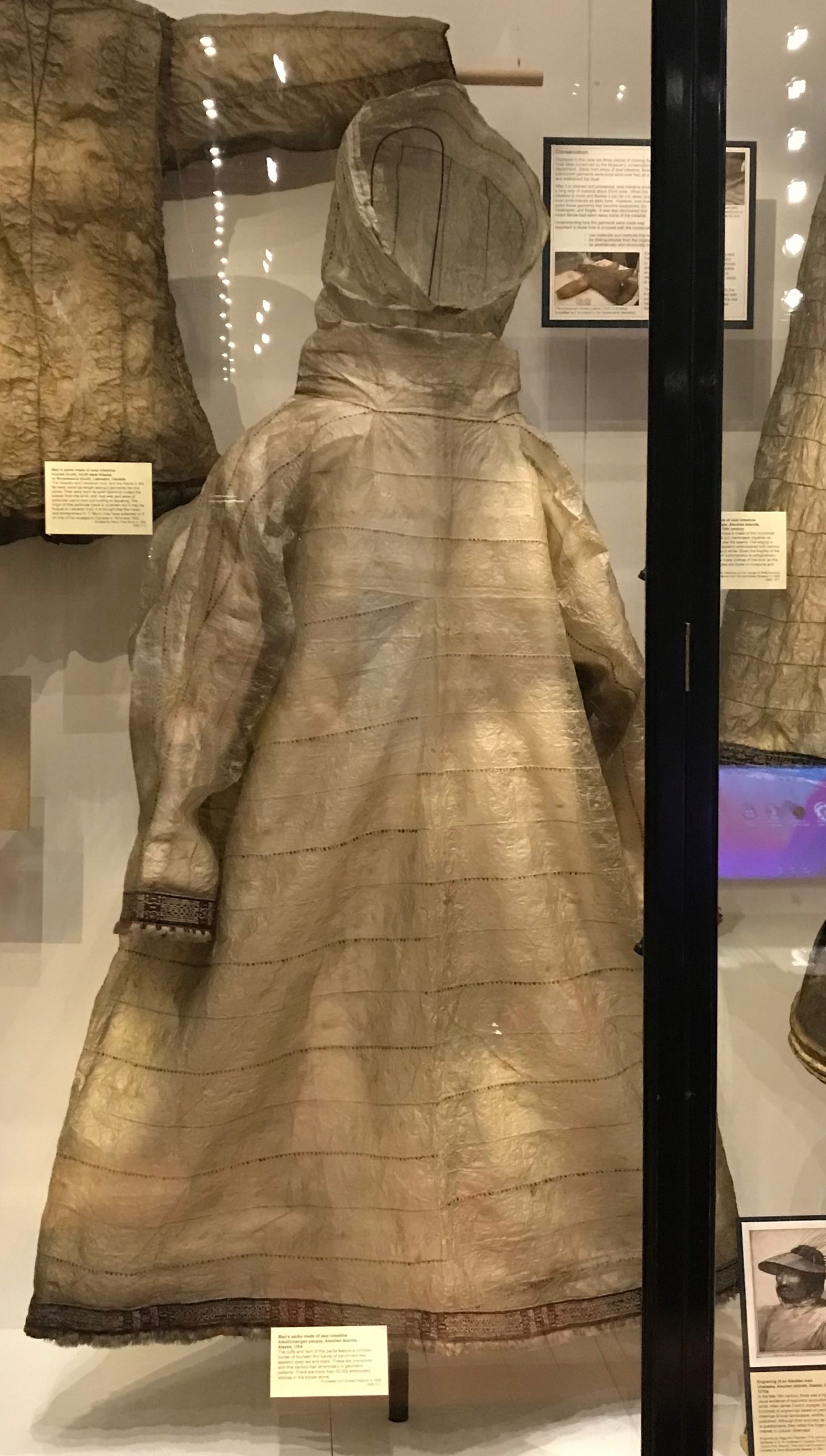
A museum display case showing off the parka that I have described. It has a hood and is of a relatively simple shape with arms. It looks like it more practical than decorative from a distance.

Let that just sink in. Over 20,000 embroidery stitches in the border alone. And made in or before 1908. So, no electric light. In Alaska, so probably dark for half the year. The work that must have gone into that absolutely fascinates me, and I’m left wondering why it was felt necessary to decorate a parka so elaborately. I wish I knew.
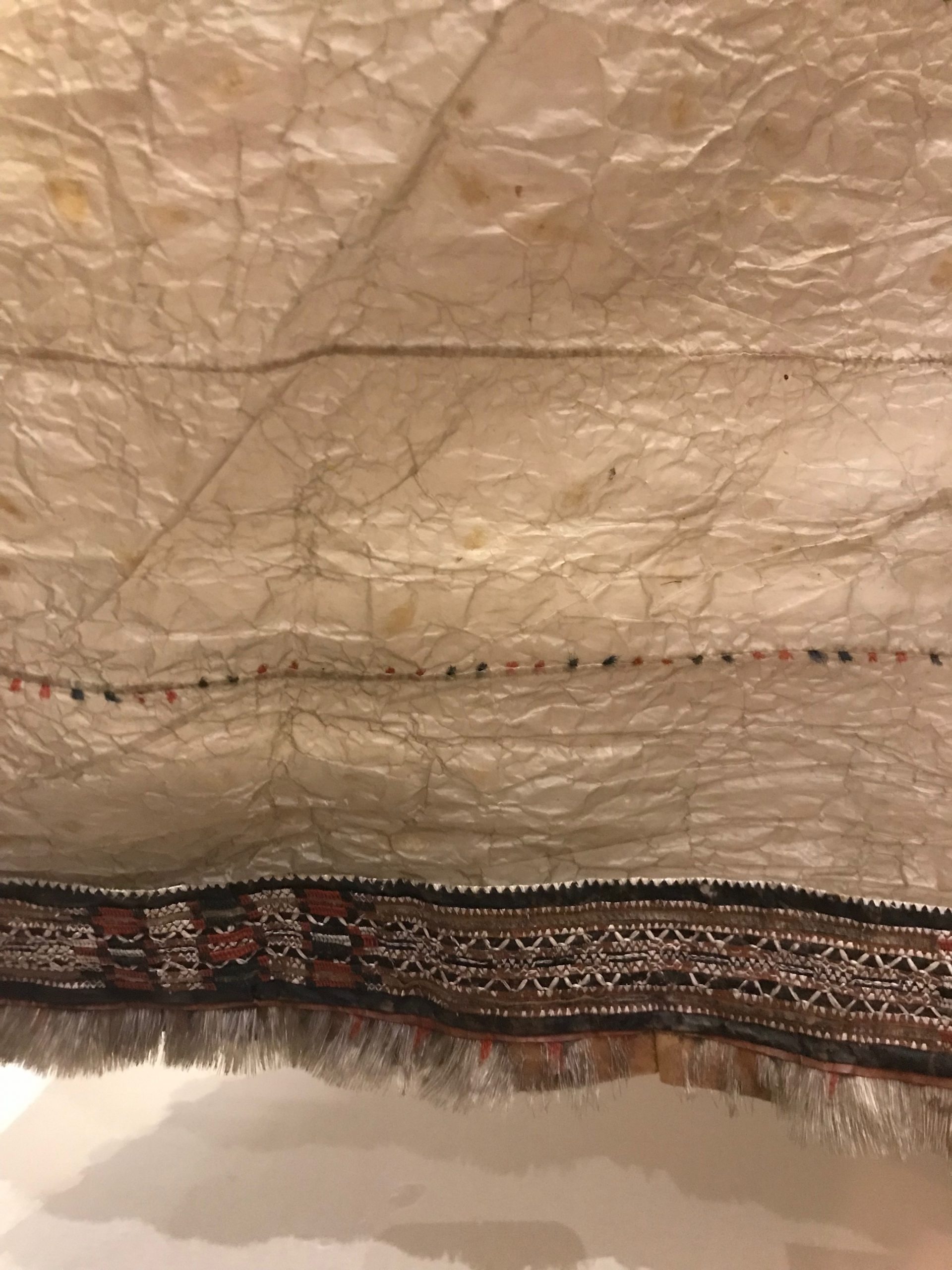
A close up of intricate embroidery on the border of the parka.

Facilities at the Pitt Rivers Museum

With the Pitt Rivers Museum connected to the Museum of Natural History it shares many of the same facilities. It has its own toilets and a small gift shop, but for refreshments you are directed to either the cafe in the Museum of Natural History or back outside for a picnic space and alternative coffee provision.

Wondering where else to visit?

Why not take a look at other places we have visited in Oxfordshire or the neighbouring county of Buckinghamshire. You could also see which other museums we have visited around the world.
Filed Under: Museums, Oxford, Oxfordshire

National Trust Dyrham Park – perfect family stop on the M4

August 12, 2023 by Penny Leave a Comment

On a recent road trip from Bedfordshire down to Exeter we needed to find somewhere to stop to let the four year old stretch her legs and run off some energy. And for us older folk in the car to have a cuppa and a loo break! Whilst motorway service stations can be OK if you just need the loo and a caffeine hit (although they vary so much in quality!) when we want a paper leg stretch I always prefer to find a National Trust site near the motorway. Looking on the National Trust app for the perfect family stop on the M4 I came across Dyrham Park and then had a deja vu moment when I realise that a pre-Covid trip to Devon had us stopping here before!

Dyrham Park is only one and a half mies from Junction 18 of the M4. From the motorway you turn onto the A46 and the entrance is straight off there. Follow the brown signs from when you come off the motorway and you can’t go wrong. Being a National Trust site entrance and parking is free for National Trust members.

What makes the perfect family stop?

For us the criteria are quite simple. Decent toilets, a playground, somewhere to get a cup of tea and an ice cream. Dyrham Park has all that and more.

What facilities are at Dyrham Park?

When you arrive off the A46 you head straight into the car park and next to that is the visitors centre with a toilet block adjacent to it. Parking can be paid for at the pay and display machines in the car park. If you are a member you need to scan your membership card at the machines and still display a ticket in your car.

This top visitor centre is where you can buy tickets to visit the park. They also have a few small gifts on sale.

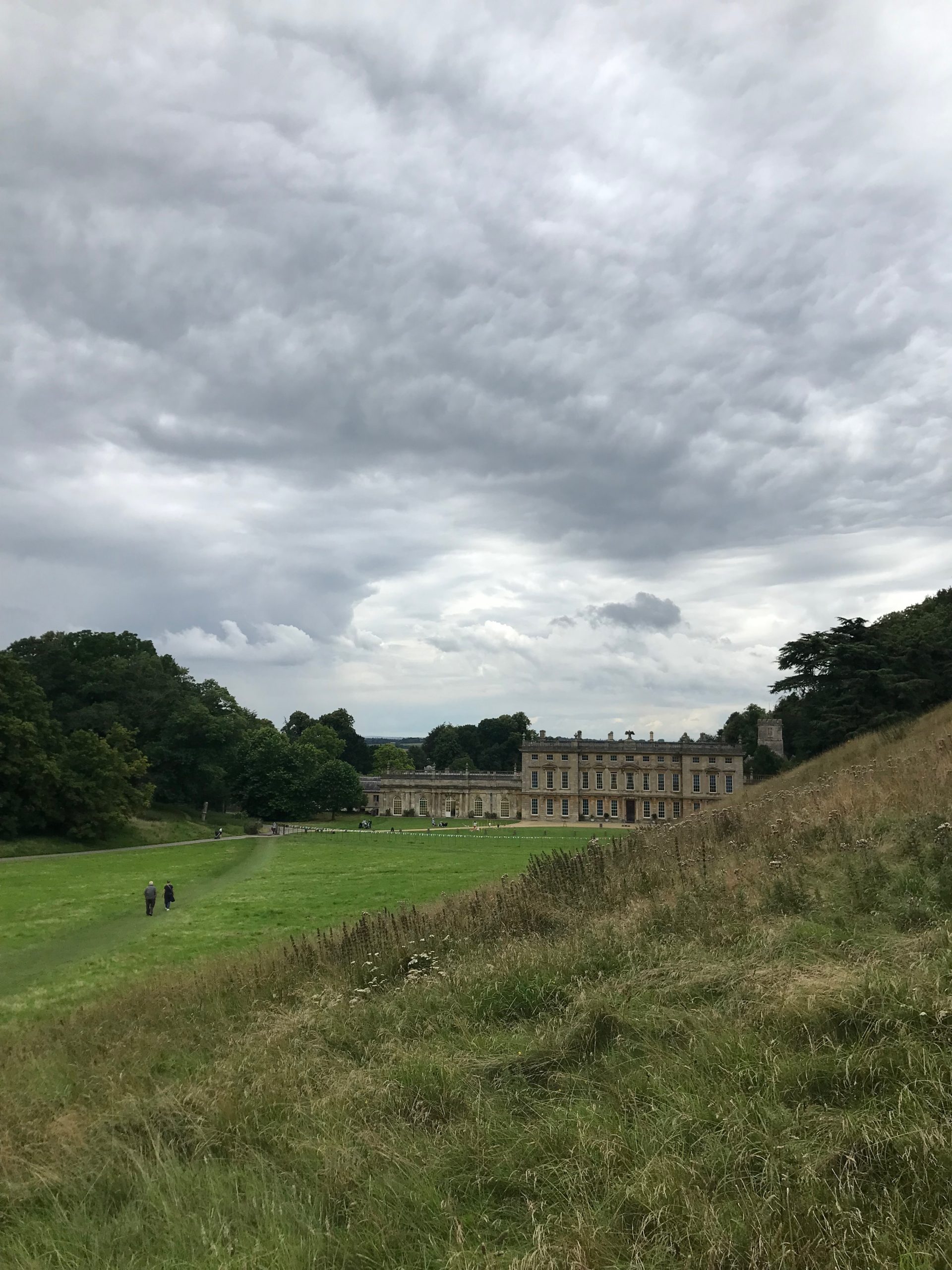
A view down towards the main house at Dyrham Park. From the angle of the photo you can see that you have to walk downhill to get to the house.

From here there is a walk to reach the main house part of the park. This is down a relatively steep hill, but there is an electric mobility bus that can help those you need it to get down and up again.

At the main house site there is a cafe, gift shop, more toilets and also a secondhand book shop. In addition to this there is a second site called the Old Lodge which was refurbished in 2022 and contains a small cafe, as well as plenty of space for picnics (both outdoors and undercover), ice creams, more toilets and a decent sized playground.

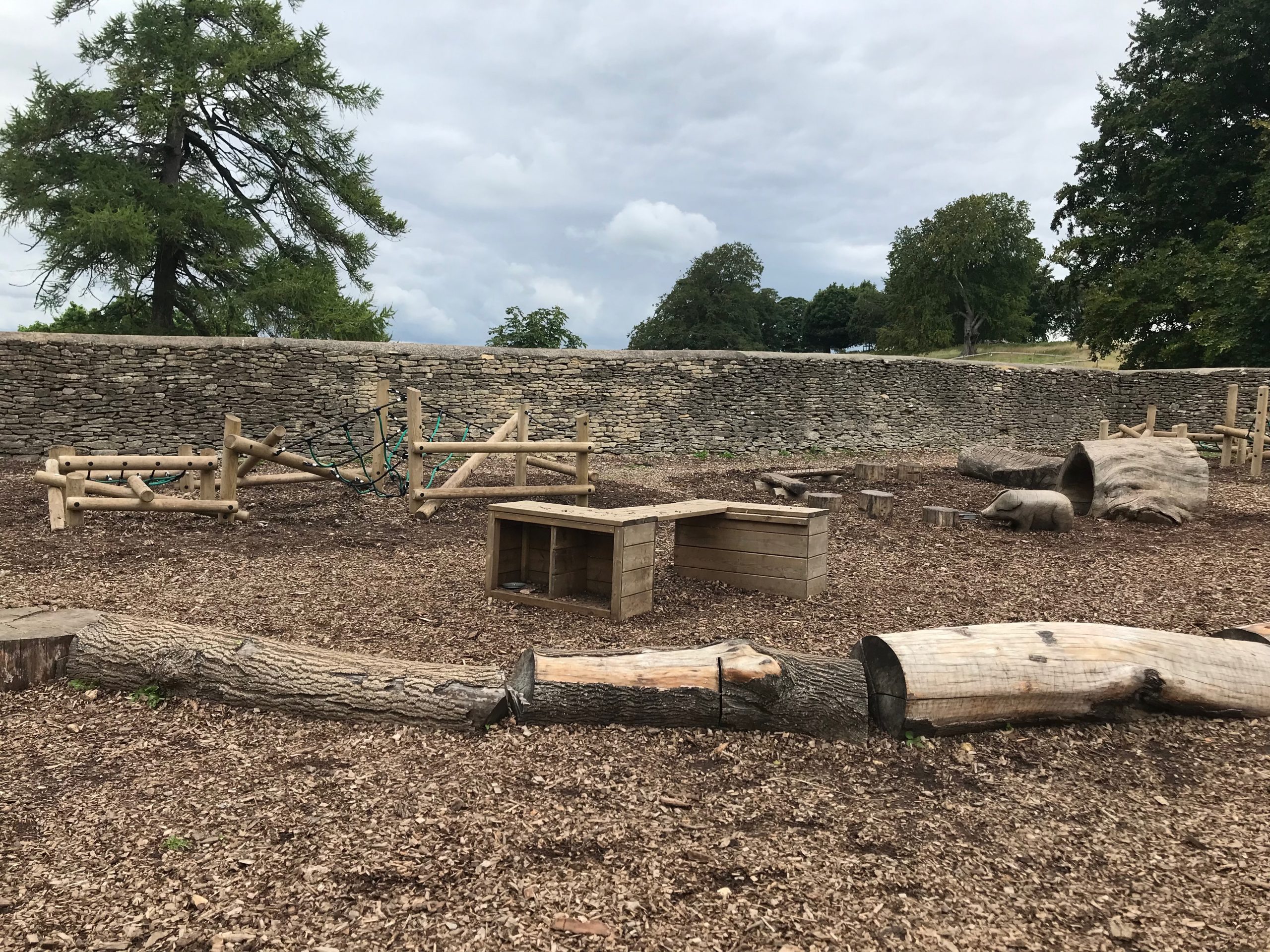
A wooden playground featuring a variety of balancing and climbing opportunities for young children and a wooden pig. All surrounded by a bark chipping ground covering.

Our stop at Dyrham Park

For us Dyrham Park was the perfect stop-off point. The weather remained dry and our four year old was able to walk (with a few moans admittedly!) from the car park to Old Lodge, then down to the house, and finally back to the car park. Old Lodge was a brilliant place to have a picnic. With some grey clouds gathering overhead we knew we could always head undercover if we suddenly needed to do so.

A smiling four year old girl wearing blue leggings and a long sleeved t-shirt  balancing on a tightrope whilst holding on to some rope supports.

The playground gave our daughter lots of climbing opportunities, alongside some lovely role play ones too. The large logs around the edge of the playground were also well positioned for parents to be able to sit on them and keep an eye on their kids.

Had we wanted a longer stop we could have visited the house itself, but as it was a good walk and a look round the secondhand bookshop was enough and we were soon on our way feeling refreshed, and somewhat invigorated from the hill climb back to the car park!

National Trust Passport Stamps

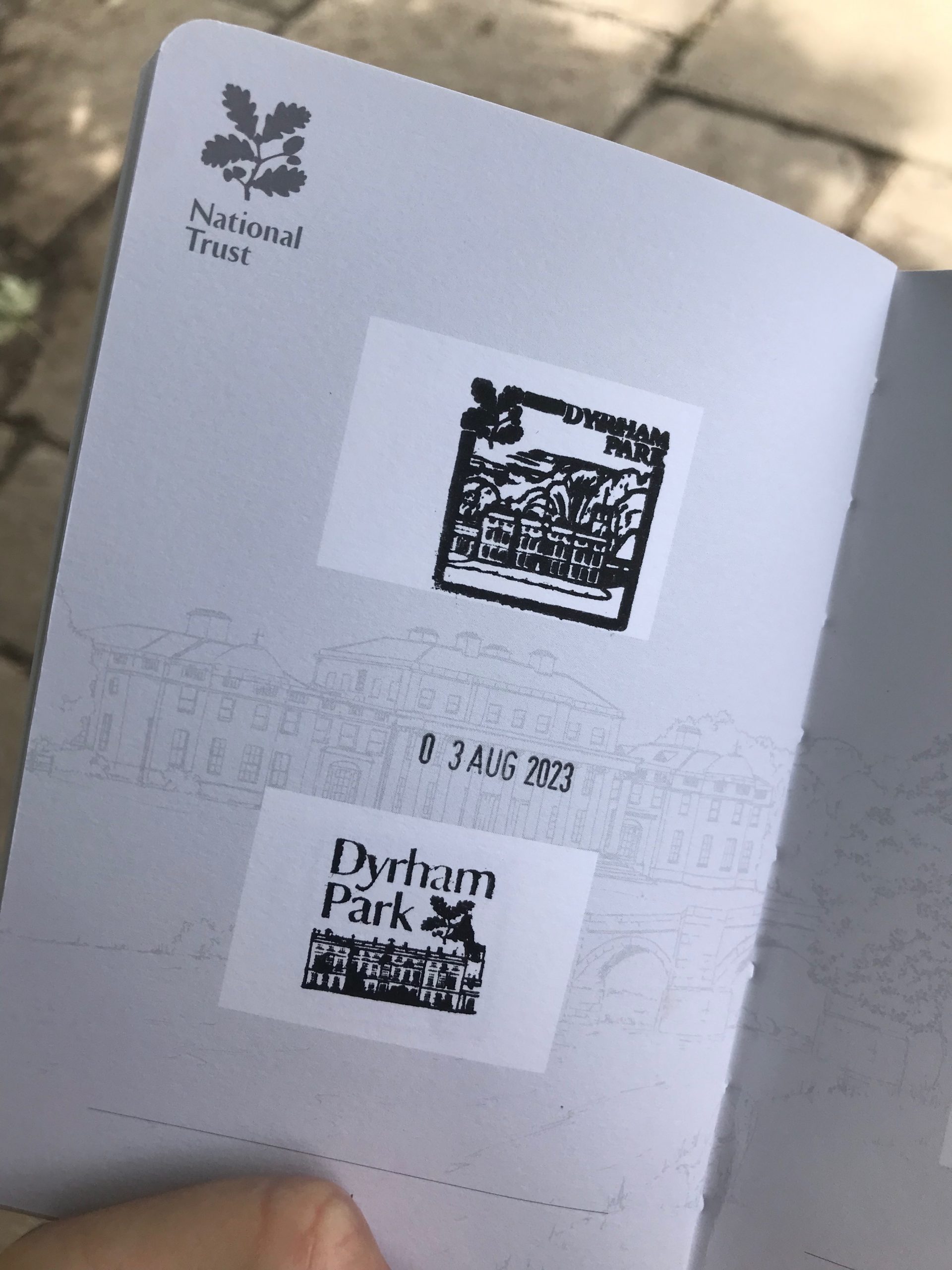
If you, like us, collect stamps in a National Trust passport for all the places you visit, then it’s worth knowing that the shop at the main house and the one at the visitor centre at the top of the hill have different stamps. All to do with them technically being in different postcodes according to one staff member. Another told us that one is actually the “old” stamp and another the new. Whatever the real reason is, if you’ve got a NT passport then it’s worth knowing.

A page inside a National Trust passport showing two different Dyrham Park stamps and a date stamp.

A National Trust passport is also a great way of keeping track of which National Trust sites you’ve been to. This helped us prove that we’d been to Dyrham Park before as we’d got our passport stamped there – although only from one shop!

Looking for somewhere to stop off somewhere else?

If you’re looking for a family stop on another motorway, the National Trust have compiled a list on their own website of places to stop. I can already see that some of our favourite stops like Clumber Park and Belton House (with the BEST National Trust playground ever!) are missing from the list, so as we continue to travel the country I’m going to try and compile our own list of where is a good family stop on the M4, M5, M1, A1, M25 …

I hope this post has helped you find the perfect family stop on the M4 – Dyrham Park.

Filed Under: Gloucestershire, National Trsut, National Trust

The Postal Museum and Mail Rail

August 11, 2023 by Penny Leave a Comment

London’s Postal Museum opened at its current Clerkenwell site in July 2017 and tells the story of the the postal system in the UK. One of the main attractions at the site is a 1km section of the Mail Rail underground train network that visitors can ride on. The museum prides itself in being an attraction for the whole family and it is packed with interactive exhibits that allow children to get very hands on. In addition there is an onsite role play area for children under the age of 8 called Sorted!

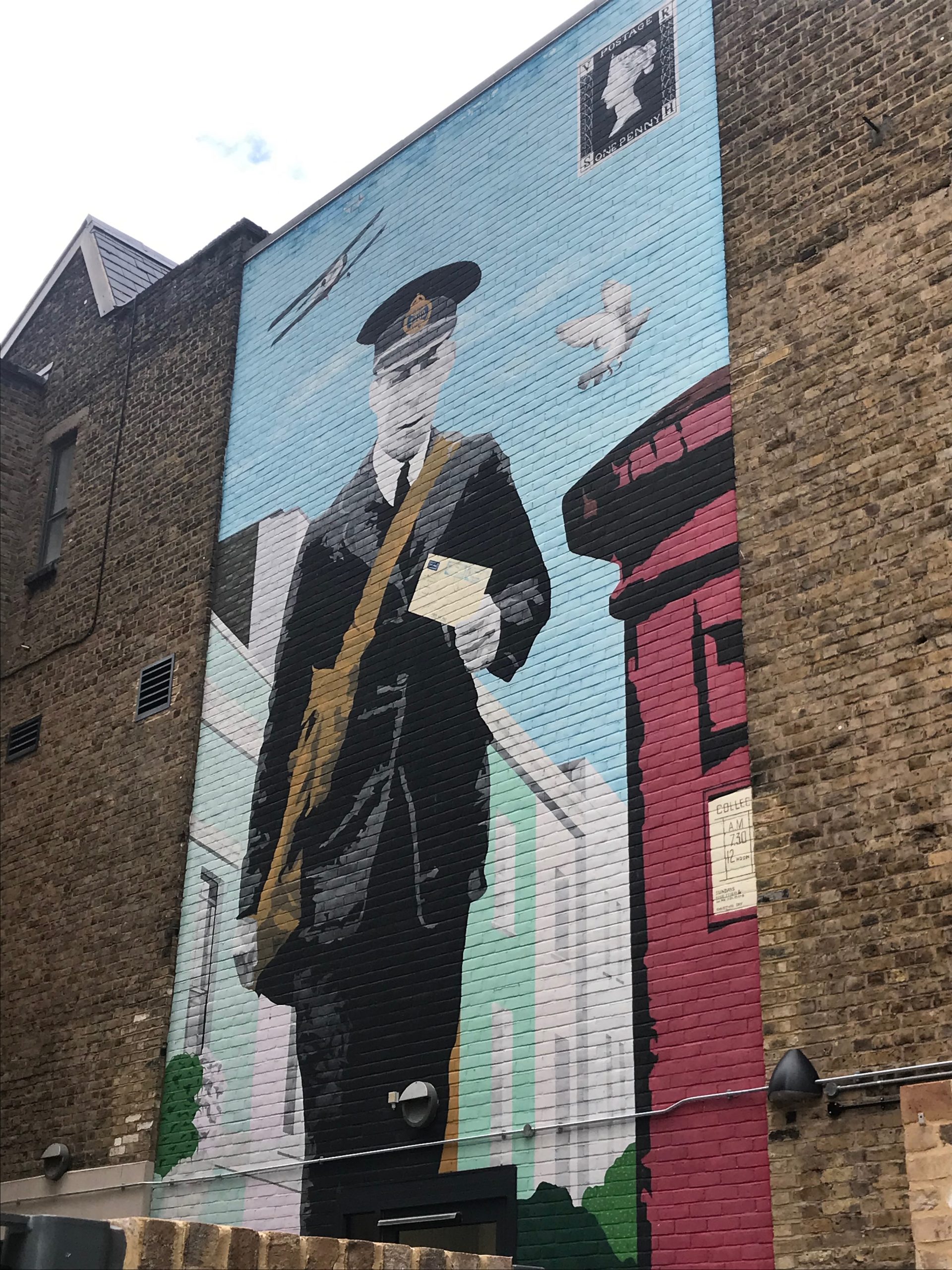
An image painted onto the side of a brick building showing an old fashioned Postman holding a letter which it looks like he is about to place into a post box. You can see a bi-plane flying in the sky in the picture and in the top right hand corner is a Penny Black Postage Stamp.

What’s at the Postal Museum?

Visits to the Postal Museum can broken down into three different sections.

Firstly there is the old underground rail system used by Royal Mail for transporting mail across central London; Mail Rail. Museum visitors can ride on the Mail Rail trains – converted to carry passengers instead of mail sacks – and during the 15 minute journey learn about the history of Mail Rail and why it was such a valuable system. Because of the way tickets work, Mail Rail is the first part of the museum that most visitors go to. You book a timed slot for riding on Mail Rail and this is what you book your museum tickets around.

In the same building as Mail Rail is Sorted! – a hands on role play area for children under the age of 8.

The main part of the museum is diagonally across the road from the building containing Mail Rail. That makes it sound further than it is, as in reality the road in question is only a small, quiet road so it does only take about a minute to walk between the two sites. This is where you find all the main exhibits and the “museum” part of The Postal Museum.

How Postal Museum tickets work

When you buy a ticket to The Postal Museum it gets you a ride on the Mail Rail and also entry to the main museum site. Your ticket allows you to revisit the museum as many times as you like in 12 months, but you can only ride on the Mail Rail once, on the day your ticket is first valid.

You book a time slot for riding on the Mail Rail and you’re asked to arrive 10 minutes before your scheduled time.

To visit Sorted! you need to buy a separate ticket per child and you have to book a time slot. Sorted! is an additional charge, and it is possible to visit Sorted! without going to any other part of the museum. If you are also visiting the museum then you get your Sorted! ticket at a discounted price.

Mail Rail

Seen by many as the main attraction at The Postal Museum, Mail Rail is something not to be missed. A 2ft narrow gauge driverless underground system originally ran for 10.5km with 8 stations. This allowed mail to be moved around London far faster than doing so at street level. The railway ran from its inception in 1927 until it finally closed in 2003.

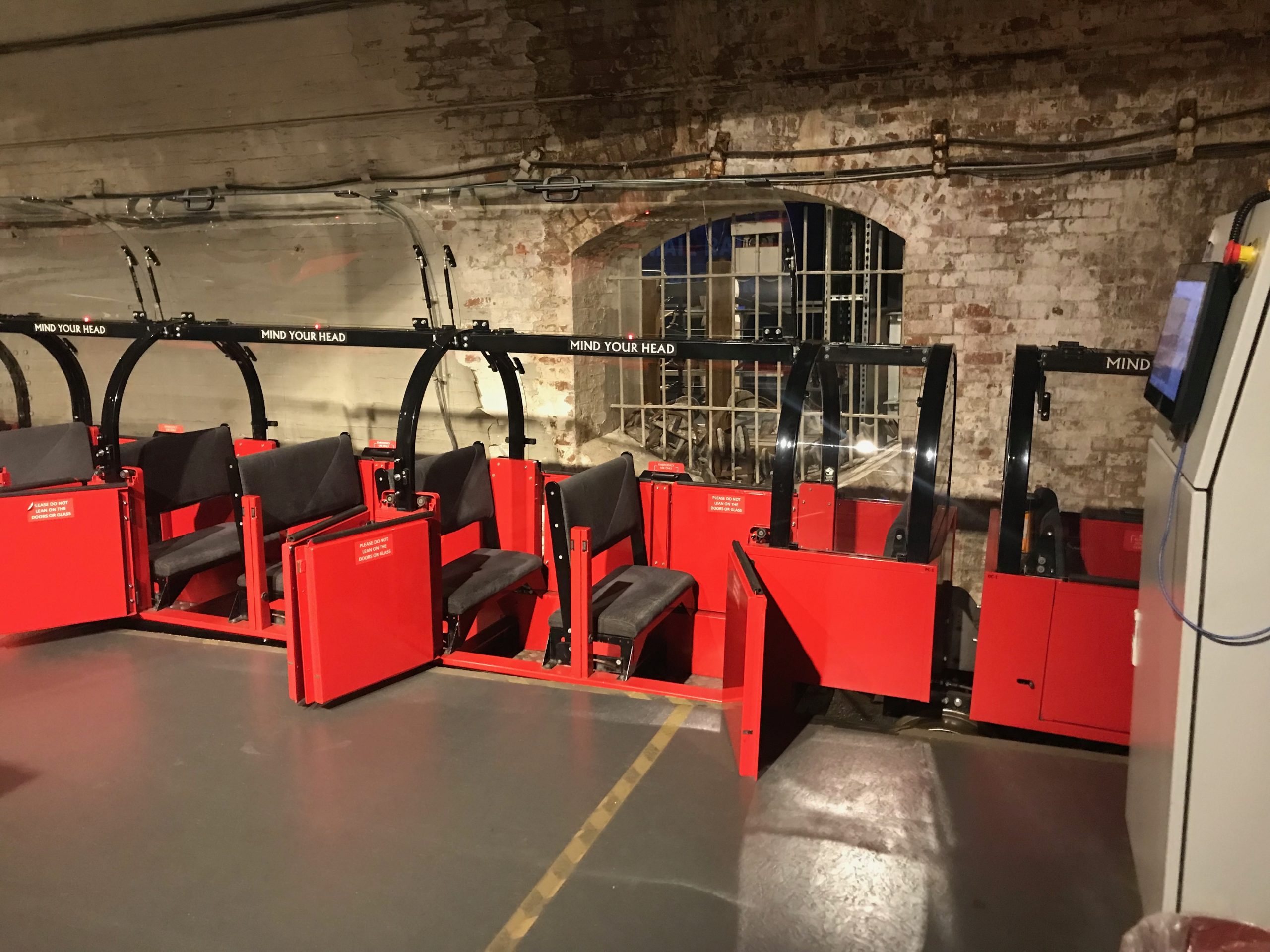
A view of the passenger carriages of the Mail Rail train.

When the original railway as mothballed, much of the original infrastructure and rolling stock was kept and that now enables visitors to be taken along a 1km section of the route in adapted versions of the trains that now carry passengers instead of mail bags, and have drivers at the front. During a 15 minute journey visitors are told the history of the line and in a couple of points the train stops to allow films to be projected on to the walls, showing what the railway used to be like, and explaining the role it played in carrying mail across the capital.

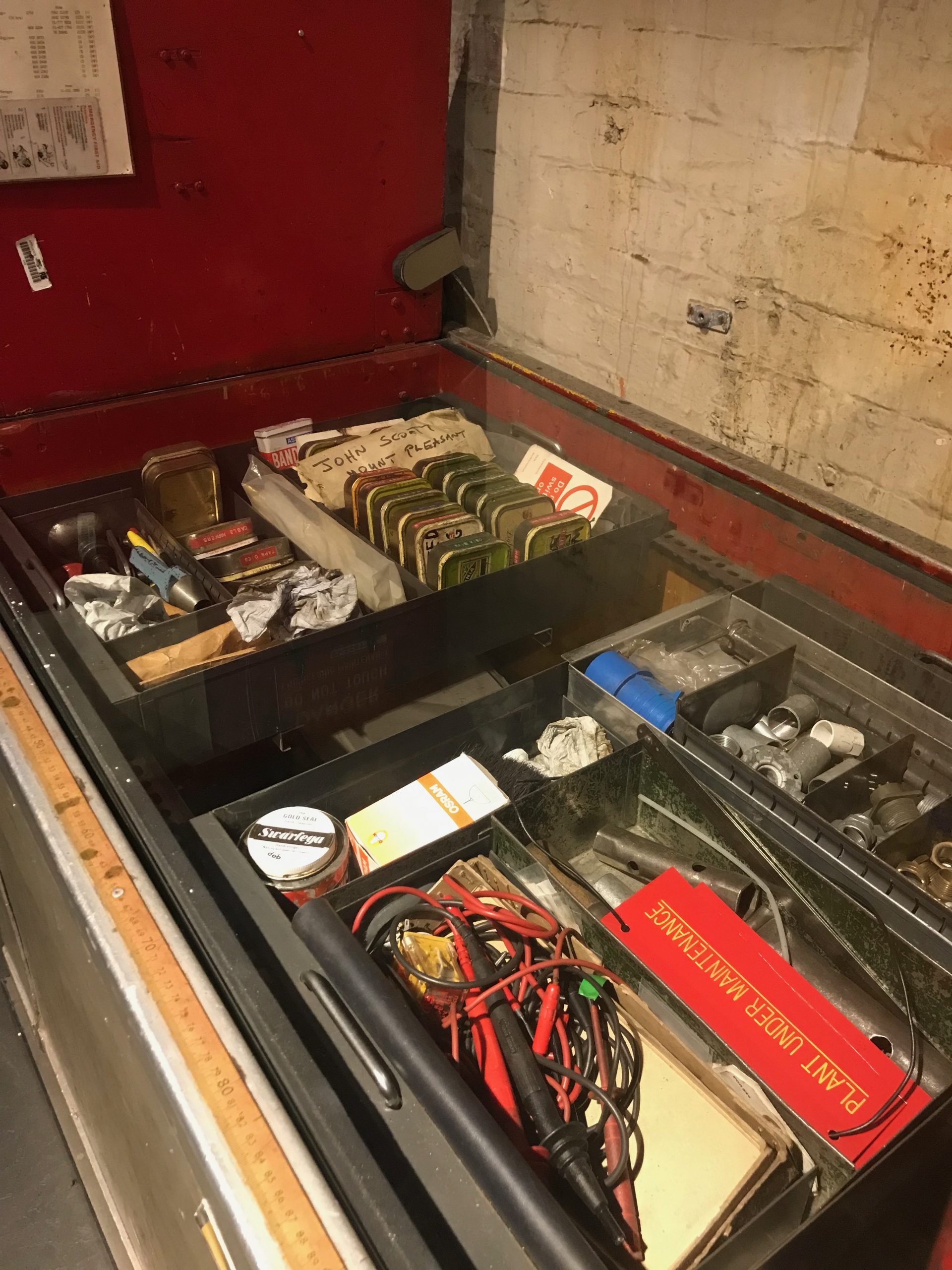
Once you’ve completed your ride on the train itself, there’s a lovely small exhibition space containing artefacts from the railway. It’s clear from the exhibits that people who work on the Mail Rail have been heavily involved in creating this exhibition, and it’s lovely to see things like a homemade engineer’s toolbox that one man created from an old decommissioned carriage. The labelled tobacco tins containing various small parts reminded me so much of my dad’s garage.

A picture of the top of an old Mail Rail carriage that was converted into an engineers trolly by someone who worked there. You can see an assortment of bits and bobs including a tin of swarfega, leads for a multimeter and an array of old tobacco tins

The whole experience is fascinating and a must do for anyone who loves something a bit geeky. The museum’s website provides some great details about the practicalities of riding the Mail Rail and accessibility information.

There is a gift shop located in the Mail Rail building.

The main Postal Museum

Once you’ve been on the Mail Rail you head to the main museum building across the road. This is where the main exhibits that make up the museum are. Although the total floor space isn’t huge, there is a wonderful collection of artefacts from the first letters and stamps, right through to the latest ones produced with King Charles III on them.

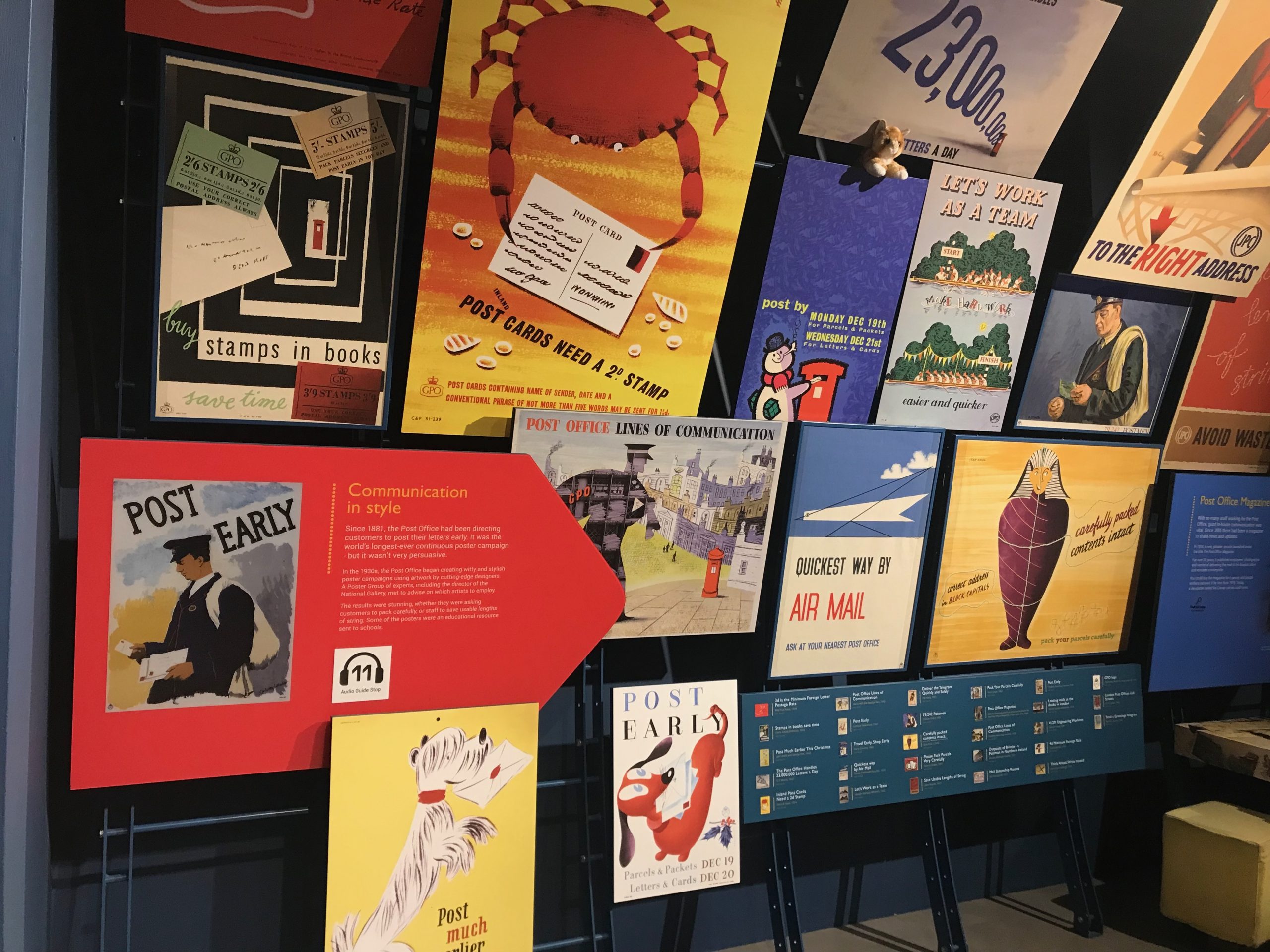
A display showing a variety of old Post Office and Royal Mail advertising posters at the Postal Museum.

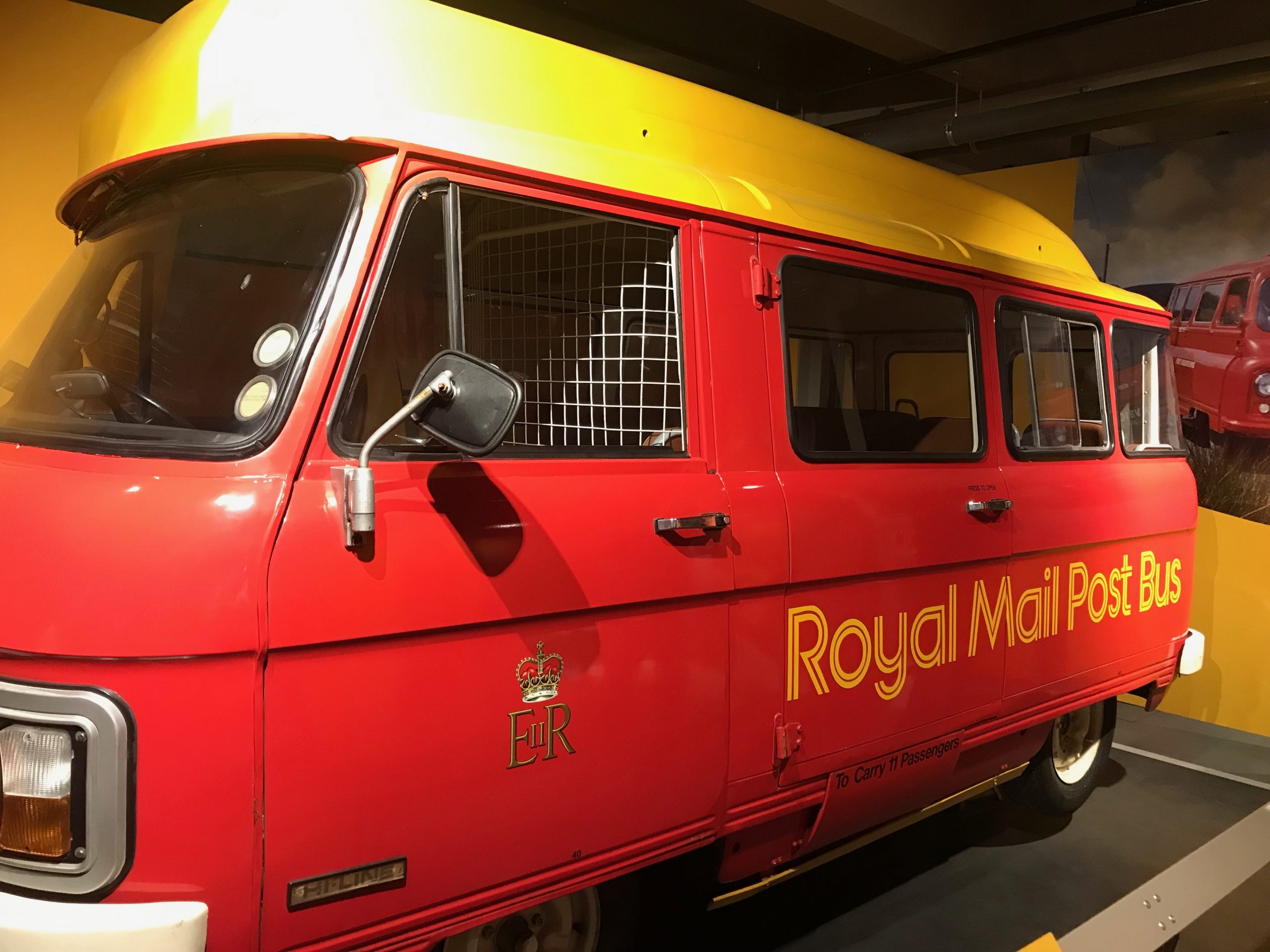
The history of the Postal system in the UK is fascinating and, even in these days of email and social media, it clearly comes across about what a crucial part of the infrastructure the postal system was. It made me feel a bit sad to realise just how much we’ve lost really. Seeing in particular the adorable little Post Bus really brought it home, as in a time when rural bus services have been cut more than ever before something like a Post Bus network would help so many.

A very cute and cheery looking red and yellow Royal Mail Post Bus.

For kids visiting the museum there was so much that was hands on for them to touch and play with, that it easily kept all three entertained in different ways. The activity book was a nice touch as it featured things that all ages could get involved in, whilst also being quite educational as well.

There is a small cafe in the foyer area of the museum along with a gift shop.

Sorted!

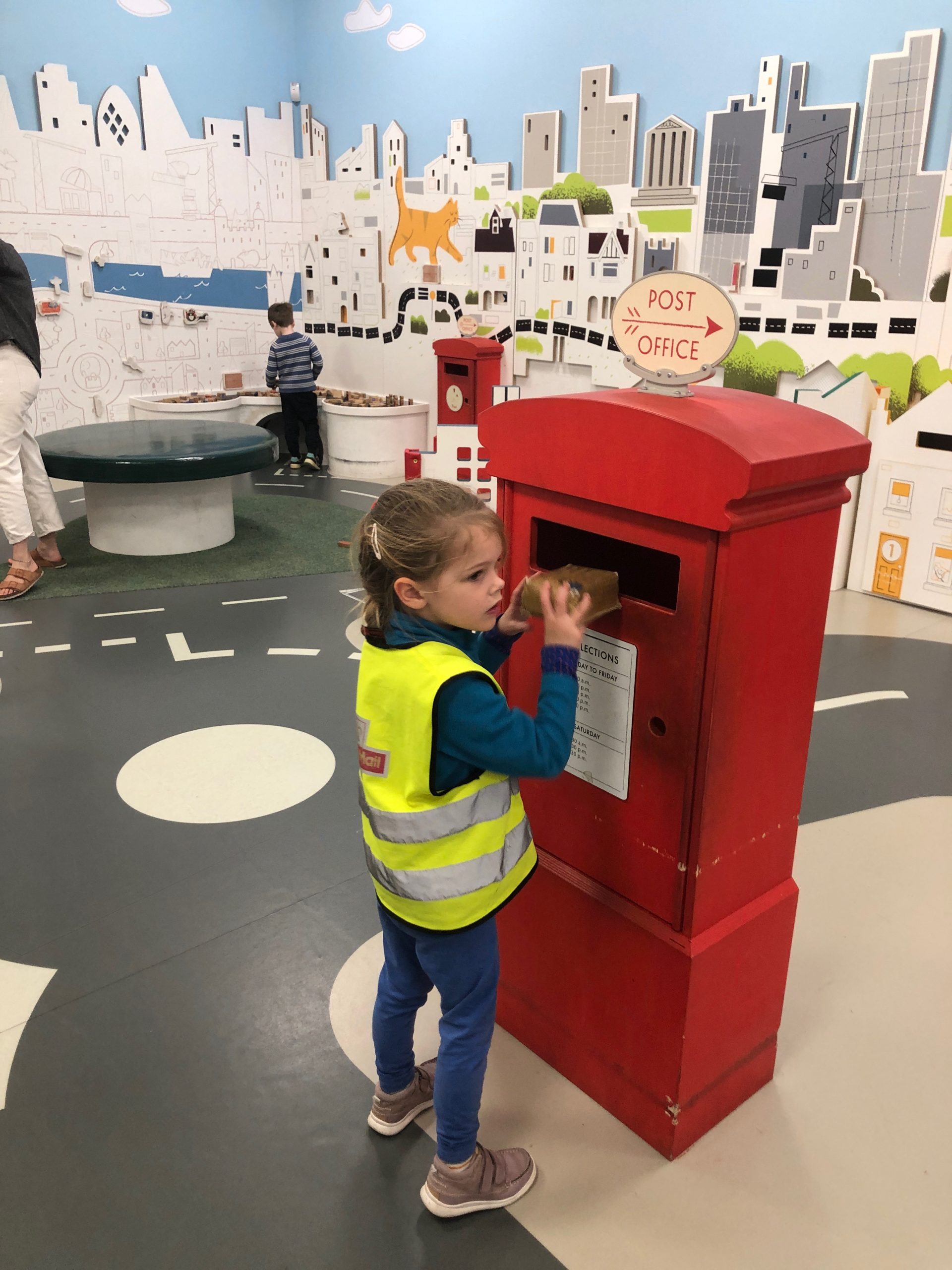
In addition to the main museum there is a role play area for children aged 8 and under located in the same building as the Mail Rail, called Sorted! You need to book a 45 minute slot for sorted and this can be done via the museum’s website. It is possible to either book just to go to Sorted! or to add a visit on to buying museum tickets. If you do the latter then it only costs a couple of pounds per child for your Sorted! visit.

A 4 year old girl posts a parcel into a play post box at the Postal Museum's Sorted Role play area. The girl is wearing a Royal Mail high coz jacket in a child's size.

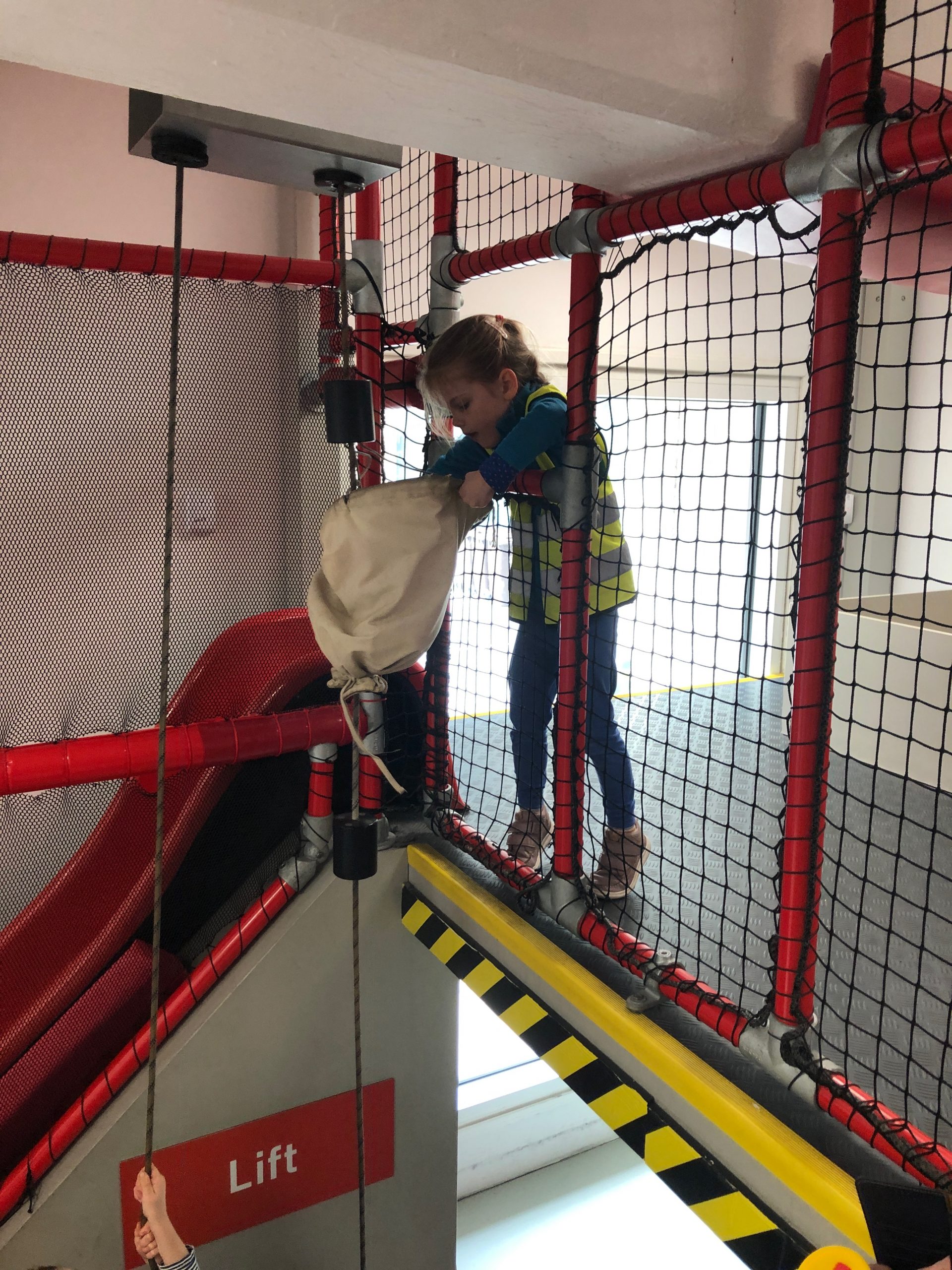
Sorted! gives children a huge number of role play opportunities, all around a postal theme. Our four year old thoroughly enjoyed it, in particular because she could dress for some of the roles.

A four year old girl wearing a child sized Royal Mail high-via jacket is hauling a play postal sack up after it has been raised to first floor level on a pulley system. Just next to where she is doing this you can see a red slide leading downstairs.

What we thought

We absolutely loved the Postal Museum. This was actually our second visit, but the first with children in tow. Things have changed a bit in the years since we first came, but actually coming again with kids made us realise just how child friendly it is. There was so much for all three kids to interact with that they all had great fun. The pneumatic tubes were a huge hit – not just for our kids, but all the ones we saw playing with them. The children also enjoyed quite a few of the other interactive exhibits, as well as being interested in quite a lot of what they saw there.

A blonde four year old girl smiling at the camera whilst wearing a vintage style GPO uniform of coat and hat, remade in a child's size.

The kids activity booklet that they were given when they arrived was also really well put together. Some things that were easy enough for the four year old to do without much assistance, but other bits that the 13 year old also enjoyed trying to find as we went around.

How to find The Postal Museum

The Postal Museum isn’t right next to any tube stops, but please don’t let that put you off at all. We travelled to Farringdon station (Circle, Metropolitan, Hammersmith & City, National Rail and Elizabeth Line) and walked from there in less than 15 minutes. And that was with a 4 year old who doesn’t always necessarily walk in a straight line! Most of the streets you walk along are quite small and quiet, especially on a weekend.

For more detailed directions to get there try using the TfL Journey Planner and enter “The Postal Museum” as your destination. That way the planner will show you buses and walking instructions too.

Preparing kids to visit The Postal Museum

When we visited there was a fantastic activity pack for children which had them spotting things around the museum. This, and quite a few of the information panels for children around the museum, are all based around the character of The Jolly Postman. The sight of him, and a picture of kids’ other favourite postman, Postman Pat, just inside the entrance to the museum was enough to convince my four year old that this was a place that would interest her. If your little one isn’t familiar with The Jolly Postman before your visit then it may well be worth introducing them.

On their website the museum have done a huge amount of work with Ambitious about Autism to produce a series of resources to help support autistic and neurodiverse visitors to the museum. This includes visual stories and pre-visit films. At the museum itself we saw a basket of ear defenders available near the queue for the Rail Mail and they also have sensory bags available to borrow, along with lanyards which can help staff identify visitors that may require additional support.

Want to read more?

Why not take a look at other museums we have visited, or see what else we’ve enjoyed doing in London.

Filed Under: London, Museums, Train Travel

How does swimming work at Duinrell?

August 2, 2023 by Penny Leave a Comment

Along side the amazing onsite theme park, one of the other main attractions at Duinrell is the swimming. The site boasts the largest water park in the Benelux area, with a total of 21 slides and other features. There are both indoor and outdoor pools with an array of water slides for all ages and abilities, but many visitors are left wondering how does swimming work at Duinrell? It’s certainly a confusing situation. Having visited (In July 2023) I hope I can help explain things.

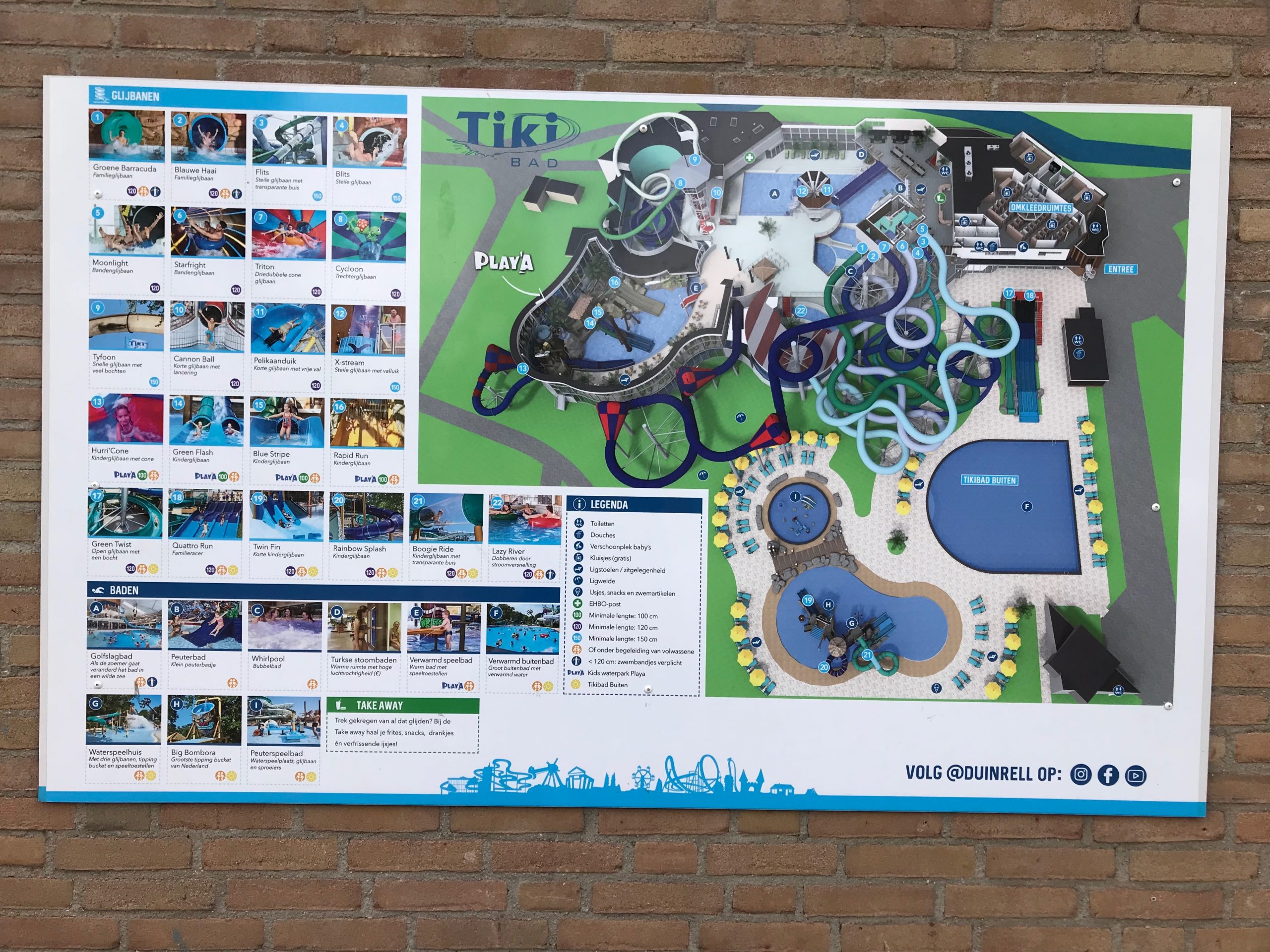
A map of teh pool complex at Duinrell, showing both the indoor and outdoor pools and all the slides
A map showing the Duinrell Tiki Pool complex

Indoor or outdoor?

There are two separate pools at Duinrell – one indoor and one outdoor. When you go swimming you choose in advance which pool you go to and you’re not able to move between the two.

Tiki Bad – indoor pool

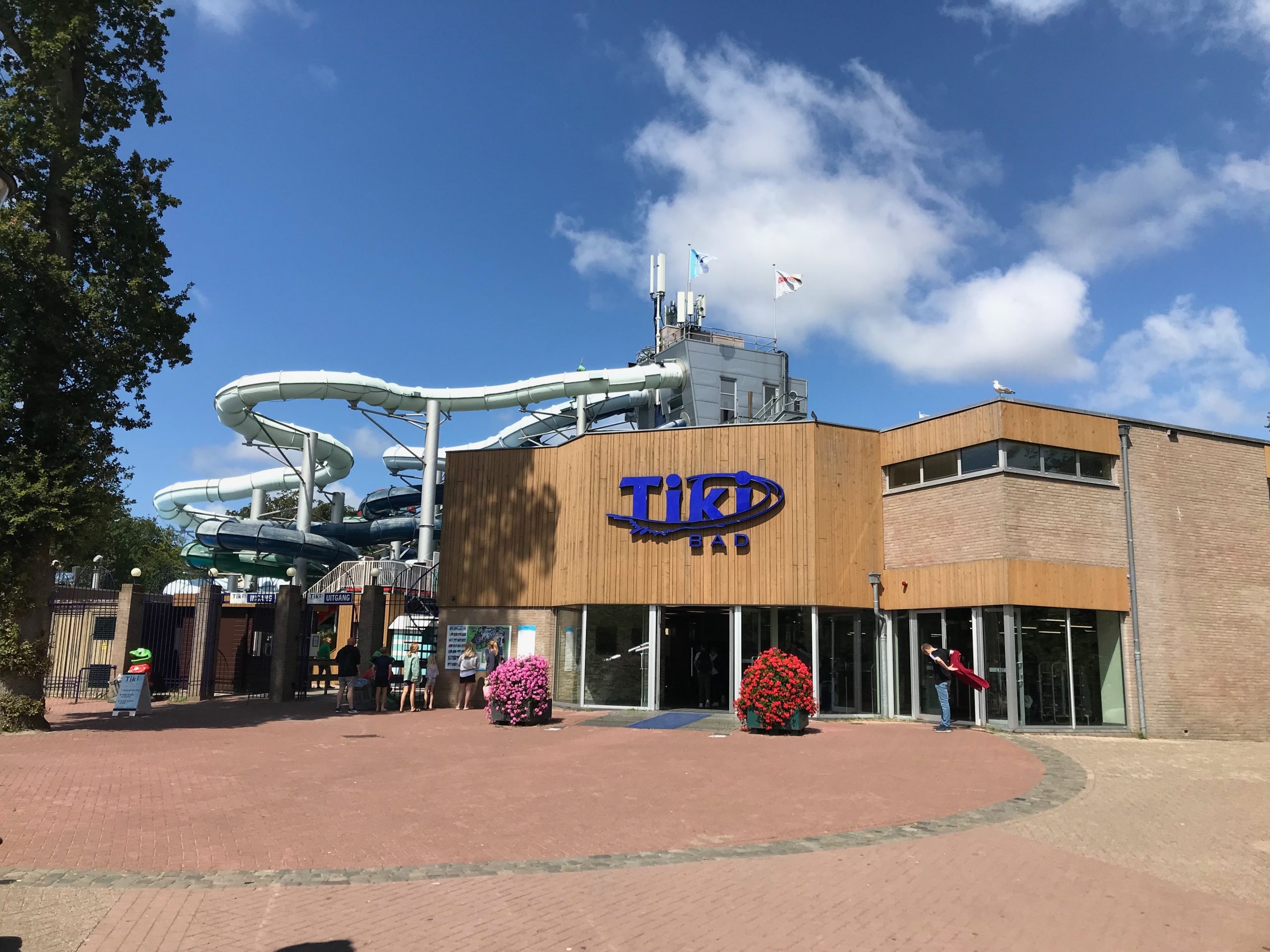
The outside of teh indoor Tiki Bad swimming pool at Duinrell
The entrance to the Duinrell Tiki Bad

The indoor pool complex contains the majority of the slides, along with a long lazy river (which includes a dark section with fake bats!), and a couple of pools aimed just at children. There are different height restrictions for all the pools and clear signage telling you how tall people have to be for each slide.

It’s also worth noting that children under the age of 120cm are not allowed in certain parts of the pool or on some slides without armbands. Even though our daughter is a decent swimmer for her age, and always had one of us with her, she still needed them. If you don’t know this in advance you can buy armbands from the pool reception for under €4.

Tiki Pool – outdoor

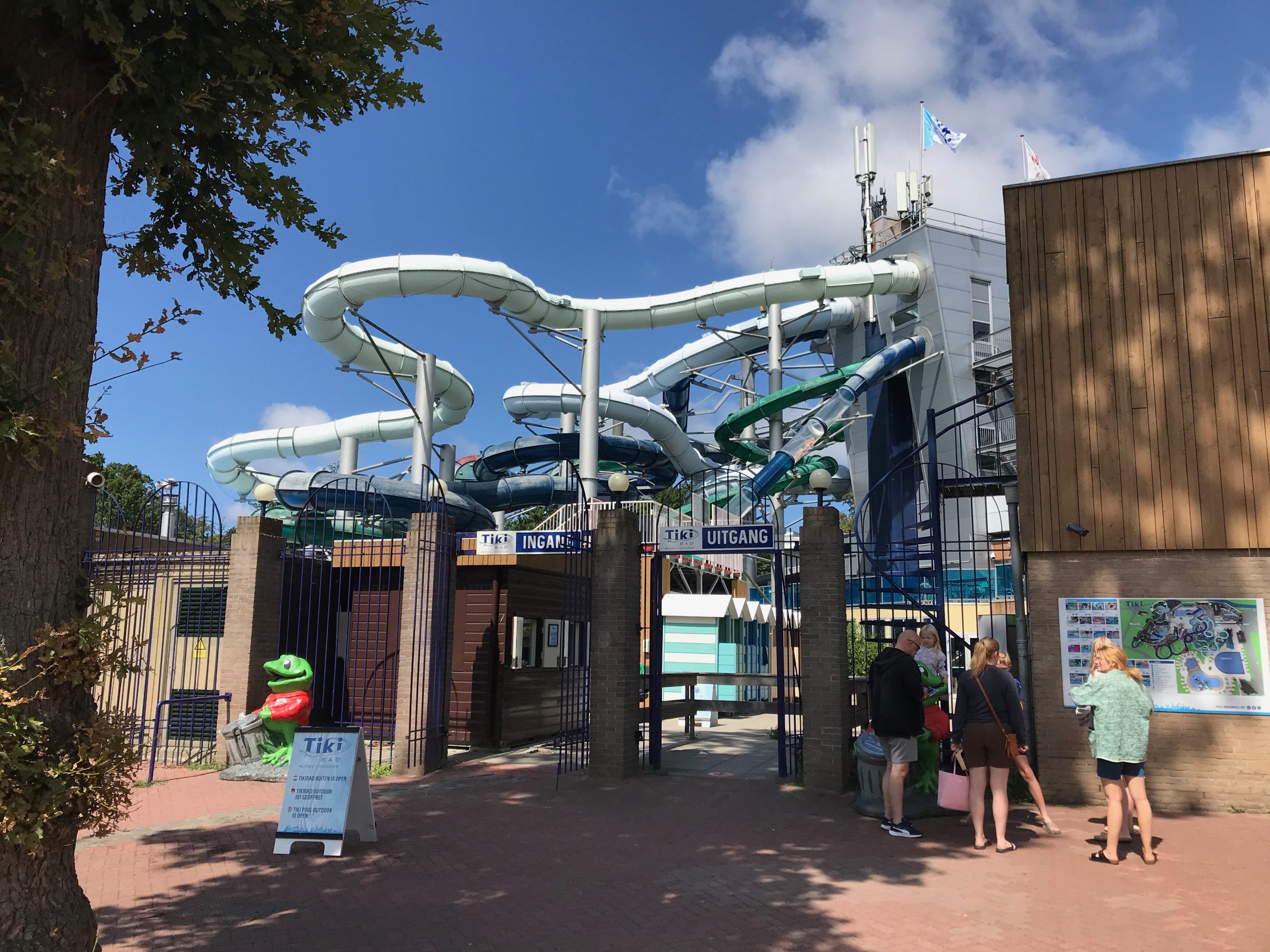
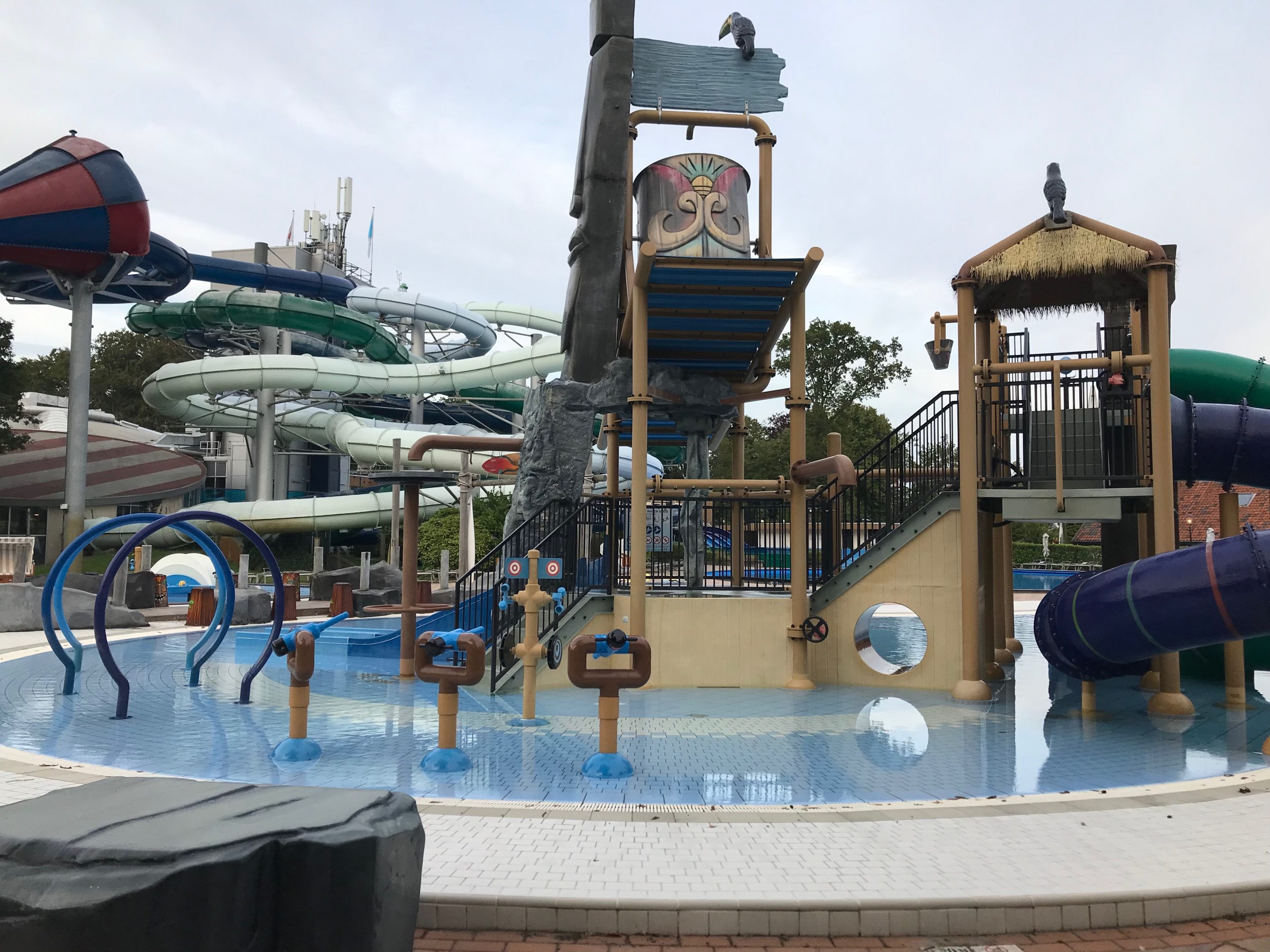
The entrance to the outdoor Tiki pool at Duinrell with the indoor pool's slides visible in the background.
The entrance to the outdoor Tiki Pool at Duinrell

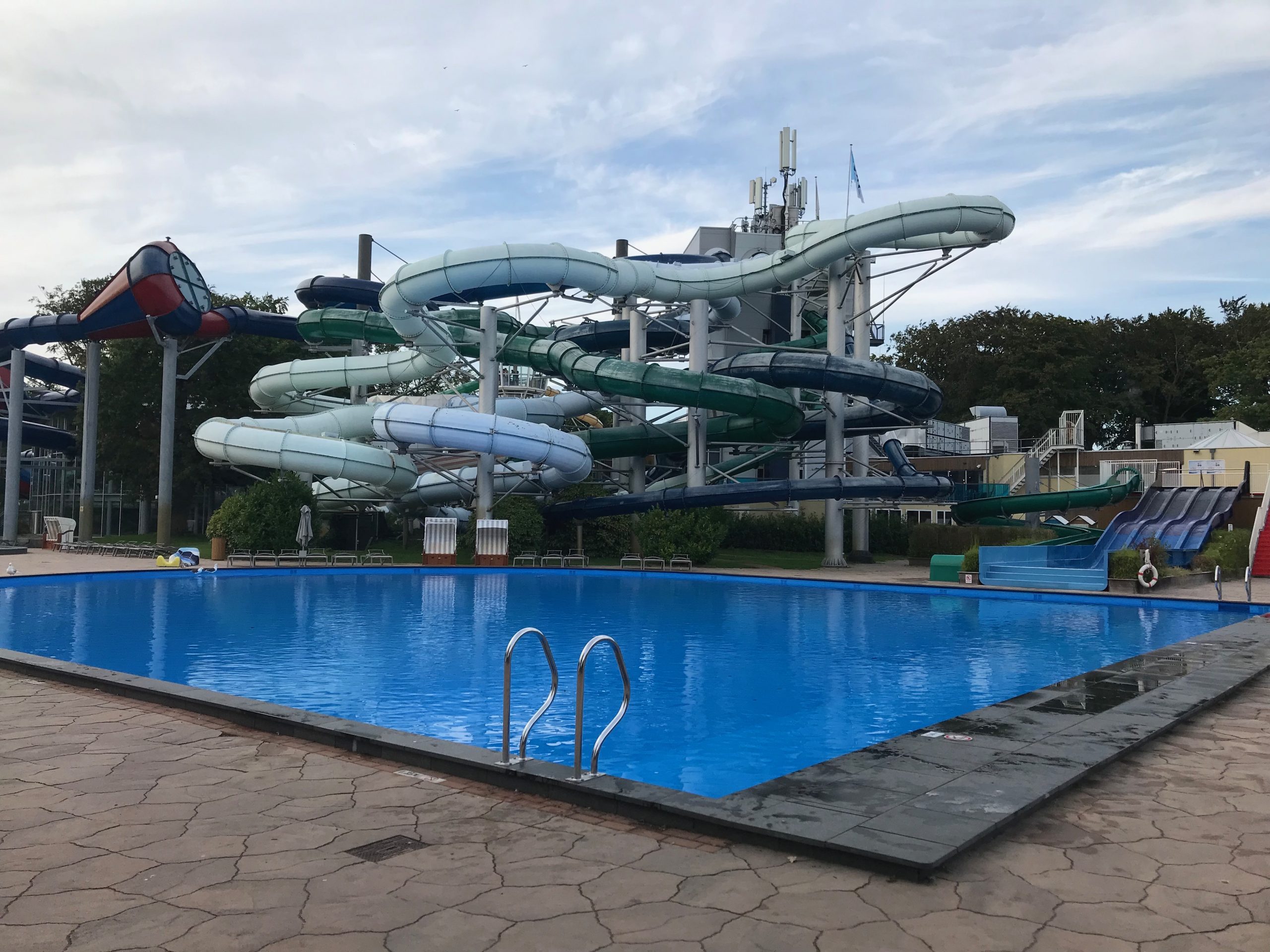
The outdoor tiki pool is only open in the summer months and contains a variety of slides and splash areas, including the largest tipping bucket in The Netherlands! When we stayed at Duinrell, although the outdoor pool was officially open, it just wasn’t quite warm enough for us to brave it.

How much does it cost

Much of the swimming confusion at Duinrell comes from the fact that swimming isn’t necessarily included in the price you have paid to stay at Duinrell. This makes it quite different from staying at somewhere like Centre Parcs where it is included in the price. As I explain in my main post about Duinrell, there are different ways to book to stay at Duinrell. You could book direct with Duinrell, or you may book via Canvas Holidays or Eurocamp. With people trying to save money as much as possible right now there’s no wonder people are asking how does swimming work at Duinrell.

If you’ve booked accommodation with Duinrell direct then swimming is included in the cost of your accommodation. That is not the case if you have booked a camping pitch with them though – then you get a discounted swimming rate of €7 per person for indoors and €5 for outdoors (these prices are increasing by €0.50 for 2024). When you check in with Duinrell you receive vouchers with codes on which give you free / discounted swims. The number of vouchers depends on how long you are staying for. One voucher applies for everyone in your accommodation – you just say how many people when booking.

A view over the main outdoor pool at Duinrell, showing the indoor pool's slides in the background.
The main outdoor Tiki Pool at Duinrell

For customers who have booked with Canvas or Eurocamp swimming is not included in your accommodation cost, but you do get it at a discounted rate. When you arrive you are provided with vouchers which give you exclusive codes which give you a discount. The number of vouchers you get seems a little bit fluid depending on who checks you in and when we arrived we stayed for three nights, but the Canvas check in team gave us two vouchers and told us that if we wanted more we should just go and ask for them.

These vouchers are not linked to one particular person so it is possible to pass unused vouchers on to someone else. Each paper voucher contains an exclusive booking code though and this can only be used once.

With Canvas or Eurocamp provided vouchers the indoor pool cost €10 per person for two hours, and the outdoor pool cost €5 per person for four hours. I expect these costs will increase in 2024 in line with the discounts Duinrell provide for campers. Should you not have any vouchers you can still book swimming slots, but they are double the price – so approximately €20 indoors, and €10 outdoors. Canvas and Eurocamp customers are also limited as to when they can swim, with them only being able to book slots between 10am and 2pm.

How to book your swimming slot

Whilst I believe it is possible to turn up at either pool and if they have availability just pay there, the way you’re supposed to book a swimming session is via the Duinrell app (available on both Google and Apple apps stores). You can only book for the same or next day (preventing people from booking everything up way in advance) and the process is incredibly simple with you just entering voucher codes, how many people want to swim and then paying (if you have to) via the app. You get emailed tickets which come with a QR code per person. For the indoor pool you book a 2 hour session, and for the outdoor pool a 4 hour one during the summer period. Between November and March the visits to the indoor pool are extended to 3 hours.

When you get to the pool

Things are pretty slick when you get to the Tiki bad. Upon entering you are faced with turnstiles and each person has to scan the QR code from their booking email. This times you arrival at the pool. In addition to the booked session you also get an additional 30 minutes to change and shower.

At the indoor pool you head upstairs for changing cubicles and it’s a unisex arrangement with a few larger cubicles for families. The lockers are free of charge, but a bit complicated. You have to choose a four digit PIN number and you enter it on the touch screen. They then allocate you a locker in that bank and the door opens for you. It’s important to remember both your locker number and PIN for when you return after your swim.

Swimmers are asked to shower before entering the pool as well as afterwards.

Around the pool are a variety of seats and sun loungers that you can leave towels and other things on. There is also a pool-side restaurant with food and drink available. If you’re not planning to eat or drink then you don’t need to take any money in with you at all. You just need the QR codes from your emailed tickets.

When you leave the centre you again need to scan your QR codes at the turnstiles and it will work out how long you have been there. If you’ve gone over your booked session and the 30 minutes given for showering and changing then you are charged more before being let out.

The outdoor Tiki pool at Duinrell
Part of the outdoor Tiki Pool at Duinrell

Our thoughts

I’m not going to lie – the swimming system at Duinrell is a right faff to get your head around. If you’re going just for the swimming then for a large family it can work out quite pricey. It is an amazing waterpark and for just two days and two visits we had we didn’t mind paying, but had we been there longer I’m not sure we could really have afforded to swim more. Once you’ve got your head round it all you can make it work, but it certainly leaves many people feeling very confused before they arrive. I really hope this has helped you understand the system a bit better and answered the question: How does swimming work at Duinrell.

Filed Under: The Netherlands

What do you need to drive in Europe from the UK?

August 1, 2023 by Penny Leave a Comment

With more and more of us opting not to fly places driving to Europe may be an alternative option, but it does leave the question of what do you need to drive in Europe from the UK? It can seem quite daunting at first, but having just done a road trip from the UK to The Netherlands (via France and Belgium) I can tell you that it’s actually quite straightforward.

A image showing pat of the back of a car featuring a light cluster and an oval white sticker with "UK" on it in black. You can just catch a glimpse of the last letter on a yellow number plate on the edge of the photo.

Don’t just think about your destination, but where you’re driving through too

Each country in Europe has different rules, but you need to remember that you need to follow the rules of all countries that you drive through, not just your final destination. The chances are that if you’re going from the UK you’re likely to arrive in either France, The Netherlands or Spain, so even if that country isn’t your final destination you need to take into account their rules too. In our case The Netherlands was our final destination, but we also had to look at France and Belgium’s requirements too.

When it comes to working out what do you need to drive in Europe from the UK you can break it down into physical things in your car and paperwork.

Physical things in your car

UK sticker

Rule changes post Brexit mean that GB stickers are no longer valid, and what you actually need is either a UK sticker to go on the back of your car, or small add on stickers to your front and back numberplate showing UK. The most economic way is to buy a set of both types of stickers. That way you also have spares should one version come off. Being the cautious types, this is exactly what we did.

Headlight Beam Converters

As I hope you already know, they drive on the right in mainland Europe, but car headlights here in the UK are set up for driving on the left. So that you don’t blind drivers coming towards you, it’s important that you either use headlamp beam converters, or look and see if you can change the settings in your car for right hand side driving and change the light set-up that way.

Hi-viz jackets

You need to have hi-viz jackets for all occupants of your car, and these need to be in the cabin of the car, not tucked away in the boot somewhere. Hopefully you won’t need to wear these at all, so even if you have kids you can just buy adult sized ones for everyone, but it is possible to buy a family pack with two adult and two child sizes in it.

Warning Triangle

Some cars come with one of these tucked away in the boot, especially if you have a German car, but it’s a good idea to have a warning triangle even if you’re here in the UK as it gives you some added protection if you have to stop somewhere that might not be immediately visible to other drivers.

First Aid Kit

A decent first aid kit is another thing that it’s a good idea to have in the car anyway, especially if travelling with children. I find that I add extra plasters to mine, along with bite/sting cream and paracetamol (and Calpol sachets for the kids).

Do make sure that you regularly check your first aid kit and replace things that have been used up or have gone out of date. Any cream in there (like Savlon or similar) can separate a bit if the weather has been hot, so they might need replacing before they are used up.

Spare bulbs and fuses

There’s a funny rule in France that means you have to carry a set of universal spare bulbs and fuses for your car. As anyone who has ever stood in Halfords trying to buy a new car bulb will know, finding the right one for your car can be an absolute pain and the idea of a universal set of bulbs that work in all cars is laughable, but even still, it’s something you have to have.

All in one kit

If you’re feeling at all daunted by the long list of things you need to drive in Europe from the UK, don’t worry. It’s possible to buy a set that contains pretty much everything I’ve listed above. Or at least a combination of the things listed.

Paperwork

It’s really important to check all paperwork properly before you travel. Make sure that you read the small print and check country lists to make sure that everywhere you drive through is mentioned, not just your final destination.

Driving Licence

UK Full Driving licences are valid for driving in Europe. Just make sure that you take your licence with you.

Car Insurance

This is one of those things that you need to read for yourself, very carefully. Many UK fully comprehensive car insurance policies cover driving in Europe, or certain European countries for a period of time each year. It’s not possible to give a sweeping statement about what is valid there and what isn’t, but check your own policy documents and if in doubt give your insurance company a ring, or check their website. Take your policy documents, or a print out of them with you on your trip.

V5

Sometimes known by drivers as the car log book, the V5 form from the DVLA shows who owns the car and what address it is registered to. Some countries require you to carry this with you, so it is wise to do so. I also recommend taking a photo of the form and keeping that on your phone too. That means that if the paper version is mislaid you at least have all the relevant numbers on it to help you report it lost to the DVLA and help you get it replaced.

Breakdown Cover

Whilst not compulsory, would you know who to call if you broke down whilst driving in Europe? I certainly wouldn’t had I not looked into it before we travelled.

It’s possible to buy European Breakdown Cover from all the main providers (AA, RAC and Green Flag) as well as some smaller companies. Policies can be either annual or just cover the duration of your trip. Some comparison sites can help you compare prices. I also highly recommend clicking through from a cash back site like Topcashback before buying. You could easily get over 10% of the cost back as cash back for doing so.

Do your research first – speed limits, road signs and tolls

Different European countries have different speed limits and road signs. It’s worth trying to familiarise yourself first with the key signs and limits from the countries you’re driving through. A quick internet search should help you, and it might even be worth printing off a few so that someone in the car can help look them up if you spot any you don’t know.

Depending on where you are going, you might encounter toll roads or bridges or tunnels that require you to pay a toll. Many European towns and cities also now have Low Emission Zones (ULEZ) in their centres. A good Sat Nav will help you avoid them if you want to, but it also helps to make sure you have a selection of Euro notes and coins to hand in the car. Some tolls require you to pay online within a certain period, but some tolls can be cash only for some lanes.

Final things to check

The above list has hopefully helped answer the question of what do you need to driving in Europe from the UK, but before you set off from home make sure you’ve checked your car over first. Make sure you have a full tank of fuel, topped up washer fluid and the correct air in your tyres too. Experience also tells me that a long car journey is easier with a good selection of car snacks too!

Want some European travel inspiration?

If you’re still not sure where you want to visit in Europe, then why not take a look at some of the places we’ve been to for inspirations or some handy travel hints?

Disclaimer: Please note that some of the links in this post are Amazon Affiliate links. This means that if you click through to Amazon and make a purchase I will receive a (small) commission. It will cost you no more than if you had arrived there under your own steam. Many thanks for any purchases that are made. Despite it being small, any commission is very much appreciated.

Filed Under: Driving, Europe

Willen Lake Abandoned Miniature Railway

July 17, 2023 by Penny Leave a Comment

Willen Lake in Milton Keynes is a great place for a family day out with loads to do for kids of all ages. Not only are there activities on the lake from pedalos and boats to an inflatable assault course, there are also plenty of places to eat and drink and also dry activities too. The new playground is vast and loved by kids, as is the nearby splash park. There is an accessible path around the whole lake which is perfect for pushchairs, wheelchairs, bikes and scooters. People who want to get up in the trees can also take on Treetop Extreme. The newly built onsite Premier Inn is perfectly situated for both the park itself and the nearby Gulliver’s Land theme park. Despite all this, there’s one tucked away part of Willen Lake that is sadly not taking visitors right now. The abandoned miniature railway.

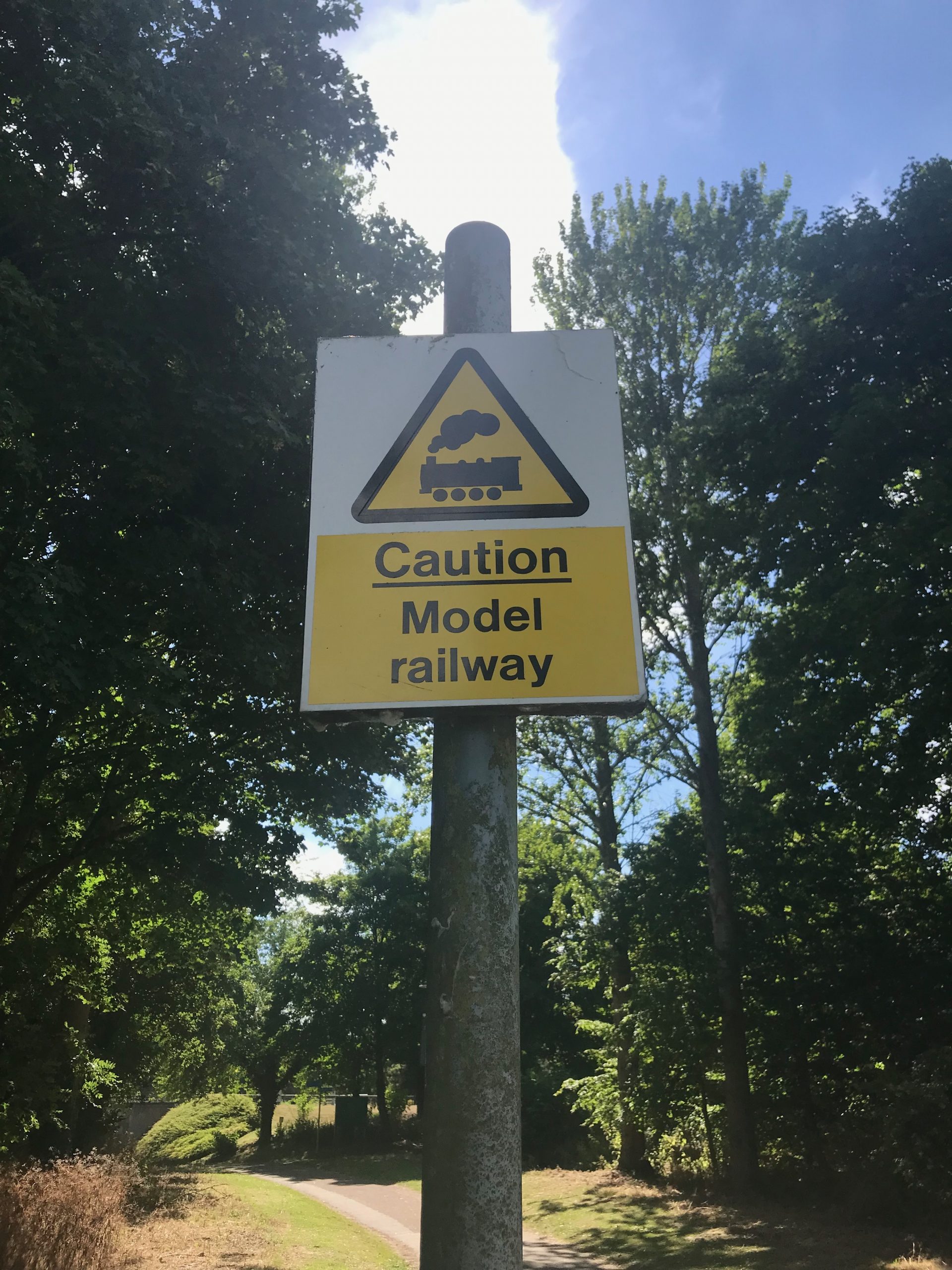
A yellow warning sign showing an picture of a steam train and the words "Caution Model railway"

Originally opened in 1989, and then the track re-routed when Treetop Extreme opened in 2005/6, the railway today is sadly in a state of disrepair.

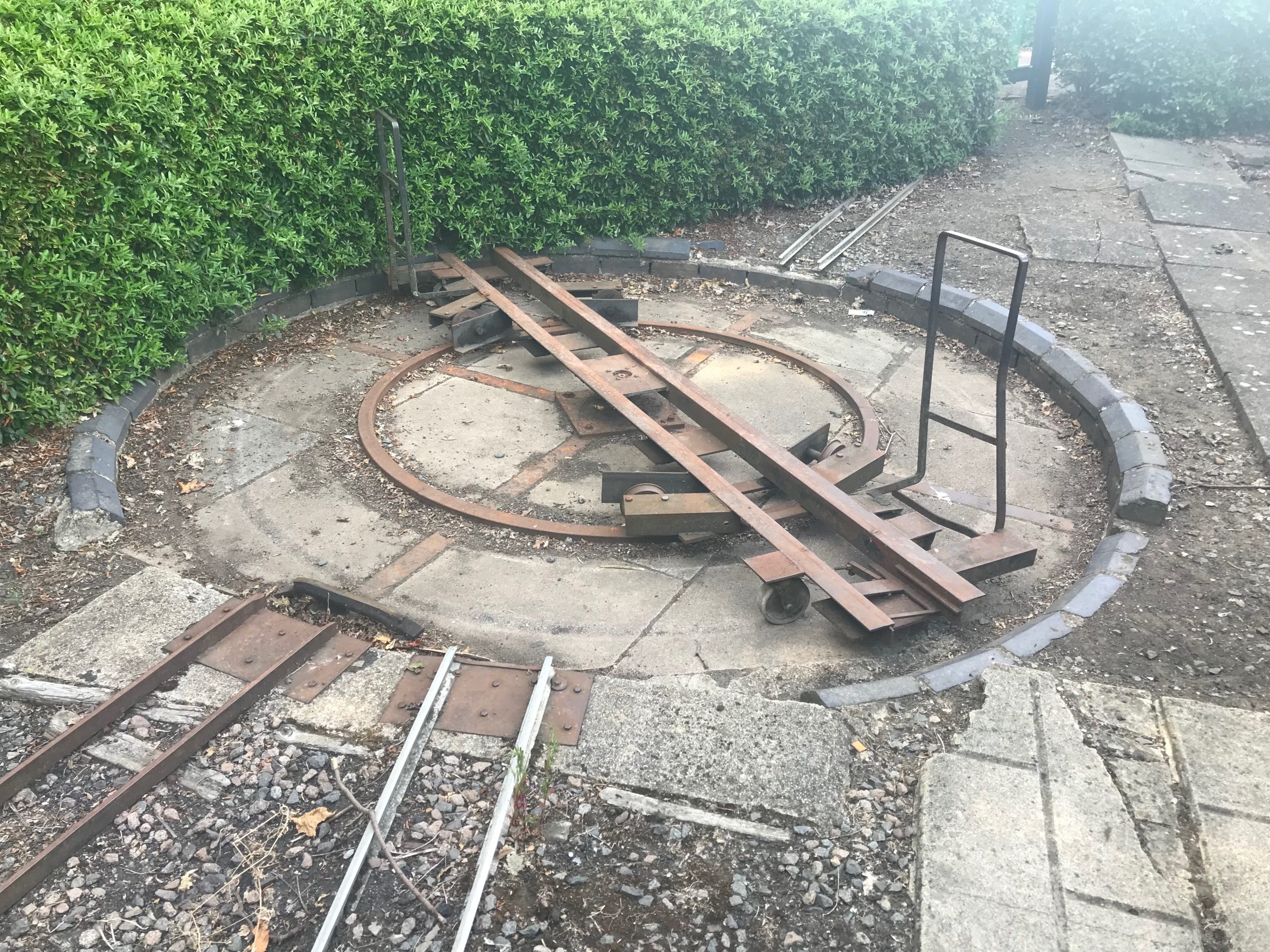
As you can see from my video below, the old station is still there complete with a turntable for turning locomotives round, and interestingly all the track is all still in place. You can even see some signs still up warning pedestrians where the track crosses a path.

A miniature railway turntable, part of the abandoned miniature railway at Willen Lake. Milton Keynes.

Off in some sidings three carriages are in a bit of a state and just left for nature (or vandals) to take over. I do also wonder if there might be a loco in the closed up shipping container that is there.

It’s such a shame to see an abandoned miniature railway like this in a place that is so popular with families. I’m sure that on a sunny day kids (big and small!) would be clamouring for a ride, but I’m guessing that the council probably isn’t interested in running it and any company or charity taking it on might struggle to make enough profit.

It may be that Covid lockdowns put an end to the railway, but I find abandoned things like this utterly fascinating and would love to know exactly what the story is behind the railway. Who owns it? And why it has been abandoned like this?

As a family we’re on a challenge to find and visit as many railways as we can around the country, I’m just hoping that the number of abandoned miniature railways stays as low as possible!

If you want to read more train related content then take a look here.

Filed Under: Buckinghamshire, Miniature Railways

  • « Previous Page
  • Page 1
  • Page 2
  • Page 3
  • Page 4
  • Page 5
  • …
  • Page 12
  • Next Page »

Primary Sidebar

Google Ads

Categories

  • Destinations
    • Europe
      • Channel Islands
        • Guernsey
      • Denmark
      • France
      • Germany
      • Sweden
      • The Netherlands
      • United Kingdom
        • England
          • Bedfordshire
          • Buckinghamshire
          • Devon
          • Essex
          • Gloucestershire
          • Hertfordshire
            • St Albans
          • London
          • Norfolk
          • North Yorkshire
            • Scarborough
            • Whitby
          • Oxfordshire
            • Oxford
        • Isle of Wight
        • Scotland
          • Edinburgh
    • Islands
  • Family Days Out
  • General Travel Writing
  • Local Things To Do
  • Museums
  • National Trsut
  • National Trust
  • Transport
    • Air Travel
    • Land Travel
      • Train Travel
        • Funiculars
        • Heritage Railways
        • Miniature Railways
    • Sea Travel
  • Travel Tips
    • Accommodation
    • Driving
  • Tube Stop Baby

Copyright © 2026 · Genesis Sample on Genesis Framework · WordPress · Log in